Instant
01 · Ask
Ask the AI a follow-up
Got more questions about historic Dry Stone Wall Restoration? Describe the bit you're unsure about — the AI explains options, sequencing and what to ask the bricklayer.

Cotswold, Yorkshire Dales or Pennines — traditional dry-stone restoration by trained heritage wallers.
You've read the brief on historic Dry Stone Wall Restoration. Now lean on us to find the right bricklayer — and stay in control of the job.
Got more questions about historic Dry Stone Wall Restoration? Describe the bit you're unsure about — the AI explains options, sequencing and what to ask the bricklayer.
Costs, timelines, pitfalls and the right questions to ask before any bricklayer starts on historic Dry Stone Wall Restoration.
Itemised quotes from up to 3 local bricklayers on historic Dry Stone Wall Restoration — so you can compare like-for-like, not lump sums.
Ready when you are
Enter your postcode and get free quotes from local pros.
Four moves that separate a smooth job from a nightmare.
Adding mortar to a dry stone wall prevents it from "breathing" and moving, leading to cracks and catastrophic failure during frosts.
Using rounded stones or soil inside the wall. This causes the faces to push outward over time.
Skipping the long stones that tie the wall together makes the structure weak and prone to splitting down the middle.
Building on top of loose soil rather than a prepared stone footing.
Indicative UK ranges and what affects price.
By job type
Quote spread is typically ± 18% — always get 3 quotes.
Bricklayer quick-view
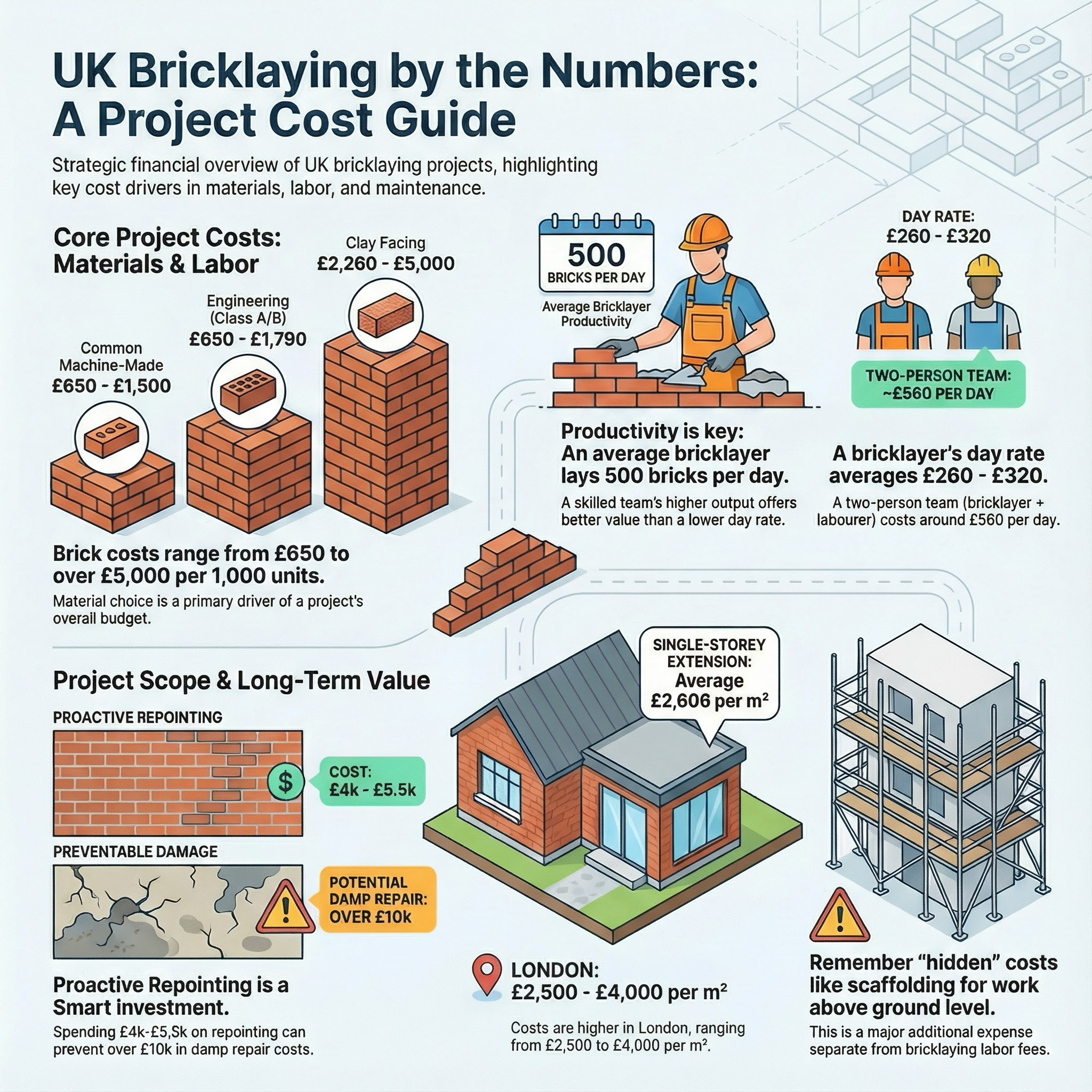
Restoring a historic wall is an investment in both heritage and property value. Professional restoration ensures the wall remains flexible enough to move with the ground while providing a sturdy, long-lasting boundary that supports local biodiversity.
Costs for dry stone walling are usually calculated by the square metre (for the face) or by the linear metre for standard heights. Prices vary significantly based on the type of stone and the accessibility of the site.
| Item | Low £ | High £ | Notes |
|---|---|---|---|
| Labour (Restoration/Rebuild) | £70 | £130 | Per m² of wall face. Includes dismantling. |
| New Sourced Stone | £80 | £200 | Per tonne. Prices vary by region and stone rarity. |
| Reclaimed Stone | £100 | £250 | Per tonne. Often required for historic matching. |
| Day Rate (Specialist Mason) | £250 | £450 | Per person. Higher for DSWA Master Craftsmen. |
Factors affecting the final price include the "batter" (slope) required, the complexity of the terrain, and whether the original stone can be reused or if new material must be brought in from a quarry.
While many homeowners attempt small repairs, historic restoration is best left to specialists. Dry stone walling is a structural craft; a poorly built wall will "belly" and collapse within a few seasons because it lacks the correct internal "hearting" and through-stones.
Note: If your property is Grade I or II listed, or situated in a National Park or AONB, DIY repairs using the wrong stone or adding cement can lead to enforcement action.
Generally, no. Restoration and maintenance do not require planning permission. However, if you are increasing the height (usually above 1 metre next to a highway or 2 metres elsewhere) or if the wall is listed, you must consult your local planning office.
Bulging (or "bellying") is usually caused by internal "hearting" settling or water pressure building up behind the wall. If the through-stones are missing, the two faces of the wall will eventually separate and collapse.
Yes, most dry stone wallers prefer to reuse the original stone. However, expect a 10-20% loss of material due to weathering and breakage over the decades, which will need to be topped up with matching stone.
Dry stone walling can be done year-round because there is no wet mortar to freeze. However, ground conditions are better in spring or autumn to avoid damaging surrounding landscaping or getting bogged down in winter mud.
A professionally restored wall, built to DSWA standards with proper through-stones and coping, can easily last 100 to 150 years with minimal maintenance.
This guide was written with AI assistance and is intended for general information only. Prices are estimates based on UK averages and may vary by region. Always get at least three quotes and consult a qualified professional before starting any work.
Ask follow-ups in plain English. The AI explains options, sequencing and what to ask the bricklayer — so you walk in informed.
Brickwork is the backbone of most UK homes, providing structural integrity and protection against our unpredictable weather. Over time, exposure to rain, frost,...
READ GUIDE →GuideYour front steps are more than just a functional entrance; they are a vital part of your home’s kerb appeal and structural safety. For UK homeowners, replacing ...
READ GUIDE →GuideRepointing is the process of renewing the external part of mortar joints between bricks. Over time, the UK’s harsh weather causes mortar to crumble, crack, and ...
READ GUIDE →GuideCracks in brickwork are a common sight for UK homeowners, often triggered by seasonal temperature changes, heavy clay soils, or historical settlement. While man...
READ GUIDE →GuideGarden walls are more than just boundaries; they provide security, privacy, and kerb appeal to UK homes. However, constant exposure to the British weather—parti...
READ GUIDE →GuideFlint walls are a hallmark of the British landscape, particularly across the South Downs, East Anglia, and the Home Counties. These structures are not just func...
READ GUIDE →