Instant
01 · Ask
Ask the AI a follow-up
Got more questions about front Steps Replacement Costs? Describe the bit you're unsure about — the AI explains options, sequencing and what to ask the bricklayer.

Cracked, sunk or unsafe steps — concrete, brick or stone, rebuilt with non-slip edge.
You've read the brief on front Steps Replacement Costs. Now lean on us to find the right bricklayer — and stay in control of the job.
Got more questions about front Steps Replacement Costs? Describe the bit you're unsure about — the AI explains options, sequencing and what to ask the bricklayer.
Costs, timelines, pitfalls and the right questions to ask before any bricklayer starts on front Steps Replacement Costs.
Itemised quotes from up to 3 local bricklayers on front Steps Replacement Costs — so you can compare like-for-like, not lump sums.
Ready when you are
Enter your postcode and get free quotes from local pros.
Four moves that separate a smooth job from a nightmare.
Steps built on shallow foundations can lift and crack during a hard UK winter.
Building steps too high against the house wall, allowing moisture to bypass the damp course.
Steps sloping toward the house, causing water to pool against the threshold.
Using cheap, porous bricks that "spall" (flake away) when salt is used to de-ice them.
Indicative UK ranges and what affects price.
By job type
Quote spread is typically ± 18% — always get 3 quotes.
Bricklayer quick-view
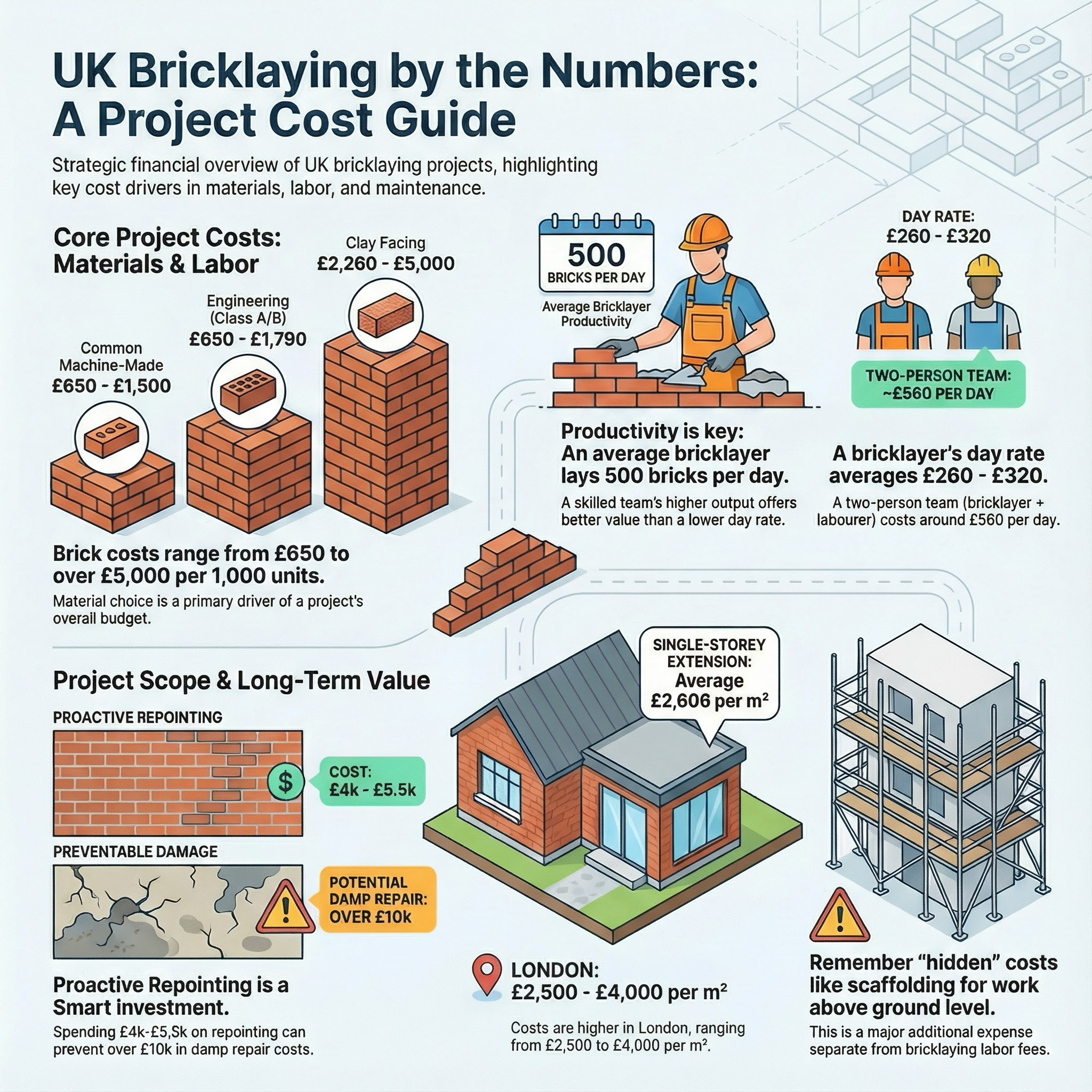
Whether you are opting for traditional red brick, sleek slate, or durable concrete, a well-constructed set of steps requires precision and a solid foundation. This guide breaks down the costs, timelines, and regulations involved in a professional front step replacement.
Prices vary based on the materials chosen and the complexity of the design. Natural stone is significantly more expensive than standard brick, but offers superior longevity and aesthetics.
| Item | Low £ | High £ | Notes |
|---|---|---|---|
| Basic Brick Steps (2-3 steps) | £850 | £1,400 | Standard clay bricks with concrete treads. |
| Natural Stone Steps | £1,500 | £2,800 | Sandstone, granite, or slate finish. |
| Labour (Daily Rate) | £250 | £450 | Varies by region (London/SE is higher). |
| Waste Removal (Skip) | £220 | £380 | 6-yard skip for concrete and brick rubble. |
| Wrought Iron Handrail | £300 | £700 | Supplied and fitted with floor fixings. |
The primary cost drivers are material choice and the depth of the required foundations. If your existing sub-base is cracked or non-existent, the cost of excavation and concrete will increase the total significantly.
While a DIY enthusiast might tackle a single step repair, a full replacement is best left to a professional bricklayer. Steps must be perfectly level across the width but have a precise 1:40 fall to the front to shed water. Incorrectly built steps can lead to "pooling," which causes moss growth and dangerous ice patches in winter. Furthermore, steps connected to the house must not bridge the Damp Proof Course (DPC), a mistake often made by amateurs that leads to rising damp inside the home.
Pro Tip: Ask your tradesperson if they plan to use "Engineering Bricks" for the hidden sub-structure. These are highly water-resistant and provide a much stronger core than standard house bricks.
In most cases, no. Replacing or installing steps is considered "Permitted Development." However, if you live in a Conservation Area or a Listed Building, you must check with your local council first.
You should avoid walking on new steps for at least 24 hours. For heavy use, wait 48 hours to ensure the mortar and any adhesive have fully cured.
Only if the concrete is structurally sound and has no cracks. If the base is moving, tiles will simply crack and pop off within one season.
Riven sandstone or flame-textured granite offer excellent natural grip. Avoid polished stone or smooth porcelain unless they have a certified R11 anti-slip rating.
This is called efflorescence. It is a natural occurrence where soluble salts migrate to the surface of the brick. It usually washes away with rain over a few months.
This guide was written with AI assistance and is intended for general information only. Prices are estimates based on UK averages and may vary by region. Always get at least three quotes and consult a qualified professional before starting any work.
Ask follow-ups in plain English. The AI explains options, sequencing and what to ask the bricklayer — so you walk in informed.
Brickwork is the backbone of most UK homes, providing structural integrity and protection against our unpredictable weather. Over time, exposure to rain, frost,...
READ GUIDE →GuideRepointing is the process of renewing the external part of mortar joints between bricks. Over time, the UK’s harsh weather causes mortar to crumble, crack, and ...
READ GUIDE →GuideCracks in brickwork are a common sight for UK homeowners, often triggered by seasonal temperature changes, heavy clay soils, or historical settlement. While man...
READ GUIDE →GuideGarden walls are more than just boundaries; they provide security, privacy, and kerb appeal to UK homes. However, constant exposure to the British weather—parti...
READ GUIDE →GuideHistoric dry stone walls are a defining feature of the British countryside and many period properties. Unlike modern masonry, these structures rely on gravity a...
READ GUIDE →GuideFlint walls are a hallmark of the British landscape, particularly across the South Downs, East Anglia, and the Home Counties. These structures are not just func...
READ GUIDE →