Instant
01 · Ask
Ask the AI a follow-up
Got more questions about garden wall brickwork repair? Describe the bit you're unsure about — the AI explains options, sequencing and what to ask the bricklayer.

Sagging, leaning, cracked or coped — pointing, partial rebuild or full rebuild quoted up front.
You've read the brief on garden wall brickwork repair. Now lean on us to find the right bricklayer — and stay in control of the job.
Got more questions about garden wall brickwork repair? Describe the bit you're unsure about — the AI explains options, sequencing and what to ask the bricklayer.
Costs, timelines, pitfalls and the right questions to ask before any bricklayer starts on garden wall brickwork repair.
Itemised quotes from up to 3 local bricklayers on garden wall brickwork repair — so you can compare like-for-like, not lump sums.
Ready when you are
Enter your postcode and get free quotes from local pros.
Four moves that separate a smooth job from a nightmare.
This is when the face of the brick flakes off. It is usually caused by using cement mortar on old bricks, which prevents moisture from escaping through the joints.
A white, powdery salt deposit on the wall. While usually harmless, it can indicate that the wall is becoming saturated with water.
Roots can lift the foundations of a wall, causing diagonal "stepped" cracks. Simply repairing the brickwork won't help unless the root issue is addressed.
Wet mortar that freezes expands and cracks. Avoid having your wall repaired in temperatures below 3°C unless the tradesperson uses frost additives or hessian protection.
Indicative UK ranges and what affects price.
By job type
Quote spread is typically ± 18% — always get 3 quotes.
Bricklayer quick-view
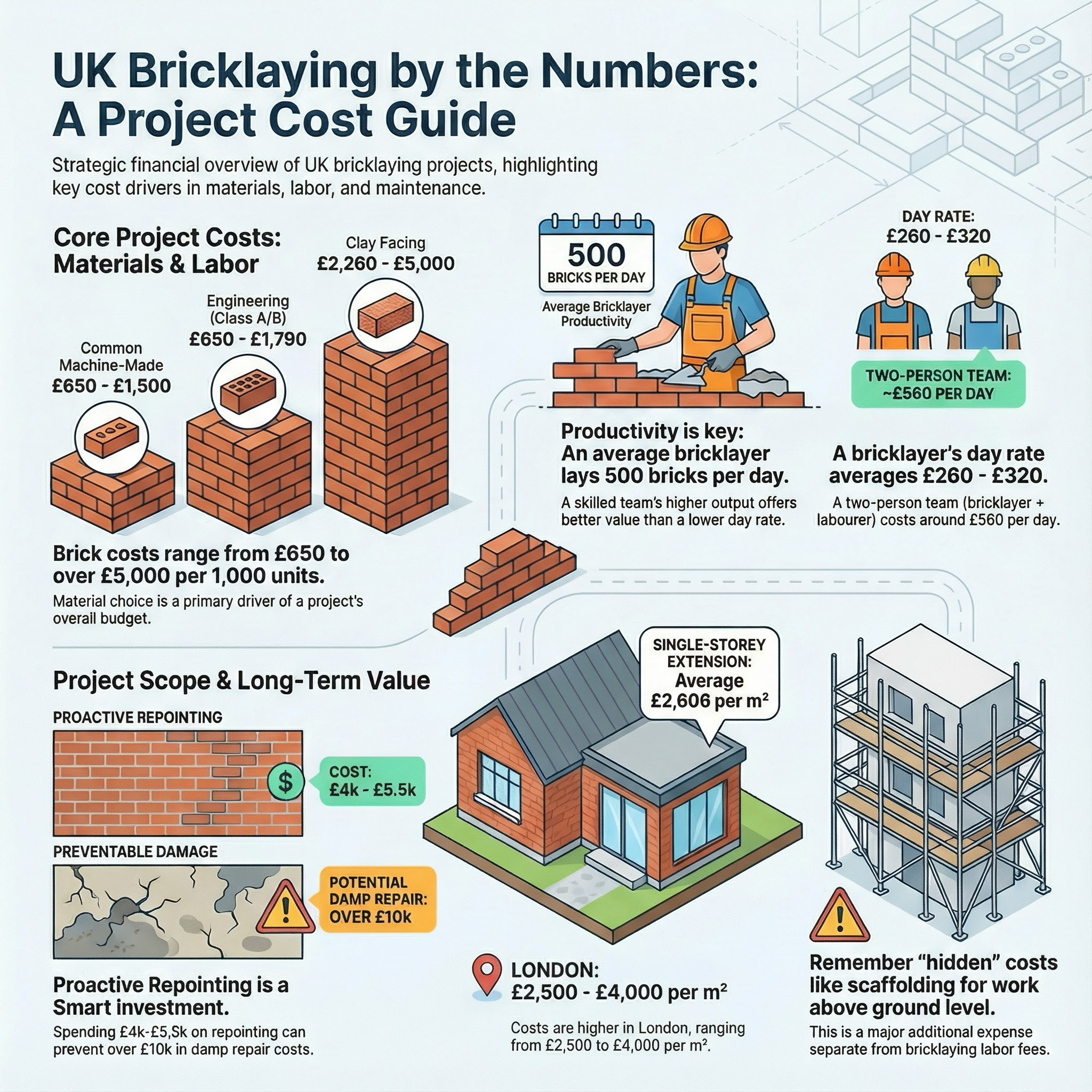
Repairing these issues early is essential to prevent structural failure. A well-maintained wall not only looks better but also avoids the significantly higher costs of a full demolition and rebuild further down the line.
Prices for garden wall repairs vary based on the age of the wall and the materials required. Matching reclaimed bricks for a Victorian wall will cost more than using standard engineering bricks for a modern boundary.
| Item | Low £ | High £ | Notes |
|---|---|---|---|
| Minimum Call-out Fee | £100 | £200 | Covers small patches or initial assessment. |
| Labour (Day Rate) | £250 | £450 | Per bricklayer; may require a labourer for larger jobs. |
| Repointing (per m²) | £35 | £70 | Higher end for lime mortar or intricate finishes. |
| Individual Brick Replacement | £10 | £25 | Per brick, including labour and materials. |
| Waste Disposal | £60 | £250 | From "Hippo" bags to 4-yard skips for rubble. |
| Scaffolding / Access | £250 | £850 | Only required for walls exceeding 2 metres in height. |
Pro Tip: Always ask your bricklayer if they are using a "ready-mix" or gauging their own mortar. On-site gauging allows for a better colour match to your existing wall.
While many homeowners feel confident repointing a few joints, structural repairs are best left to a professional bricklayer. Incorrect mortar mixes (such as using strong cement on soft old bricks) can cause the bricks to fail rapidly as moisture gets trapped inside them.
If your wall is over 1 metre high and sits next to a highway, or over 2 metres high elsewhere, any significant structural changes may require a professional to ensure it meets safety standards. A collapsing wall is a major liability risk for a homeowner.
If a wall leans more than 30mm or has horizontal cracks running through the bricks rather than just the mortar, it may be unstable. You should contact a bricklayer or structural engineer immediately if you notice movement when pushing the wall.
Light drizzle is manageable, but heavy rain will wash out fresh mortar and cause staining. Professional bricklayers will usually cover their work with plastic sheeting if rain is expected, or postpone the job for a dry window.
Lime mortar is "breathable" and softer than the bricks. This allows moisture to evaporate through the joints rather than getting trapped in the bricks, which prevents the bricks from cracking during a frost.
This depends on the deeds of your property. If the wall is a "Party Wall," costs are usually split 50/50. Check your property's Title Plan (available from the Land Registry) to see who owns the boundary.
Generally, no. Painting a garden wall often traps moisture inside the brickwork, leading to rapid decay and spalling. It also creates a high-maintenance cycle of repainting every few years.
Experienced bricklayers use "brick tinting" or source reclaimed bricks from local yards. Even if a perfect match isn't manufactured anymore, a specialist can often find a close alternative that blends in over time.
This guide was written with AI assistance and is intended for general information only. Prices are estimates based on UK averages and may vary by region. Always get at least three quotes and consult a qualified professional before starting any work.
Ask follow-ups in plain English. The AI explains options, sequencing and what to ask the bricklayer — so you walk in informed.
Brickwork is the backbone of most UK homes, providing structural integrity and protection against our unpredictable weather. Over time, exposure to rain, frost,...
READ GUIDE →GuideYour front steps are more than just a functional entrance; they are a vital part of your home’s kerb appeal and structural safety. For UK homeowners, replacing ...
READ GUIDE →GuideRepointing is the process of renewing the external part of mortar joints between bricks. Over time, the UK’s harsh weather causes mortar to crumble, crack, and ...
READ GUIDE →GuideCracks in brickwork are a common sight for UK homeowners, often triggered by seasonal temperature changes, heavy clay soils, or historical settlement. While man...
READ GUIDE →GuideHistoric dry stone walls are a defining feature of the British countryside and many period properties. Unlike modern masonry, these structures rely on gravity a...
READ GUIDE →GuideFlint walls are a hallmark of the British landscape, particularly across the South Downs, East Anglia, and the Home Counties. These structures are not just func...
READ GUIDE →