Instant
01 · Ask
Ask the AI a follow-up
Got more questions about bespoke Windows And Doors Installation? Describe the bit you're unsure about — the AI explains options, sequencing and what to ask the carpenter.

Joinery-made hardwood units — fitted to opening, painted and weather-sealed.
You've read the brief on bespoke Windows And Doors Installation. Now lean on us to find the right carpenter — and stay in control of the job.
Got more questions about bespoke Windows And Doors Installation? Describe the bit you're unsure about — the AI explains options, sequencing and what to ask the carpenter.
Costs, timelines, pitfalls and the right questions to ask before any carpenter starts on bespoke Windows And Doors Installation.
Itemised quotes from up to 3 local carpenters on bespoke Windows And Doors Installation — so you can compare like-for-like, not lump sums.
Ready when you are
Enter your postcode and get free quotes from local pros.
Four moves that separate a smooth job from a nightmare.
Using unseasoned wood can cause the door or window to warp within the first six months; always insist on kiln-dried timber.
If the "cill" is not pitched correctly or the "drip groove" is missing, water will sit against the frame and cause premature rot.
Incorrectly positioned frames within the wall cavity can cause condensation and mould around the internal reveals.
Using cheap DIY-store paint rather than professional-grade micro-porous coatings will lead to the finish peeling within two years.
Indicative UK ranges and what affects price.
By job type
Quote spread is typically ± 18% — always get 3 quotes.
Carpenter quick-view
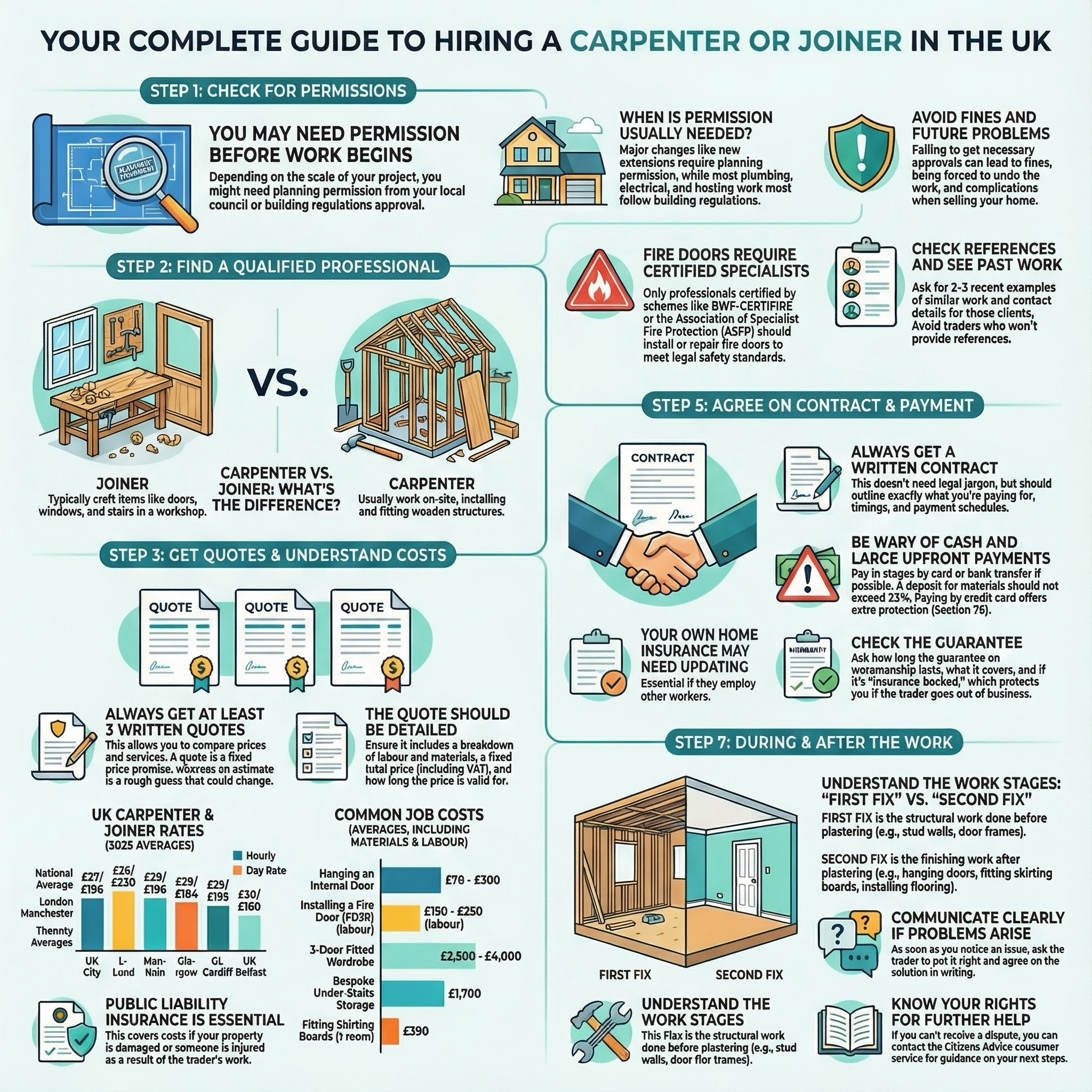
Carpenter explained
Beyond aesthetics, bespoke installations offer superior thermal performance and longevity when crafted by a skilled joiner. This guide covers everything from workshop fabrication to final installation, helping you navigate the costs and regulations involved in high-end timber projects.
| Item | Low £ | High £ | Notes |
|---|---|---|---|
| Bespoke Timber Casement Window | £950 | £1,800 | Per unit; includes glazing and fitting. |
| Traditional Sliding Sash Window | £1,400 | £2,900 | Includes weights, pulleys, and heritage glass. |
| Bespoke External Front Door | £1,800 | £4,500 | Solid hardwood with multi-point locking. |
| Bespoke Bi-fold/French Doors | £3,500 | £8,000+ | Depends on width and number of leaves. |
| Daily Labour Rate (Joiner) | £250 | £450 | Varies by region and specialist skill level. |
Prices are heavily influenced by the choice of timber; Accoya or Oak can double the material cost compared to standard Redwood. Additionally, if your home is a Listed Building, you may require specialist "slimline" heritage glazing, which carries a premium price tag.
Bespoke window and door installation is strictly a professional task. Timber is a "living" material that expands and contracts; incorrect fitting can lead to seized sashes, rot, or significant heat loss. Furthermore, UK Building Regulations require windows to be "self-certified" by a registered installer or inspected by Building Control.
Attempting this as a DIY project may void your home insurance and will certainly cause issues when you come to sell the property, as you will lack the necessary FENSA or CERTASS certification. Always hire a specialist joiner or a dedicated window installation firm.
Generally, no, if you are replacing windows like-for-like in a standard residential property. However, if you live in a Conservation Area or a Listed Building, you will likely need Planning Permission or Listed Building Consent before any work begins.
Hardwoods (Oak, Sapele) are denser and naturally more resistant to rot but are more expensive. High-quality softwoods like Accoya are chemically treated to be even more durable than many hardwoods, offering a 50-year guarantee against rot.
This depends on your local planning officer. Many now allow "vacuum glazing" or "slimline" double glazing (which looks like single glazing) as long as the timber profiles match the original exactly.
With modern factory-applied micro-porous finishes, you should only need to recoat your windows every 7–10 years. South-facing windows exposed to heavy sun may require maintenance slightly sooner.
You are paying for skilled manual labour, high-quality natural materials, and a product that can last 60+ years. uPVC is mass-manufactured from plastic and typically has a lifespan of only 15–25 years before the seals or frames fail.
This guide was written with AI assistance and is intended for general information only. Prices are estimates based on UK averages and may vary by region. Always get at least three quotes and consult a qualified professional before starting any work.
Ask follow-ups in plain English. The AI explains options, sequencing and what to ask the carpenter — so you walk in informed.
Joinery and Metalwork Installation Guide Scope of Works Survey & design brief – site measure‑up, discuss timber/steel grade, produce sketches/CAD. Workshop ...
READ GUIDE →GuideAssembling a chest of drawers is one of the most common yet frustrating home improvement tasks. Whether you have purchased a flat-pack unit from a high-street r...
READ GUIDE →GuideCustom carpentry is the hallmark of a well-finished UK home. Unlike flat-pack furniture, bespoke joinery is designed to fit the unique, often irregular dimensio...
READ GUIDE →GuideLetterbox Repair Guide Scope of Works Initial inspection & measure‑up – check door thickness, sleeve length and draught issues. Remove interior trim & o...
READ GUIDE →GuideFrom squeaky floorboards and sticking doors to more serious issues like timber rot or structural joist damage, carpentry repairs are a staple of UK home mainten...
READ GUIDE →GuideA wobbly or broken dining chair leg doesn't mean your furniture set is destined for the skip. Professional repair restores the structural integrity and aestheti...
READ GUIDE →