Instant
01 · Ask
Ask the AI a follow-up
Got more questions about custom carpentry? Describe the bit you're unsure about — the AI explains options, sequencing and what to ask the carpenter.

Bespoke joinery for any space — designed in workshop, finished on-site, made to the millimetre.
You've read the brief on custom carpentry. Now lean on us to find the right carpenter — and stay in control of the job.
Got more questions about custom carpentry? Describe the bit you're unsure about — the AI explains options, sequencing and what to ask the carpenter.
Costs, timelines, pitfalls and the right questions to ask before any carpenter starts on custom carpentry.
Itemised quotes from up to 3 local carpenters on custom carpentry — so you can compare like-for-like, not lump sums.
Ready when you are
Enter your postcode and get free quotes from local pros.
Four moves that separate a smooth job from a nightmare.
Natural wood expands and contracts with humidity. A professional will leave "expansion gaps" or use stable engineered boards to prevent doors from sticking in winter.
If a carpenter doesn't scribe correctly, you will see unsightly gaps against the wall filled with excessive caulk, which eventually cracks.
Floating shelves or heavy wardrobes can sag if not fixed into studs or masonry. Always confirm how the units will be anchored.
Large wardrobe carcasses may not fit up narrow Victorian staircases. Ensure the carpenter has measured the access route, not just the final room.
Indicative UK ranges and what affects price.
By job type
Quote spread is typically ± 18% — always get 3 quotes.
Carpenter quick-view
Carpenter explained
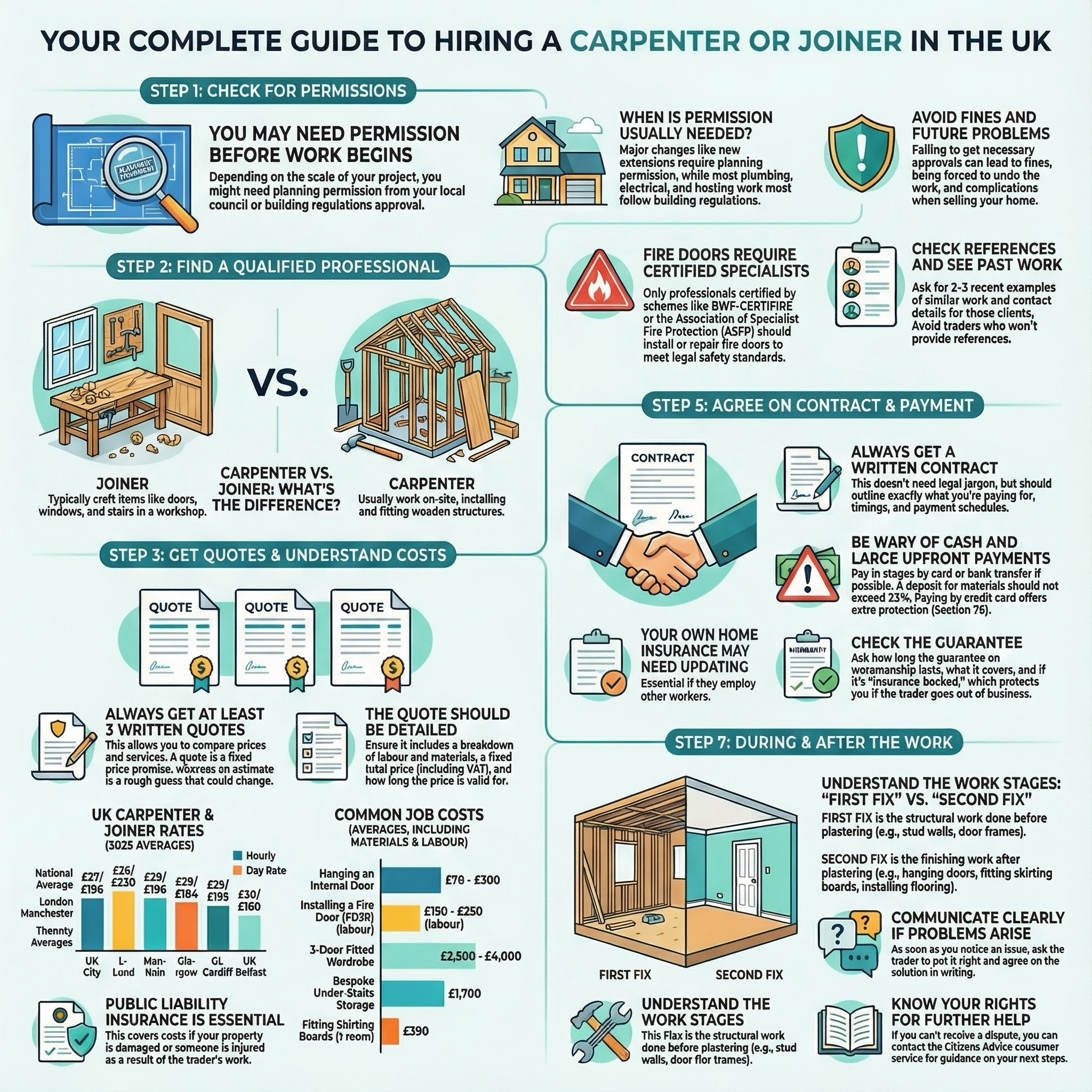
Whether you are looking for handcrafted wardrobes, a home library, or a tailored media unit, the process involves a blend of traditional craftsmanship and modern precision. This guide outlines the stages, costs, and considerations for commissioning high-quality carpentry in 2025/26.
| Item / Service | Low £ | High £ | Notes |
|---|---|---|---|
| Bespoke Alcove Units (Pair) | £1,800 | £3,500 | Includes lower cupboards and floating shelves; price varies by finish. |
| Fitted Wardrobes (3-door) | £2,500 | £5,500 | Standard MDF vs. premium hardwood internals and spray-paint finish. |
| Under-Stairs Storage | £900 | £2,200 | Pull-out drawers or "push-to-open" doors are more complex to fit. |
| Floating Shelving (Per Linear Metre) | £150 | £350 | Includes heavy-duty concealed fixings and finishing. |
| Carpenter Day Rate | £250 | £450 | Regional variation; London and South East typically sit at the top end. |
| Materials Surcharge | +15% | +30% | Reflects current timber market volatility and delivery fees. |
Prices are influenced heavily by the choice of material. While moisture-resistant (MR) MDF is the standard for painted finishes, solid hardwoods like Oak, Walnut, or Ash will significantly increase the budget. Complexities such as integrated LED lighting, mirrored door inserts, or high-end "soft-close" mechanisms from brands like Blum will also add to the final tally.
While basic shelving can be a DIY task, custom cabinetry requires specialist tools like track saws, biscuit joiners, and routers to achieve a professional result. Professional carpenters understand how to compensate for the "out-of-plumb" walls found in most UK homes, ensuring doors hang straight and gaps are invisible.
If your project involves integrated electrics for lighting or media, you must ensure the work complies with Part P of the UK Building Regulations. A carpenter can build the housing, but a qualified electrician should handle the wiring.
For painted finishes, Moisture Resistant (MR) MDF is often superior. It is more stable, doesn't warp or shrink like solid wood, and provides a perfectly smooth surface for paint. Solid wood is preferred if you want a natural grain finish or a "heritage" look.
Usually, no. A skilled carpenter will "cope" or scribe the side of the wardrobe or unit to fit perfectly over your existing skirting boards. However, some prefer to remove them for a totally flush finish against the wall.
Quality carpenters do most of the cutting in their workshop. On-site, they should use dust extraction on their saws. While some dust is inevitable, a professional will use floor protection and "zip-wall" barriers to contain it.
Yes, but it requires careful design. You must include decorative grilles for airflow and use heat-reflecting foil to prevent the timber from drying out and cracking. It will also slightly reduce the radiator's efficiency.
This depends on the wall type. Shelves fixed into solid masonry with heavy-duty steel rods can hold 30kg-50kg+. On plasterboard (stud) walls, the weight limit is significantly lower unless the fixings align with the wooden studs.
This guide was written with AI assistance and is intended for general information only. Prices are estimates based on UK averages and may vary by region. Always get at least three quotes and consult a qualified professional before starting any work.
Ask follow-ups in plain English. The AI explains options, sequencing and what to ask the carpenter — so you walk in informed.
Joinery and Metalwork Installation Guide Scope of Works Survey & design brief – site measure‑up, discuss timber/steel grade, produce sketches/CAD. Workshop ...
READ GUIDE →GuideAssembling a chest of drawers is one of the most common yet frustrating home improvement tasks. Whether you have purchased a flat-pack unit from a high-street r...
READ GUIDE →GuideLetterbox Repair Guide Scope of Works Initial inspection & measure‑up – check door thickness, sleeve length and draught issues. Remove interior trim & o...
READ GUIDE →GuideFrom squeaky floorboards and sticking doors to more serious issues like timber rot or structural joist damage, carpentry repairs are a staple of UK home mainten...
READ GUIDE →GuideA wobbly or broken dining chair leg doesn't mean your furniture set is destined for the skip. Professional repair restores the structural integrity and aestheti...
READ GUIDE →GuideA bespoke staircase is more than just a functional link between floors; it is often the architectural centrepiece of a UK home. Whether you are replacing a date...
READ GUIDE →