Instant
01 · Ask
Ask the AI a follow-up
Got more questions about custom Cabinet Installation? Describe the bit you're unsure about — the AI explains options, sequencing and what to ask the carpenter.

Designed to the room, built off-site or in situ — boot rooms, alcoves, kitchens and built-ins.
You've read the brief on custom Cabinet Installation. Now lean on us to find the right carpenter — and stay in control of the job.
Got more questions about custom Cabinet Installation? Describe the bit you're unsure about — the AI explains options, sequencing and what to ask the carpenter.
Costs, timelines, pitfalls and the right questions to ask before any carpenter starts on custom Cabinet Installation.
Itemised quotes from up to 3 local carpenters on custom Cabinet Installation — so you can compare like-for-like, not lump sums.
Ready when you are
Enter your postcode and get free quotes from local pros.
Four moves that separate a smooth job from a nightmare.
Using unseasoned timber can lead to warping or cracking as your central heating dries the air; always opt for kiln-dried timber or stable engineered boards.
Pipes or cables hidden behind plasterboard can interfere with fixings; a professional will use a wall scanner before drilling.
Gaps between the cabinet and a wonky wall are a sign of poor craftsmanship; the unit should look like it is growing out of the wall.
Floating shelves or wide drawers can sag over time if not engineered with the correct internal reinforcements.
Indicative UK ranges and what affects price.
By job type
Quote spread is typically ± 18% — always get 3 quotes.
Carpenter quick-view
Carpenter explained
Investing in custom joinery not only maximises your living space but can also significantly increase your property value. Whether you are looking for traditional shaker-style alcove units or sleek, modern media walls, professional installation ensures a seamless "built-in" look that lasts a lifetime.
| Project Type | Low £ | High £ | Notes |
|---|---|---|---|
| Pair of Alcove Units (MDF) | £1,800 | £3,500 | Includes base cupboards and floating shelves. |
| Bespoke Fitted Wardrobe (per linear metre) | £900 | £1,600 | Price varies based on internal configurations. |
| Media Wall (Large) | £2,500 | £6,000+ | Includes cable management and integrated lighting. |
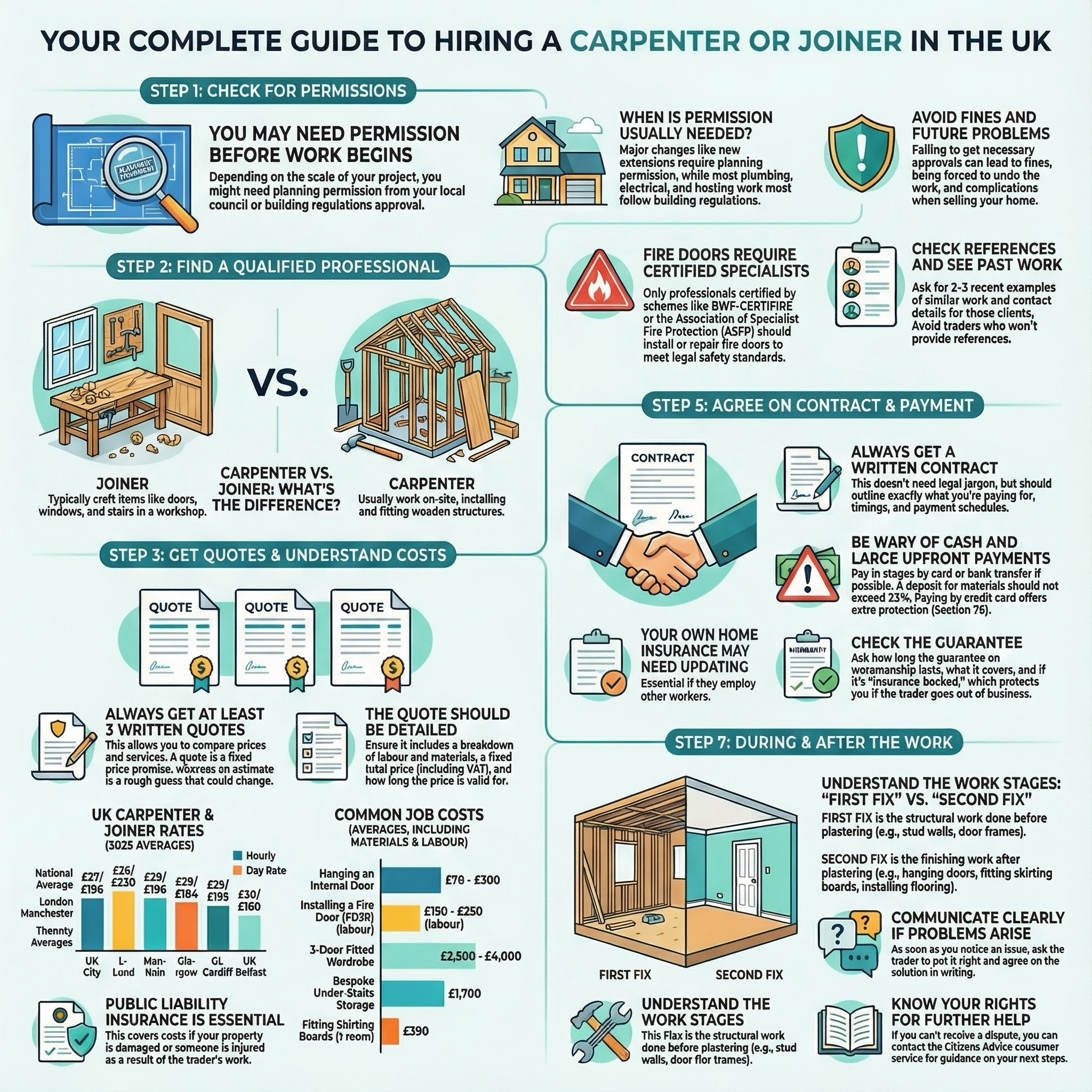
| Carpenter Day Rate | £250 | £450 | Higher rates typically apply in London and the SE. |
Prices are heavily influenced by your choice of material and the complexity of the finish. Hand-painted finishes are generally more expensive due to the labour involved, while melamine-faced boards offer a more budget-friendly, durable alternative for internal shelving.
Always clarify if the quote includes VAT and the final painting/decoration, as many carpenters provide units "primed only," leaving the final coat to a decorator.
While basic shelving can be a DIY task, custom cabinetry requires specialist machinery and advanced "scribing" skills to achieve a professional finish. Mistakes in measuring or cutting expensive hardwoods can be costly, and DIY attempts often lack the structural integrity needed for heavy loads.
If your project involves integrated electrics (such as LED strip lighting or TV mounting), you must ensure the work complies with Part P of the Building Regulations. Professional carpenters often partner with qualified electricians to handle these elements safely.
Yes, but you must maintain legal access for servicing. Cabinets around boilers require specific ventilation gaps, and consumer units must be easily accessible without the use of tools.
Generally, a joiner creates the pieces in a workshop (joining wood together), while a carpenter installs them on-site. For custom cabinets, you ideally want someone skilled in both "bench joinery" and "site carpentry."
Spray-painting offers a flawless, "factory" finish but is difficult to touch up if scratched. Hand-painting has a more traditional texture and is much easier to repair or change in the future.
No. Any damp issues must be resolved and the wall fully dried before installation. Fitting timber or MDF against a damp wall will lead to mould growth and structural failure of the unit.
Usually, no. A skilled carpenter will "scribe" the base of the cabinet to fit perfectly over your existing skirting, or they may remove a small section to allow the unit to sit flush against the wall.
This guide was written with AI assistance and is intended for general information only. Prices are estimates based on UK averages and may vary by region. Always get at least three quotes and consult a qualified professional before starting any work.
Ask follow-ups in plain English. The AI explains options, sequencing and what to ask the carpenter — so you walk in informed.
Joinery and Metalwork Installation Guide Scope of Works Survey & design brief – site measure‑up, discuss timber/steel grade, produce sketches/CAD. Workshop ...
READ GUIDE →GuideAssembling a chest of drawers is one of the most common yet frustrating home improvement tasks. Whether you have purchased a flat-pack unit from a high-street r...
READ GUIDE →GuideCustom carpentry is the hallmark of a well-finished UK home. Unlike flat-pack furniture, bespoke joinery is designed to fit the unique, often irregular dimensio...
READ GUIDE →GuideLetterbox Repair Guide Scope of Works Initial inspection & measure‑up – check door thickness, sleeve length and draught issues. Remove interior trim & o...
READ GUIDE →GuideFrom squeaky floorboards and sticking doors to more serious issues like timber rot or structural joist damage, carpentry repairs are a staple of UK home mainten...
READ GUIDE →GuideA wobbly or broken dining chair leg doesn't mean your furniture set is destined for the skip. Professional repair restores the structural integrity and aestheti...
READ GUIDE →