Instant
01 · Ask
Ask the AI a follow-up
Got more questions about door Architrave Repair Costs &? Describe the bit you're unsure about — the AI explains options, sequencing and what to ask the carpenter.

Cracked, dented or rotten architrave — matched, mitred and re-installed without disturbing the wall.
You've read the brief on door Architrave Repair Costs &. Now lean on us to find the right carpenter — and stay in control of the job.
Got more questions about door Architrave Repair Costs &? Describe the bit you're unsure about — the AI explains options, sequencing and what to ask the carpenter.
Costs, timelines, pitfalls and the right questions to ask before any carpenter starts on door Architrave Repair Costs &.
Itemised quotes from up to 3 local carpenters on door Architrave Repair Costs & — so you can compare like-for-like, not lump sums.
Ready when you are
Enter your postcode and get free quotes from local pros.
Four moves that separate a smooth job from a nightmare.
Using nails that are too large or failing to pre-drill hardwood can cause the architrave to split.
If pins aren't punched below the surface and filled correctly, they will "bleed" rust or show as bumps through the paint.
Using poor quality adhesive or fixing into "blown" plaster can cause the corner joints to open up over time.
Modern architrave is often thinner than Victorian or Edwardian originals, leading to an awkward "step" if only one side is replaced.
Indicative UK ranges and what affects price.
By job type
Quote spread is typically ± 18% — always get 3 quotes.
Carpenter quick-view
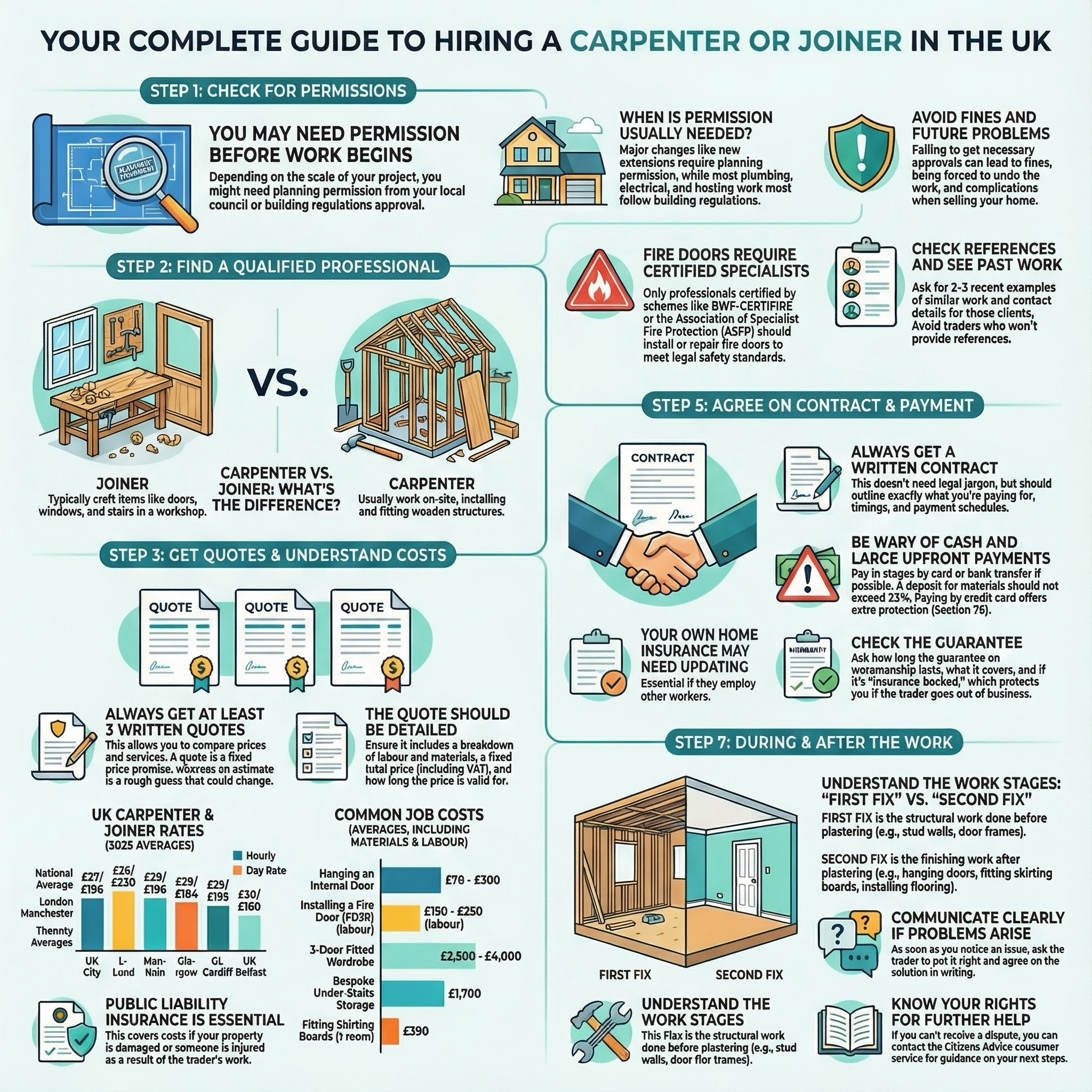
Carpenter explained
Repairing damaged architrave is a cost-effective way to refresh a room without the expense of a full renovation. Whether it is a simple case of re-pinning a loose length or replacing a section of rotten timber, a professional carpenter can restore the architectural integrity of your doorways quickly and neatly.
| Item | Low £ | High £ | Notes |
|---|---|---|---|
| Call-out / Minimum Charge | £70 | £120 | Covers the first hour of labour and travel. |
| Hourly Labour Rate | £40 | £70 | Varies by region (London/SE prices are higher). |
| Materials (MDF) | £10 | £25 | Standard 2.1m lengths for a single door. |
| Materials (Hardwood/Oak) | £45 | £90 | Premium timber costs significantly more. |
| Full Replacement (per door) | £120 | £220 | Includes materials, labour, and basic filling. |
Prices are primarily driven by the material choice and the complexity of the profile. If you have period features with bespoke mouldings, a carpenter may need to source custom timber, which will increase both material costs and lead times.
While fixing a loose piece of trim is a manageable DIY task, achieving perfect "light-tight" mitre joints requires specialist tools like a mitre saw and a steady hand. If your home has fire doors, you must ensure any repairs do not interfere with the intumescent strips or the door's fire-rating certification.
Professional carpenters use "pre-primed" materials and pneumatic nail guns, which result in a much cleaner finish than manual nailing and hand-painting raw wood.
If the wood is MDF and has "blown" (swollen), it cannot be repaired and must be replaced. Real timber can often be dried, sanded, and treated, provided there is no rot.
No, the architrave sits on the wall around the door frame. The door can usually stay on its hinges, though it may be opened or closed during the process to check clearances.
This is usually due to central heating drying out the timber or the house settling. A professional can fix this by "pinning and gluing" the joint or using a flexible wood filler.
MDF is cheaper, doesn't warp, and has no knots, making it excellent for a painted finish. However, real wood (softwood or hardwood) is more durable and can be stained or varnished.
Cutting timber does create fine dust. Ensure your tradesperson uses a vacuum-attached mitre saw or performs the cuts outside to protect your soft furnishings.
This guide was written with AI assistance and is intended for general information only. Prices are estimates based on UK averages and may vary by region. Always get at least three quotes and consult a qualified professional before starting any work.
Ask follow-ups in plain English. The AI explains options, sequencing and what to ask the carpenter — so you walk in informed.
Joinery and Metalwork Installation Guide Scope of Works Survey & design brief – site measure‑up, discuss timber/steel grade, produce sketches/CAD. Workshop ...
READ GUIDE →GuideAssembling a chest of drawers is one of the most common yet frustrating home improvement tasks. Whether you have purchased a flat-pack unit from a high-street r...
READ GUIDE →GuideCustom carpentry is the hallmark of a well-finished UK home. Unlike flat-pack furniture, bespoke joinery is designed to fit the unique, often irregular dimensio...
READ GUIDE →GuideLetterbox Repair Guide Scope of Works Initial inspection & measure‑up – check door thickness, sleeve length and draught issues. Remove interior trim & o...
READ GUIDE →GuideFrom squeaky floorboards and sticking doors to more serious issues like timber rot or structural joist damage, carpentry repairs are a staple of UK home mainten...
READ GUIDE →GuideA wobbly or broken dining chair leg doesn't mean your furniture set is destined for the skip. Professional repair restores the structural integrity and aestheti...
READ GUIDE →