Instant
01 · Ask
Ask the AI a follow-up
Got more questions about floor joist replacement? Describe the bit you're unsure about — the AI explains options, sequencing and what to ask the carpenter.

Bouncy, rotten or notched joist — sistered, replaced or strengthened to current Building Regs.
You've read the brief on floor joist replacement. Now lean on us to find the right carpenter — and stay in control of the job.
Got more questions about floor joist replacement? Describe the bit you're unsure about — the AI explains options, sequencing and what to ask the carpenter.
Costs, timelines, pitfalls and the right questions to ask before any carpenter starts on floor joist replacement.
Itemised quotes from up to 3 local carpenters on floor joist replacement — so you can compare like-for-like, not lump sums.
Ready when you are
Enter your postcode and get free quotes from local pros.
Four moves that separate a smooth job from a nightmare.
Accidentally cutting through gas pipes or electrical cables hidden within the joist notches.
Failing to seat the joist deeply enough into the wall (usually 100mm minimum) or using poor-quality hangers.
Replacing the timber without fixing the damp or leak that caused the rot in the first place.
Weakening new joists by cutting holes for pipes in the wrong zones (notches should only be in the top 1/8th to 1/4 of the span).
Indicative UK ranges and what affects price.
By job type
Quote spread is typically ± 18% — always get 3 quotes.
Carpenter quick-view
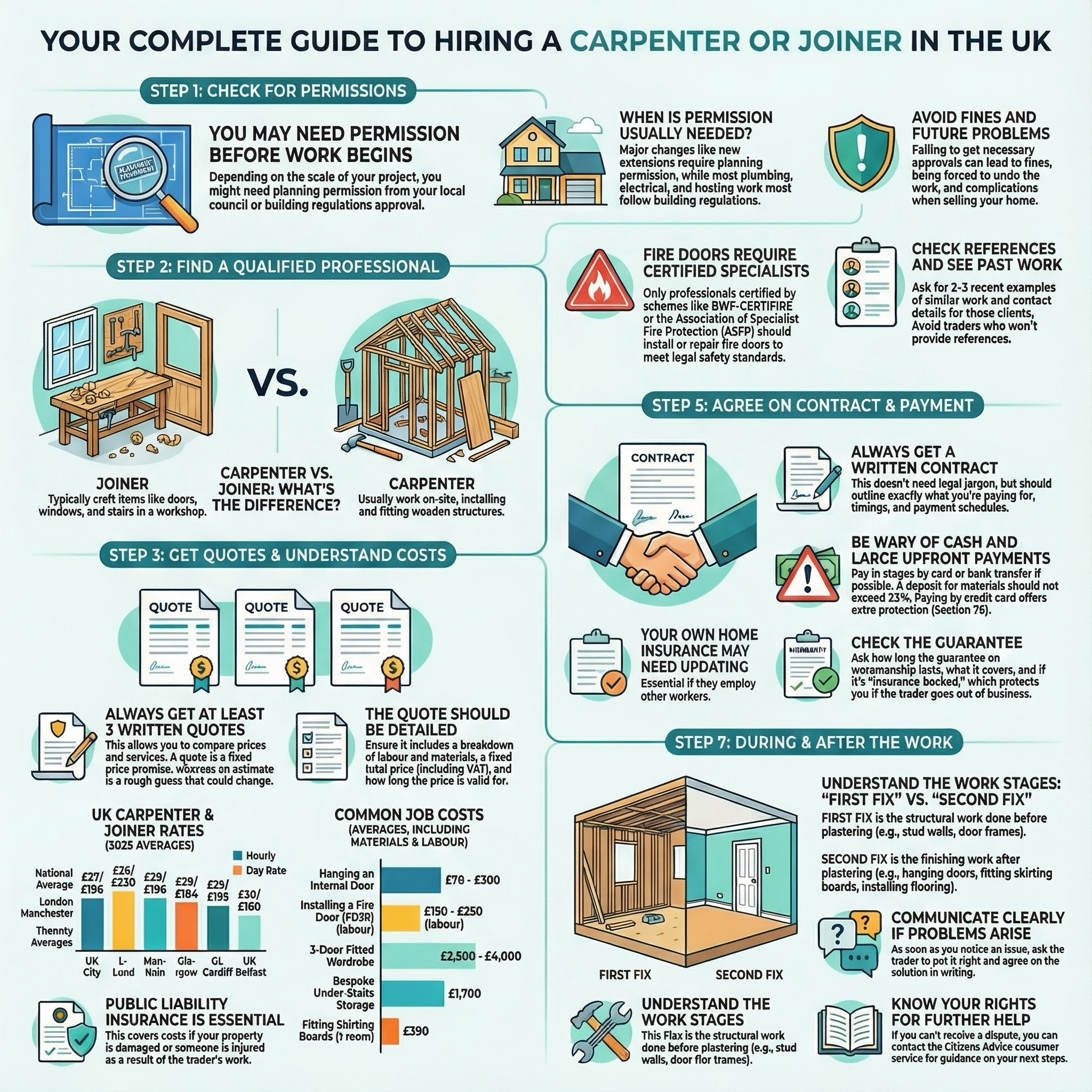
Carpenter explained
Replacing or repairing joists is a critical maintenance task for UK homeowners, particularly in older period properties where damp-proofing may have failed. Addressing these issues early prevents localized damage from spreading into a costly whole-house structural problem.
| Item | Low £ | High £ | Notes |
|---|---|---|---|
| Survey/Initial Inspection | £100 | £250 | Often deducted from the final bill if work proceeds. |
| Single Joist Replacement | £350 | £700 | Includes labour, materials, and localized access. |
| Full Room (approx. 15m²) | £1,800 | £4,500 | Total removal and replacement of all structural timbers. |
| Structural Engineer Fee | £400 | £900 | Required for complex structural calculations or alterations. |
| Waste Disposal (Skip hire) | £180 | £350 | Costs vary by skip size and regional council permits. |
Prices are heavily influenced by access; ground floor joists with a crawl space are often cheaper to fix than upper floor joists that require ceiling removal and replastering. All prices include VAT at 20%.
This is strictly professional territory. Floor joists are structural elements; an incorrect installation can lead to floor collapse or significant damage to the building's envelope.
Note: While a DIYer can lift floorboards to inspect damage, the actual cutting and seating of structural timber must be done by a qualified carpenter to ensure compliance with UK Building Regulations.
Yes, if the damage is localized. A new joist is bolted alongside the existing one to reinforce it, but all rot must be cut out first to prevent it from spreading to the new timber.
Common signs include a "bouncy" feel when walking, skirting boards pulling away from the floor, a musty smell, or visible dipping in the centre of the room.
Usually, no. Most policies exclude "wear and tear," wet rot, or woodworm. However, if the damage was caused by a sudden "peril" like a burst pipe, you may be covered for the repair.
For a single room, no. However, that room will be completely unusable, and there will be significant dust. For whole-house joist replacement, moving out for a few days is highly recommended.
C24 is a higher-grade timber with fewer knots and higher density, making it stronger for longer spans. Most UK professionals prefer C24 for structural floor work.
This guide was written with AI assistance and is intended for general information only. Prices are estimates based on UK averages and may vary by region. Always get at least three quotes and consult a qualified professional before starting any work.
Ask follow-ups in plain English. The AI explains options, sequencing and what to ask the carpenter — so you walk in informed.
Joinery and Metalwork Installation Guide Scope of Works Survey & design brief – site measure‑up, discuss timber/steel grade, produce sketches/CAD. Workshop ...
READ GUIDE →GuideAssembling a chest of drawers is one of the most common yet frustrating home improvement tasks. Whether you have purchased a flat-pack unit from a high-street r...
READ GUIDE →GuideCustom carpentry is the hallmark of a well-finished UK home. Unlike flat-pack furniture, bespoke joinery is designed to fit the unique, often irregular dimensio...
READ GUIDE →GuideLetterbox Repair Guide Scope of Works Initial inspection & measure‑up – check door thickness, sleeve length and draught issues. Remove interior trim & o...
READ GUIDE →GuideFrom squeaky floorboards and sticking doors to more serious issues like timber rot or structural joist damage, carpentry repairs are a staple of UK home mainten...
READ GUIDE →GuideA wobbly or broken dining chair leg doesn't mean your furniture set is destined for the skip. Professional repair restores the structural integrity and aestheti...
READ GUIDE →