Instant
01 · Ask
Ask the AI a follow-up
Got more questions about garden shed and cupboard assembly? Describe the bit you're unsure about — the AI explains options, sequencing and what to ask the carpenter.

Flatpack shed, summerhouse or garden cupboard — assembled, levelled and ready to use.
You've read the brief on garden shed and cupboard assembly. Now lean on us to find the right carpenter — and stay in control of the job.
Got more questions about garden shed and cupboard assembly? Describe the bit you're unsure about — the AI explains options, sequencing and what to ask the carpenter.
Costs, timelines, pitfalls and the right questions to ask before any carpenter starts on garden shed and cupboard assembly.
Itemised quotes from up to 3 local carpenters on garden shed and cupboard assembly — so you can compare like-for-like, not lump sums.
Ready when you are
Enter your postcode and get free quotes from local pros.
Four moves that separate a smooth job from a nightmare.
If the base isn't 100% level and solid, the shed will eventually lean, causing doors to jam and the roof to leak.
Using too many or too few nails in the roofing felt can lead to water seeping through the roof deck.
Sheds placed directly against a fence or wall without a gap will suffer from damp and premature rot.
Lightweight sheds can move or even flip in high-velocity UK wind gusts if not bolted to a heavy base.
Indicative UK ranges and what affects price.
By job type
Quote spread is typically ± 18% — always get 3 quotes.
Carpenter quick-view
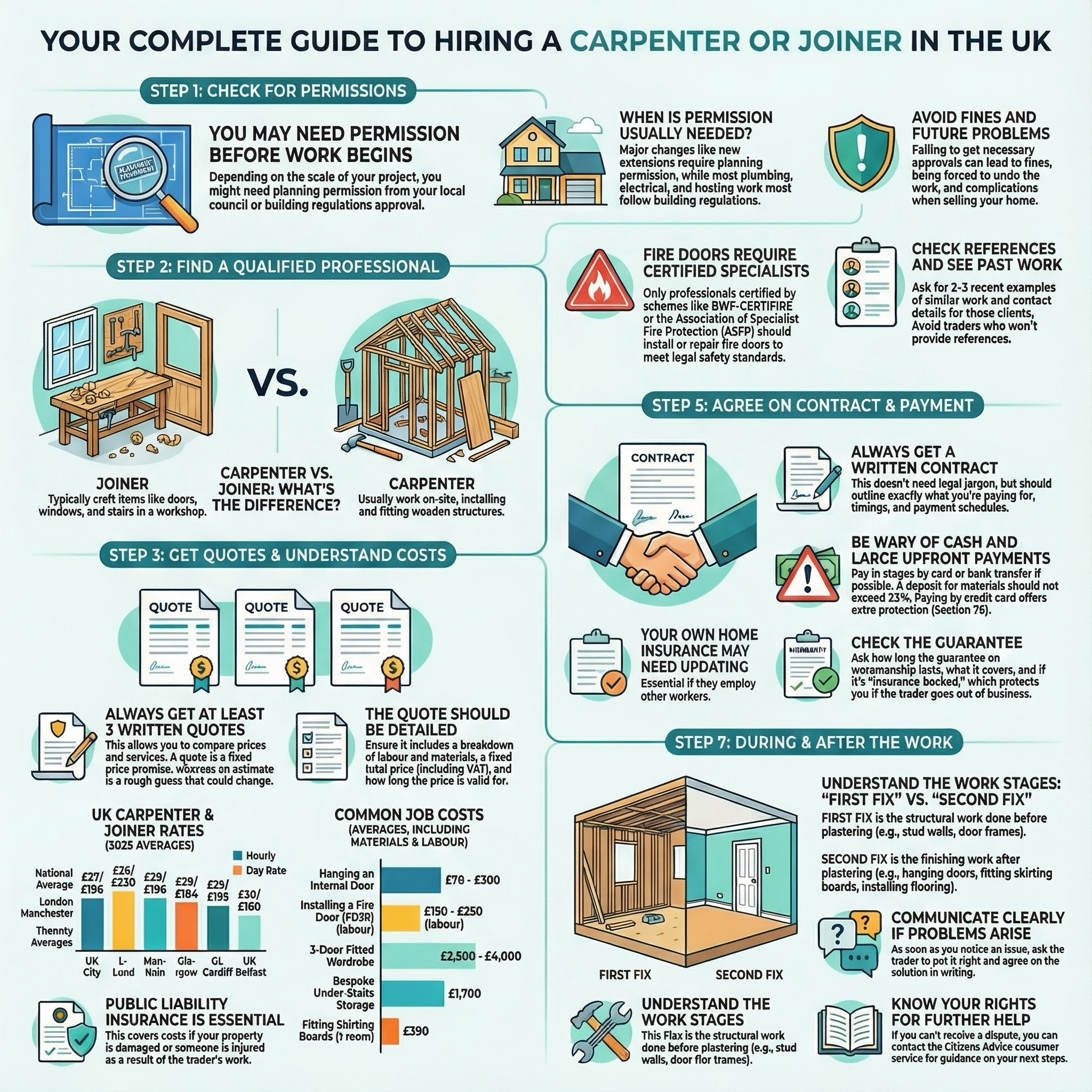
Carpenter explained
A professional carpenter or handyman doesn't just follow the manual; they assess the site, level the base, and apply trade secrets to prevent common issues like door sagging or roof leaks. This guide outlines what to expect when hiring a pro to handle your outdoor assembly project.
Prices for assembly vary based on the complexity of the unit and your location in the UK, with London and the South East typically seeing higher rates. Most professionals charge a flat project fee for standard kits, though hourly rates are common for bespoke builds or complex repairs.
| Item | Low £ | High £ | Notes |
|---|---|---|---|
| Small Garden Cupboard | £80 | £150 | Single person, 1-2 hours work. |
| Standard 6x4 or 8x6 Shed | £180 | £350 | Includes felt roofing and door hanging. |
| Large 10x8+ Shed / Workshop | £400 | £750 | Often requires two people for safety. |
| Minimum Call-out Fee | £60 | £100 | Covers travel and first hour of labour. |
| Waste Disposal | £30 | £90 | Removal of packaging and old timber. |
Factors that increase the price include the need for a second pair of hands for large panels, the installation of a new base, or the application of protective wood treatment. Prices shown include VAT where applicable for 2025/26.
Assembling a small garden cupboard is a manageable DIY task for those with basic tools and patience. However, full-sized garden sheds are heavy, cumbersome, and notoriously difficult to get "square" without experience.
Professional assembly is highly recommended for larger structures to ensure the roof is felted correctly; a single mistake here can lead to rot within twelve months.
If your shed requires electrical power or a gas supply (for a workshop or studio), you must hire a Part P registered electrician or a Gas Safe engineer by law. A carpenter can build the structure, but they cannot legally sign off on these utility connections.
Most garden sheds fall under "Permitted Development," meaning you won't need planning permission, but there are strict rules to follow:
Yes, most assembly quotes assume a flat, level, and solid base (slabs, concrete, or a timber frame) is already in place. If you need the tradesperson to build the base as well, you must specify this upfront as it requires different materials and significantly more time.
While the frame can often be erected in light rain, roofing felt should ideally be applied when it is dry. Moisture trapped under the felt or between tongue-and-groove panels can lead to internal damp and mould issues later on.
Most "assembly only" quotes do not include painting or staining. However, many carpenters will offer this as an add-on service; it is best to do this during assembly so that the underside and joints are fully protected before they become inaccessible.
A concrete pad or paving slabs on a sharp sand/cement bed are the most durable options. For sloping ground, a tanalised (pressure-treated) timber frame set on adjustable pedestals or "Easy Pads" is often more cost-effective and provides excellent airflow.
You should aim for at least 18 inches (45cm) of clearance on all sides. This allows the installer enough room to work, ensures proper airflow to prevent rot, and gives you space to apply wood treatment in future years.
This guide was written with AI assistance and is intended for general information only. Prices are estimates based on UK averages and may vary by region. Always get at least three quotes and consult a qualified professional before starting any work.
Ask follow-ups in plain English. The AI explains options, sequencing and what to ask the carpenter — so you walk in informed.
Joinery and Metalwork Installation Guide Scope of Works Survey & design brief – site measure‑up, discuss timber/steel grade, produce sketches/CAD. Workshop ...
READ GUIDE →GuideAssembling a chest of drawers is one of the most common yet frustrating home improvement tasks. Whether you have purchased a flat-pack unit from a high-street r...
READ GUIDE →GuideCustom carpentry is the hallmark of a well-finished UK home. Unlike flat-pack furniture, bespoke joinery is designed to fit the unique, often irregular dimensio...
READ GUIDE →GuideLetterbox Repair Guide Scope of Works Initial inspection & measure‑up – check door thickness, sleeve length and draught issues. Remove interior trim & o...
READ GUIDE →GuideFrom squeaky floorboards and sticking doors to more serious issues like timber rot or structural joist damage, carpentry repairs are a staple of UK home mainten...
READ GUIDE →GuideA wobbly or broken dining chair leg doesn't mean your furniture set is destined for the skip. Professional repair restores the structural integrity and aestheti...
READ GUIDE →