Instant
01 · Ask
Ask the AI a follow-up
Got more questions about internal door replacement and disposal? Describe the bit you're unsure about — the AI explains options, sequencing and what to ask the carpenter.

Old doors out, new doors in — planed, hinged and disposed of with a clean fix-out finish.
You've read the brief on internal door replacement and disposal. Now lean on us to find the right carpenter — and stay in control of the job.
Got more questions about internal door replacement and disposal? Describe the bit you're unsure about — the AI explains options, sequencing and what to ask the carpenter.
Costs, timelines, pitfalls and the right questions to ask before any carpenter starts on internal door replacement and disposal.
Itemised quotes from up to 3 local carpenters on internal door replacement and disposal — so you can compare like-for-like, not lump sums.
Ready when you are
Enter your postcode and get free quotes from local pros.
Four moves that separate a smooth job from a nightmare.
If the hinge is recessed too deeply, the door will "spring" open rather than staying shut.
Failing to account for new, thick carpets often results in the door scuffing the floor or getting stuck.
Using blunt tools on modern veneered doors can cause the surface to splinter, ruining the finish.
If the frame has settled, the latch may not line up with the strike plate, preventing the door from clicking shut.
Indicative UK ranges and what affects price.
By job type
Quote spread is typically ± 18% — always get 3 quotes.
Carpenter quick-view
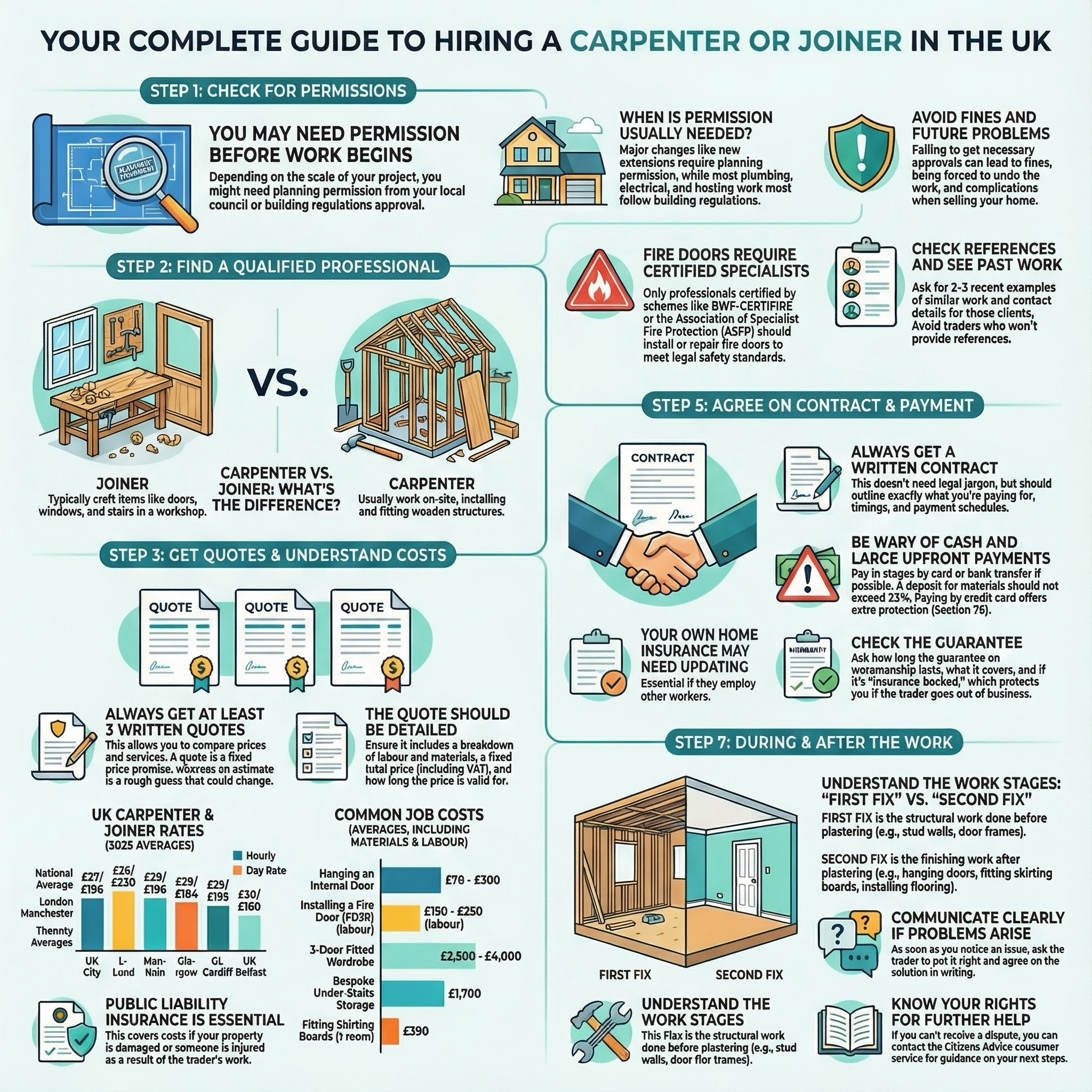
Carpenter explained
While many homeowners view this as a simple swap, fitting a new door into an older, settled UK frame often requires precision carpentry. Professional installation ensures the door hangs "true" and operates smoothly without sticking or dragging on carpets.
| Item | Low £ | High £ | Notes |
|---|---|---|---|
| Labour (per door) | £100 | £180 | Lower per-door rate for multiple installs. |
| Hollow-core Slab Door | £45 | £95 | Lightweight, budget-friendly options. |
| Solid Oak / Veneer Door | £140 | £350 | Premium feel and better soundproofing. |
| FD30 Fire Door | £120 | £280 | Required for certain rooms/flats. |
| Ironmongery Set | £25 | £75 | Handles, hinges, and latch mechanism. |
| Disposal Fee | £20 | £45 | Per door, including waste transfer notes. |
Total costs are heavily influenced by the door material and the condition of your existing frames. Hardwood doors take longer to plane and chisel than softwood or moulded doors, increasing the labour cost.
Always confirm if your quote includes the cost of the door and handles, or if the carpenter is providing a "labour-only" price for fitting items you have already purchased.
Fitting a door is a classic "deceptively difficult" DIY task. While hanging a door is possible for a confident hobbyist, achieving a consistent 2mm gap in a wonky Victorian frame requires professional-grade planes and sharp chisels.
If you are installing fire doors (FD30 or FD60), professional installation is highly recommended to ensure compliance with UK Building Regulations. A poorly fitted fire door may fail to provide the required 30 minutes of protection in an emergency.
Yes, but if the doors are warped or the joints have failed, paint is only a temporary cosmetic fix. New doors provide better sound insulation and a more consistent look throughout the home.
It is best practice to buy new hinges. Old hinges are often caked in paint or slightly bent, which can prevent a new door from hanging perfectly straight.
Most "hollow core" doors have a solid timber frame (lipping) of about 10mm-20mm. Trimming more than this can compromise the door's structural integrity. Always check the manufacturer's instructions.
A pre-hung door comes already attached to a frame (lining). These are easier to install in new builds but can be difficult to retro-fit into existing openings without significant masonry work.
Planing and chiselling create significant wood shavings and fine dust. Most professional carpenters use vacuum-connected power tools, but it is still wise to cover nearby furniture with dust sheets.
This guide was written with AI assistance and is intended for general information only. Prices are estimates based on UK averages and may vary by region. Always get at least three quotes and consult a qualified professional before starting any work.
Ask follow-ups in plain English. The AI explains options, sequencing and what to ask the carpenter — so you walk in informed.
Joinery and Metalwork Installation Guide Scope of Works Survey & design brief – site measure‑up, discuss timber/steel grade, produce sketches/CAD. Workshop ...
READ GUIDE →GuideAssembling a chest of drawers is one of the most common yet frustrating home improvement tasks. Whether you have purchased a flat-pack unit from a high-street r...
READ GUIDE →GuideCustom carpentry is the hallmark of a well-finished UK home. Unlike flat-pack furniture, bespoke joinery is designed to fit the unique, often irregular dimensio...
READ GUIDE →GuideLetterbox Repair Guide Scope of Works Initial inspection & measure‑up – check door thickness, sleeve length and draught issues. Remove interior trim & o...
READ GUIDE →GuideFrom squeaky floorboards and sticking doors to more serious issues like timber rot or structural joist damage, carpentry repairs are a staple of UK home mainten...
READ GUIDE →GuideA wobbly or broken dining chair leg doesn't mean your furniture set is destined for the skip. Professional repair restores the structural integrity and aestheti...
READ GUIDE →