Instant
01 · Ask
Ask the AI a follow-up
Got more questions about joinery Scope of Works? Describe the bit you're unsure about — the AI explains options, sequencing and what to ask the carpenter.

What good joinery briefs include — materials, finishes, sequencing, sign-off and snags.
You've read the brief on joinery Scope of Works. Now lean on us to find the right carpenter — and stay in control of the job.
Got more questions about joinery Scope of Works? Describe the bit you're unsure about — the AI explains options, sequencing and what to ask the carpenter.
Costs, timelines, pitfalls and the right questions to ask before any carpenter starts on joinery Scope of Works.
Itemised quotes from up to 3 local carpenters on joinery Scope of Works — so you can compare like-for-like, not lump sums.
Ready when you are
Enter your postcode and get free quotes from local pros.
Four moves that separate a smooth job from a nightmare.
Using timber that hasn't been properly kiln-dried can lead to warping or shrinking once the central heating is turned on.
Gaps between the joinery and the wall occur when the joiner fails to accurately cut the wood to follow the contours of your home.
Using cheap varnishes or failing to seal the end grain can lead to staining and timber degradation over time.
Using low-quality hinges or drawer runners on heavy bespoke doors will lead to sagging and misalignment within months.
Indicative UK ranges and what affects price.
By job type
Quote spread is typically ± 18% — always get 3 quotes.
Carpenter quick-view
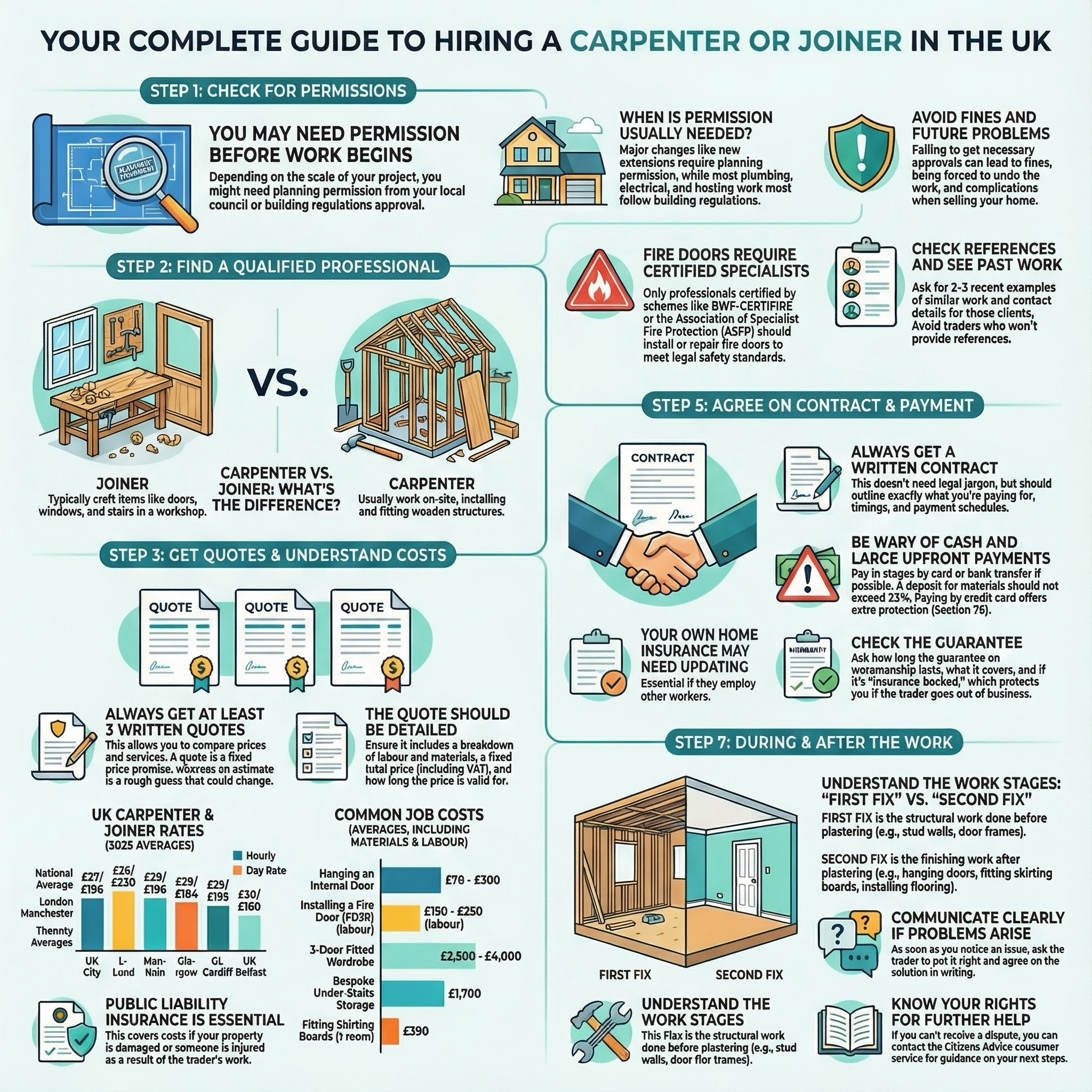
Carpenter explained
Investing in professional joinery doesn't just improve your daily living space; it significantly enhances the market value of your property. From maximizing awkward alcoves to replacing draughty period windows, high-quality timber work provides a level of durability and aesthetic appeal that off-the-shelf alternatives cannot match.
Joinery costs vary significantly based on the timber species chosen and the complexity of the design. Expect to pay a premium for hardwoods like Oak or Walnut compared to softwoods or moisture-resistant MDF.
| Item / Service | Low £ | High £ | Notes |
|---|---|---|---|
| Joiner Day Rate (Labour) | £250 | £450 | Higher rates in London and the SE. |
| Bespoke Fitted Wardrobe | £1,500 | £4,500+ | Per 2-metre run, depending on internals. |
| Handcrafted External Door | £800 | £2,200 | Excludes ironmongery and glazing. |
| Custom Staircase (Softwood) | £1,200 | £3,500 | Straight flight; excludes installation. |
| Alcove Units (Pair) | £900 | £2,000 | Includes shelving and lower cupboards. |
Total project costs are heavily influenced by the "finish" requested. A "prime and paint" finish is generally more affordable than a "clear-grade" hardwood finish which requires flawless timber selection and expert staining.
While basic shelving might be a weekend DIY task, bespoke joinery requires a significant investment in stationary power tools, such as table saws and thicknessers, and a high level of technical skill. Professional joiners understand wood movement—how timber expands and contracts with UK humidity—which is vital for ensuring doors don't stick and joints don't crack.
For any structural work or items like fire doors and external windows, professional installation is essential to ensure compliance with UK Building Regulations and insurance requirements.
A joiner usually works in a workshop creating items by "joining" pieces of wood together (windows, doors, stairs). A carpenter typically works on-site, installing those items or working on structural elements like roof timbers and floor joists.
Hardwood (Oak, Walnut, Sapele) is more durable and aesthetically pleasing but more expensive. Softwood (Pine, Larch) is cost-effective and great for painted finishes, but it is more prone to denting and requires more maintenance outdoors.
Most joiners can source ironmongery for you, often at a trade discount. However, many homeowners prefer to buy their own handles to match their specific interior design style.
Indoor joinery usually only needs dusting and the occasional wipe with a damp cloth. Oil-finished wood will require a fresh coat of oil every 12–24 months to maintain its lustre and protection.
Yes, this is a core skill of a bench joiner. They can often grind custom cutters for their machinery to perfectly replicate the profile of your existing Victorian or Edwardian skirting and architraves.
This guide was written with AI assistance and is intended for general information only. Prices are estimates based on UK averages and may vary by region. Always get at least three quotes and consult a qualified professional before starting any work.
Ask follow-ups in plain English. The AI explains options, sequencing and what to ask the carpenter — so you walk in informed.
Joinery and Metalwork Installation Guide Scope of Works Survey & design brief – site measure‑up, discuss timber/steel grade, produce sketches/CAD. Workshop ...
READ GUIDE →GuideAssembling a chest of drawers is one of the most common yet frustrating home improvement tasks. Whether you have purchased a flat-pack unit from a high-street r...
READ GUIDE →GuideCustom carpentry is the hallmark of a well-finished UK home. Unlike flat-pack furniture, bespoke joinery is designed to fit the unique, often irregular dimensio...
READ GUIDE →GuideLetterbox Repair Guide Scope of Works Initial inspection & measure‑up – check door thickness, sleeve length and draught issues. Remove interior trim & o...
READ GUIDE →GuideFrom squeaky floorboards and sticking doors to more serious issues like timber rot or structural joist damage, carpentry repairs are a staple of UK home mainten...
READ GUIDE →GuideA wobbly or broken dining chair leg doesn't mean your furniture set is destined for the skip. Professional repair restores the structural integrity and aestheti...
READ GUIDE →