Instant
01 · Ask
Ask the AI a follow-up
Got more questions about staircase newel creation? Describe the bit you're unsure about — the AI explains options, sequencing and what to ask the carpenter.

Bespoke staircase newel — oak, painted softwood or steel, turned or boxed to design.
You've read the brief on staircase newel creation. Now lean on us to find the right carpenter — and stay in control of the job.
Got more questions about staircase newel creation? Describe the bit you're unsure about — the AI explains options, sequencing and what to ask the carpenter.
Costs, timelines, pitfalls and the right questions to ask before any carpenter starts on staircase newel creation.
Itemised quotes from up to 3 local carpenters on staircase newel creation — so you can compare like-for-like, not lump sums.
Ready when you are
Enter your postcode and get free quotes from local pros.
Four moves that separate a smooth job from a nightmare.
Caused by fixing the post only to the floorboards rather than the joists. A professional will always "block out" the joists for a solid fix.
Using unseasoned wood can lead to the post warping or splitting once the central heating is turned on in winter.
In oak installations, using a "laminated" post next to "solid" rails can create a jarring visual difference.
Removing a newel post that is actually supporting the weight of the landing can cause ceiling cracks or structural sagging.
Indicative UK ranges and what affects price.
By job type
Quote spread is typically ± 18% — always get 3 quotes.
Carpenter quick-view
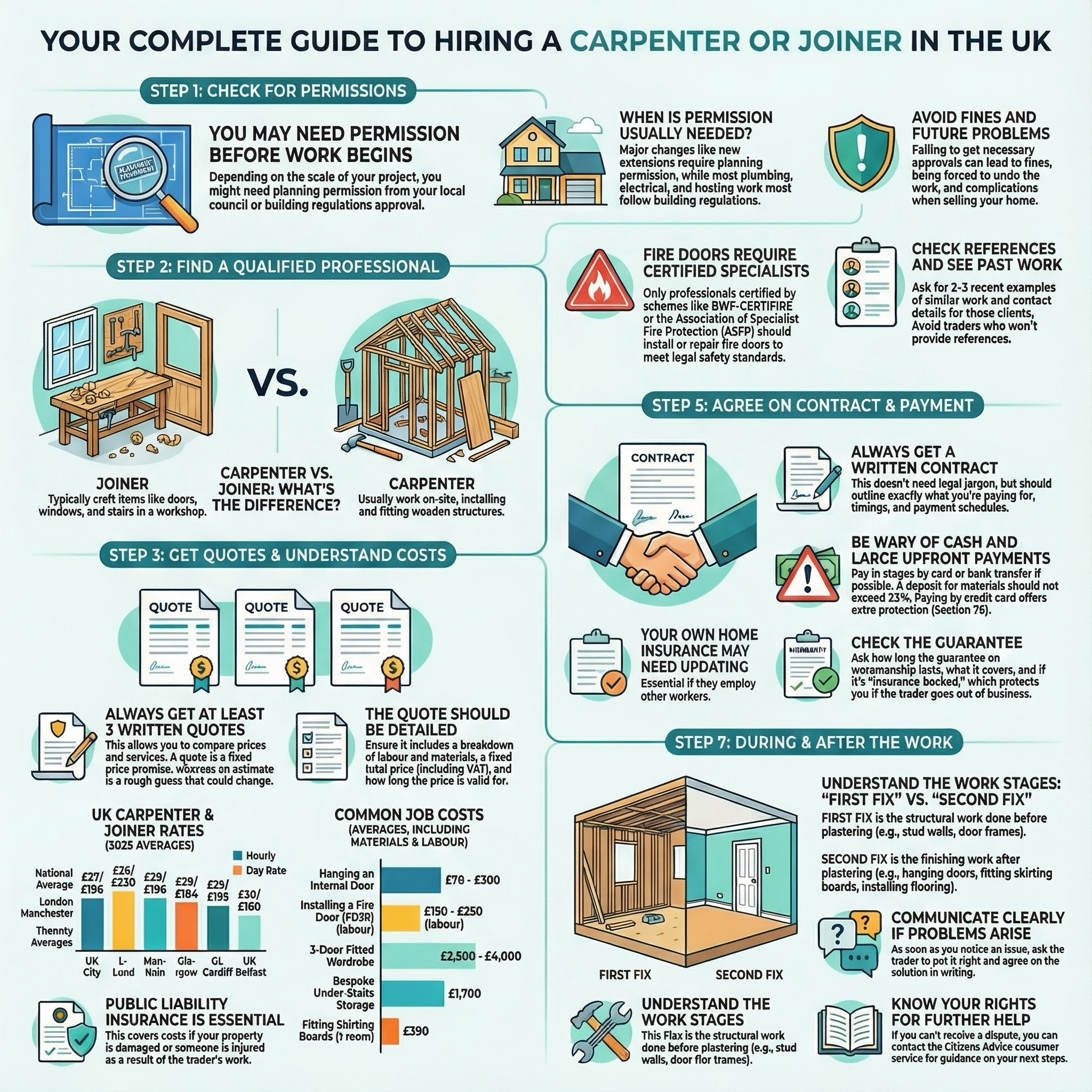
Carpenter explained
For UK homeowners, a well-crafted newel post is more than just a decorative feature; it is a vital safety component that must withstand decades of daily pressure. Professional installation ensures the post is correctly tied into the floor joists or the stair stringer, preventing the common "wobbly" handrail syndrome found in many older properties.
| Item | Low £ | High £ | Notes |
|---|---|---|---|
| Standard Softwood Newel (Supply & Fit) | £250 | £450 | Basic pine or hemlock, usually painted. |
| Solid Oak Newel (Supply & Fit) | £500 | £850 | Premium hardwood including oiling/sealing. |
| Bespoke Hand-Turned Newel | £900 | £1,600 | Custom matched to period designs. |
| Half-Newel (Wall Mounted) | £150 | £300 | Fixed to the landing wall for rail termination. |
| Labour Only (Daily Rate) | £250 | £450 | Varies by region and joiner expertise. |
Material choice is the biggest price driver, with European Oak costing significantly more than standard Pine. If your project requires structural reinforcement of the floor joists to support the post, expect labour costs to increase by £150–£300.
While a confident DIYer can replace a decorative newel cap, replacing the post itself is a high-stakes task. The newel post is a structural element; if it is not secured correctly to the floor joists, the entire balustrade becomes unsafe.
Professional carpenters use specialist "zip bolts" or traditional deep-tenon joinery that a DIYer may struggle to execute without professional-grade routing equipment. Always hire a professional if the post supports the weight of the staircase or if you are unsure of the floor's structural integrity.
Staircase work in the UK must comply with Building Regulations Part K (Protection from falling, collision and impact).
Yes. Most modern renovations involve cutting the old post down to a "base stub" and using a newel turner or a metal connector to install a new timber post on top. This avoids damaging the stairs and floor.
Oak is the gold standard for durability and aesthetics. However, if you plan to paint the staircase, Ash or even high-quality Pine are more cost-effective options that provide excellent structural strength.
This is usually due to the timber shrinking over time or the mechanical fixings loosening. A carpenter can often fix this by "injecting" resin or installing hidden structural screws (Clever-Bulls) to tighten the connection to the joist.
While not strictly required for strength, a half-newel provides a much cleaner aesthetic and a stronger termination point for the handrail than simply "bolting" the rail to the plasterwork.
Absolutely. As long as the base is structurally sound, you can fit almost any style of post. However, you must ensure the new post height matches your existing handrail to remain compliant with Building Regs.
This guide was written with AI assistance and is intended for general information only. Prices are estimates based on UK averages and may vary by region. Always get at least three quotes and consult a qualified professional before starting any work.
Ask follow-ups in plain English. The AI explains options, sequencing and what to ask the carpenter — so you walk in informed.
Joinery and Metalwork Installation Guide Scope of Works Survey & design brief – site measure‑up, discuss timber/steel grade, produce sketches/CAD. Workshop ...
READ GUIDE →GuideAssembling a chest of drawers is one of the most common yet frustrating home improvement tasks. Whether you have purchased a flat-pack unit from a high-street r...
READ GUIDE →GuideCustom carpentry is the hallmark of a well-finished UK home. Unlike flat-pack furniture, bespoke joinery is designed to fit the unique, often irregular dimensio...
READ GUIDE →GuideLetterbox Repair Guide Scope of Works Initial inspection & measure‑up – check door thickness, sleeve length and draught issues. Remove interior trim & o...
READ GUIDE →GuideFrom squeaky floorboards and sticking doors to more serious issues like timber rot or structural joist damage, carpentry repairs are a staple of UK home mainten...
READ GUIDE →GuideA wobbly or broken dining chair leg doesn't mean your furniture set is destined for the skip. Professional repair restores the structural integrity and aestheti...
READ GUIDE →