Instant
01 · Ask
Ask the AI a follow-up
Got more questions about wooden Door Repair? Describe the bit you're unsure about — the AI explains options, sequencing and what to ask the carpenter.

Crack, dent, rot or warp — repaired and refinished, often cheaper than replacing the whole door.
You've read the brief on wooden Door Repair. Now lean on us to find the right carpenter — and stay in control of the job.
Got more questions about wooden Door Repair? Describe the bit you're unsure about — the AI explains options, sequencing and what to ask the carpenter.
Costs, timelines, pitfalls and the right questions to ask before any carpenter starts on wooden Door Repair.
Itemised quotes from up to 3 local carpenters on wooden Door Repair — so you can compare like-for-like, not lump sums.
Ready when you are
Enter your postcode and get free quotes from local pros.
Four moves that separate a smooth job from a nightmare.
Timber expands in winter humidity; a door trimmed in winter may have excessive gaps in summer.
Over time, screws can pull loose from the frame, causing the door to sag and damage the floor.
Common at the base of external frames where water pools; if not cut out, it will spread through the entire structure.
Years of thick paint can prevent latches and hinges from operating smoothly, often mistaken for structural failure.
Indicative UK ranges and what affects price.
By job type
Quote spread is typically ± 18% — always get 3 quotes.
Carpenter quick-view
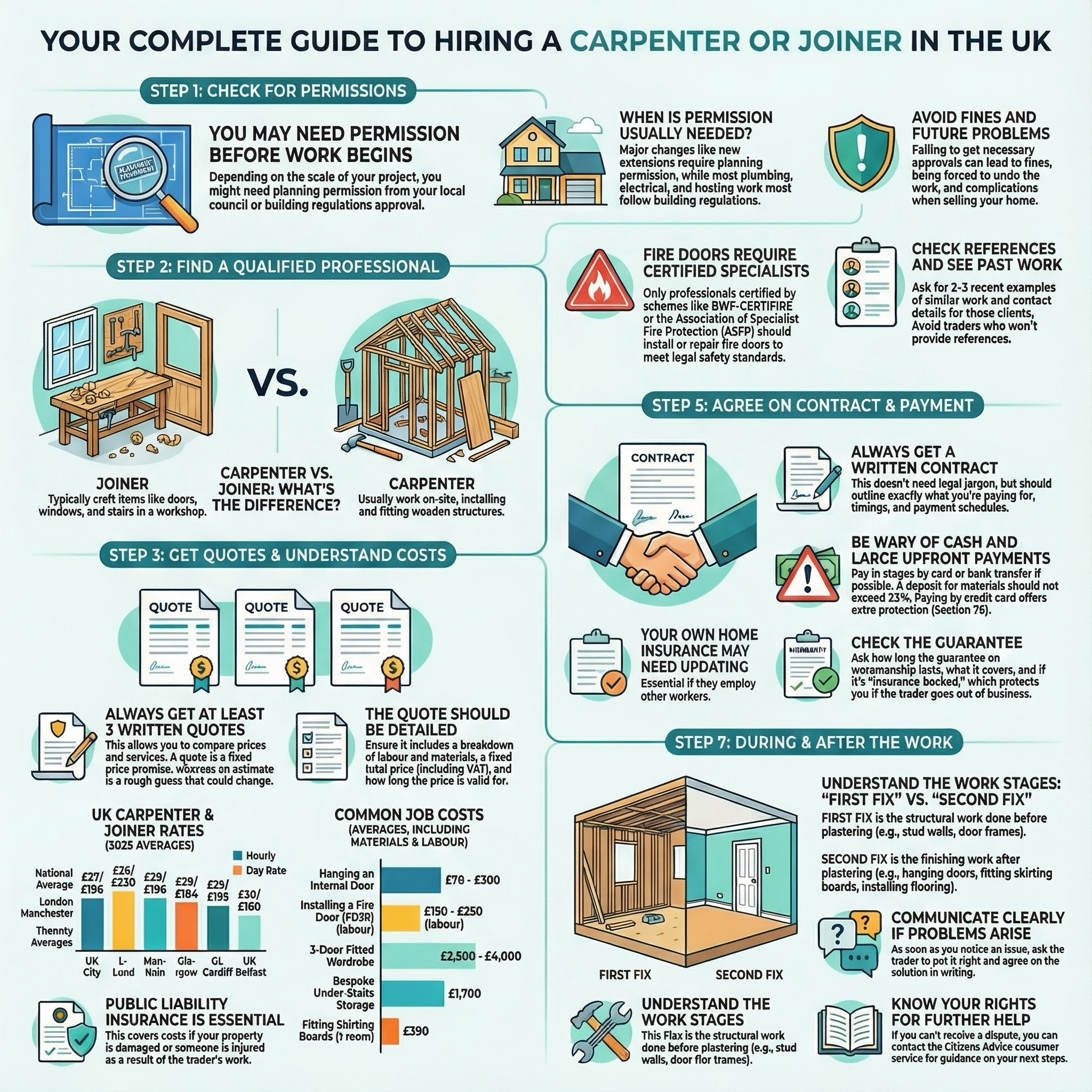
Carpenter explained
Repairing a high-quality timber door is usually more cost-effective and sustainable than a full replacement. Whether it is a sticking internal door or a weathered Victorian front door, professional carpentry can restore both functionality and security to your home.
| Item | Low £ | High £ | Notes |
|---|---|---|---|
| Minor Adjustment / Planing | £80 | £150 | Fixing a single sticking door. |
| Rot Repair (Splicing Timber) | £150 | £350 | Includes materials and labour. |
| Hinge & Hardware Replacement | £100 | £200 | Labour plus mid-range ironmongery. |
| Full External Door Refurbishment | £400 | £850 | Stripping, repairing, and re-hanging. |
| Carpenter Day Rate | £250 | £450 | Varies by region (higher in London). |
Costs are influenced by the timber species; repairing a bespoke solid oak door requires more specialised skill and expensive materials than a standard pine internal door. Emergency call-outs for secured entry repairs will also command a premium.
While basic tasks like oiling hinges or light sanding are suitable for DIY, structural repairs should be left to a professional carpenter. Hanging a door or splicing timber requires precision tools and an understanding of grain direction to prevent future splitting.
Warning: If you are repairing a fire door (common in flats or between a garage and a house), any work must be performed by a competent person to ensure the door retains its fire-rating integrity under UK Building Regulations.
Minor warping can sometimes be corrected by adjusting the stop beads or using tensioning bars, but severe "twisting" often requires door replacement as the timber's internal stresses are permanent.
For standard internal hollow-core doors, replacement is usually cheaper. For solid oak, mahogany, or period front doors, repair is significantly more cost-effective than buying a like-for-like replacement.
Timber is hygroscopic, meaning it absorbs moisture from the damp UK winter air and expands. A carpenter can plane the specific "rubbing" points to allow for this seasonal movement.
A carpenter can "rise" the door by removing it and planing the bottom edge, or by installing rising butt hinges which lift the door slightly as it opens.
Small holes can be filled and painted, but because veneer is a very thin layer of real wood over a core, it is difficult to "patch" invisibly if you intend to leave the wood stained rather than painted.
This guide was written with AI assistance and is intended for general information only. Prices are estimates based on UK averages and may vary by region. Always get at least three quotes and consult a qualified professional before starting any work.
Ask follow-ups in plain English. The AI explains options, sequencing and what to ask the carpenter — so you walk in informed.
Joinery and Metalwork Installation Guide Scope of Works Survey & design brief – site measure‑up, discuss timber/steel grade, produce sketches/CAD. Workshop ...
READ GUIDE →GuideAssembling a chest of drawers is one of the most common yet frustrating home improvement tasks. Whether you have purchased a flat-pack unit from a high-street r...
READ GUIDE →GuideCustom carpentry is the hallmark of a well-finished UK home. Unlike flat-pack furniture, bespoke joinery is designed to fit the unique, often irregular dimensio...
READ GUIDE →GuideLetterbox Repair Guide Scope of Works Initial inspection & measure‑up – check door thickness, sleeve length and draught issues. Remove interior trim & o...
READ GUIDE →GuideFrom squeaky floorboards and sticking doors to more serious issues like timber rot or structural joist damage, carpentry repairs are a staple of UK home mainten...
READ GUIDE →GuideA wobbly or broken dining chair leg doesn't mean your furniture set is destined for the skip. Professional repair restores the structural integrity and aestheti...
READ GUIDE →