Instant
01 · Ask
Ask the AI a follow-up
Got more questions about upholstery stain cleaning? Describe the bit you're unsure about — the AI explains options, sequencing and what to ask the carpet & upholstery cleaning.

Pet, food, sweat or unknown spill — treated with fabric-safe chemistry and finished dry.
You've read the brief on upholstery stain cleaning. Now lean on us to find the right carpet & upholstery cleaning — and stay in control of the job.
Got more questions about upholstery stain cleaning? Describe the bit you're unsure about — the AI explains options, sequencing and what to ask the carpet & upholstery cleaning.
Costs, timelines, pitfalls and the right questions to ask before any carpet & upholstery cleaning starts on upholstery stain cleaning.
Itemised quotes from up to 3 local carpet & upholstery cleanings on upholstery stain cleaning — so you can compare like-for-like, not lump sums.
Ready when you are
Enter your postcode and get free quotes from local pros.
Four moves that separate a smooth job from a nightmare.
If the technician uses too much water or has poor suction, the internal padding can stay damp, leading to musty smells or internal rot.
This usually happens when high heat is applied to natural fibres like cotton or linen without proper tension.
This occurs when a deep stain is "cleaned" on the surface but travels back up the fibres as the item dries. A pro will use specific drying techniques to prevent this.
Using high-pH cleaners on unstable dyes can cause colours to run into each other.
Indicative UK ranges and what affects price.
By job type
Quote spread is typically ± 18% — always get 3 quotes.
Carpet & Upholstery Cleaning quick-view
Carpet & Upholstery Cleaning explained
Whether you are dealing with a red wine spill on a velvet sofa or general grubbiness on a family armchair, hiring a specialist ensures the right chemistry is used for your specific fabric. Attempting to scrub out stains without professional knowledge often leads to permanent watermarks or chemical damage.
Pricing for upholstery cleaning depends largely on the size of the item and the delicacy of the fabric. Most UK specialists have a minimum call-out charge to cover their travel and equipment setup costs.
| Item / Service | Low £ | High £ | Notes |
|---|---|---|---|
| Minimum Call-out Fee | £65 | £95 | Covers travel and initial 30-60 mins. |
| Armchair (Standard) | £40 | £70 | Price per chair; discounts for pairs. |
| 2-Seater Sofa | £60 | £110 | Synthetic fabrics are usually cheaper. |
| 3-Seater Sofa | £80 | £150 | Increases for loose back/base cushions. |
| Corner / L-Shape Sofa | £120 | £250 | Depends on the number of sections. |
| Fabric Protection Treatment | £20 | £50 | Per item; helps prevent future stains. |
Factors that increase the price include delicate fabrics like silk or viscose, heavy pet hair removal, and the need for specialist odour neutralisers for biological "accidents." Prices generally include VAT and all necessary cleaning solutions.
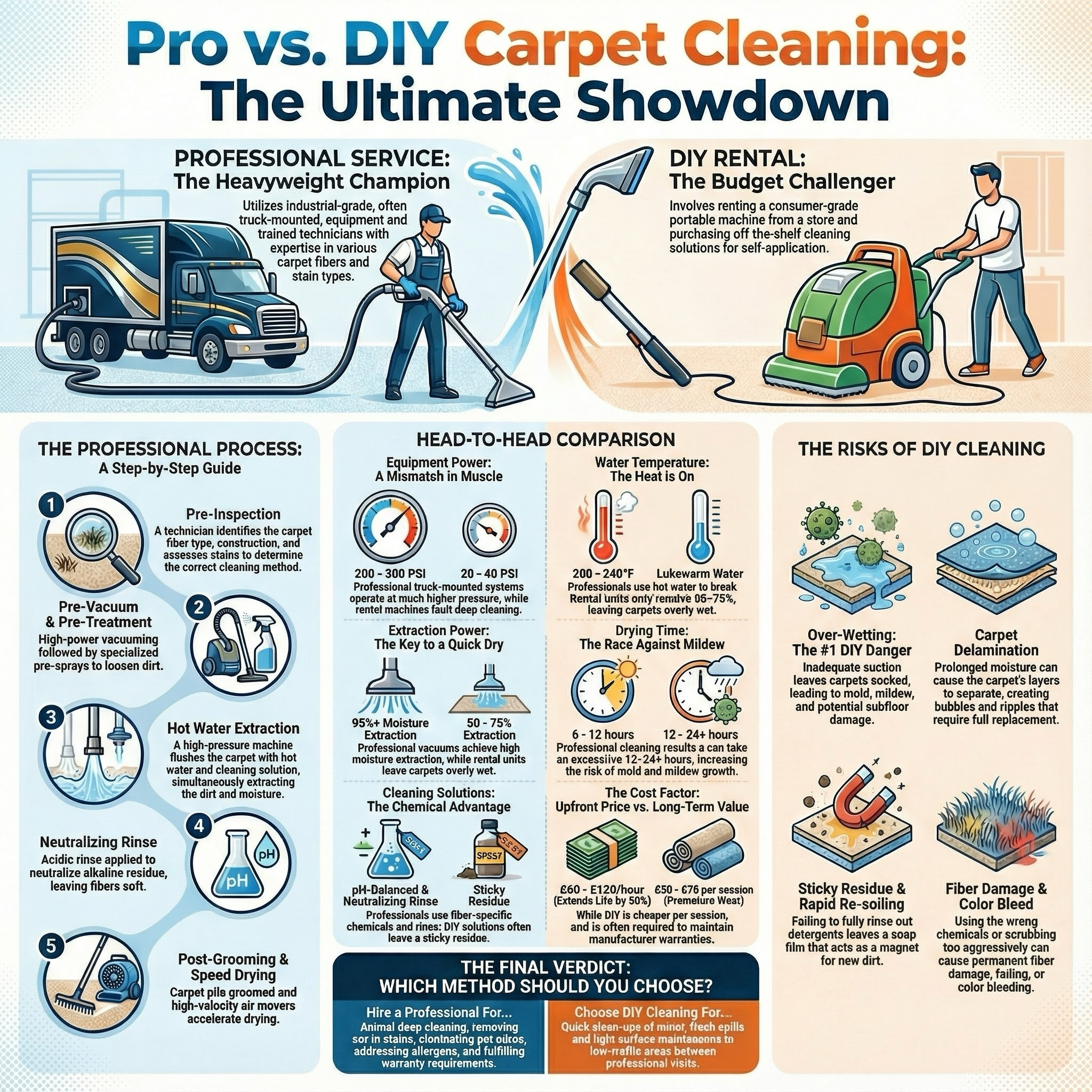
While you can rent a "carpet doctor" style machine from a local supermarket, they are rarely powerful enough for deep upholstery cleaning. Professional machines have significantly higher suction, meaning they leave less water in your furniture, which prevents mould growth. Furthermore, professionals carry a range of pH-balanced chemicals; using the wrong supermarket spray on a wool-mix sofa can cause "browning" or permanent fibre distortion.
Expert Tip: If you spill something, blot it immediately with a clean white cloth. Never scrub, as this pushes the stain deeper and can fray the fabric fibres permanently.
Questions to ask:
While professionals can remove about 90-95% of common stains, some substances like permanent ink, bleach, or certain hair dyes can permanently alter the fabric's colour. A pro will manage your expectations after the initial inspection.
Yes, especially for new or freshly cleaned furniture. It creates a hydrophobic barrier that gives you time to blot up spills before they soak into the fibres, making future professional cleans more effective.
For a typical UK household, a professional clean every 12 to 18 months is recommended. If you have pets or allergy sufferers, every 6 to 12 months is better to manage dander and dust mites.
Most modern professional cleaning solutions are citrus-based or odourless. Any slight "clean" scent should dissipate within a few hours as the furniture dries.
Yes. Specialists use solvent-based cleaning methods or "dry foam" for these items. It is vital to hire a pro for these, as any water contact can ruin the fabric instantly.
This guide was written with AI assistance and is intended for general information only. Prices are estimates based on UK averages and may vary by region. Always get at least three quotes and consult a qualified professional before starting any work.
Ask follow-ups in plain English. The AI explains options, sequencing and what to ask the carpet & upholstery cleaning — so you walk in informed.
For UK homeowners and professional cleaners alike, a carpet cleaning machine is a significant investment. Whether it is a high-end domestic model or a professio...
READ GUIDE →GuideProfessional sofa and furniture sanitising goes far beyond a quick vacuum. For UK homeowners, it is an essential service for removing deep-seated allergens, bac...
READ GUIDE →GuideProfessional carpet and upholstery cleaning is more than just a cosmetic fix for a tired-looking room. In the UK, where damp weather and high footfall are commo...
READ GUIDE →GuideMaintaining a clean office carpet is essential for more than just aesthetics. In the UK, where damp weather is common, commercial carpets act as a giant filter,...
READ GUIDE →GuideWool carpets are a premium investment for UK homeowners, offering natural durability, fire resistance, and superior insulation. However, wool is a delicate prot...
READ GUIDE →GuideProfessional carpet cleaning is more than just a cosmetic fix; it is a vital maintenance task for any UK home. High-quality cleaning removes deep-seated allerge...
READ GUIDE →