Instant
01 · Ask
Ask the AI a follow-up
Got more questions about carpet fitting hall, landing, and stairs? Describe the bit you're unsure about — the AI explains options, sequencing and what to ask the carpets.

Hard-wearing carpet with a stair runner or fully fitted — measured, ordered, fitted in a day.
You've read the brief on carpet fitting hall, landing, and stairs. Now lean on us to find the right carpets — and stay in control of the job.
Got more questions about carpet fitting hall, landing, and stairs? Describe the bit you're unsure about — the AI explains options, sequencing and what to ask the carpets.
Costs, timelines, pitfalls and the right questions to ask before any carpets starts on carpet fitting hall, landing, and stairs.
Itemised quotes from up to 3 local carpetss on carpet fitting hall, landing, and stairs — so you can compare like-for-like, not lump sums.
Ready when you are
Enter your postcode and get free quotes from local pros.
Four moves that separate a smooth job from a nightmare.
If the underlay is too thin, you may feel the sharp pins of the gripper rods through the carpet. Always pair your carpet with the recommended underlay thickness.
Fitting new carpet won't fix structural squeaks. Ask your fitter to screw down loose treads before the underlay goes down.
In halls, light can make the carpet look "shaded." Ensure the fitter lays the pile running towards the entrance for the best aesthetic.
On stairs, if the carpet isn't cut wide enough, gaps can appear at the sides (the "strings"). A professional will "tuck" these for a seamless finish.
Indicative UK ranges and what affects price.
By job type
Quote spread is typically ± 18% — always get 3 quotes.
Carpets quick-view
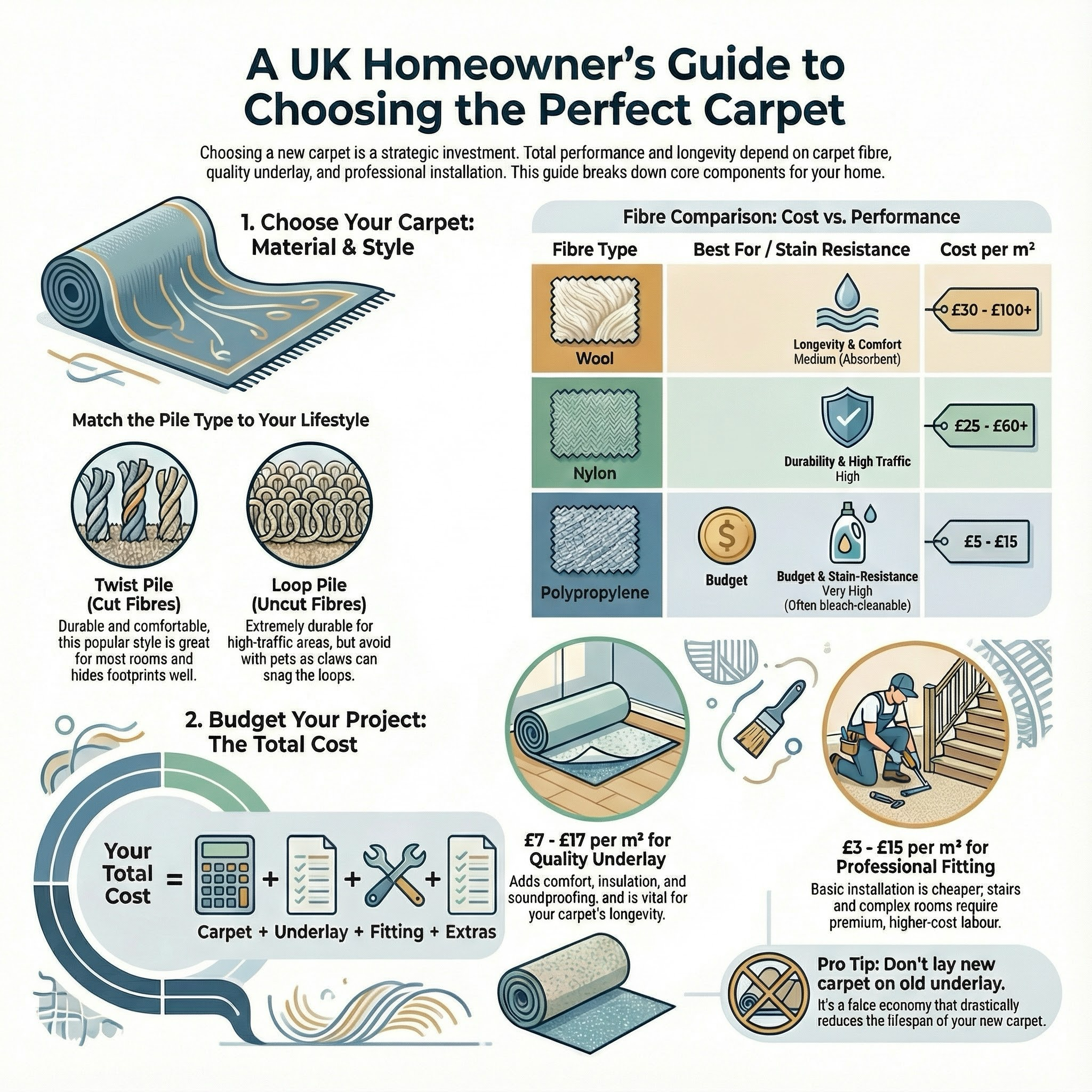
Carpets explained
A professional carpet fitting for these areas involves more than just laying fabric; it requires expert tensioning, neat joins in doorways, and careful manipulation around spindles and "winders" (curved steps). Investing in a quality installation ensures your home's "spine" remains attractive and safe for years to come.
Prices vary based on the complexity of your staircase (e.g., straight vs. winding) and the quality of the materials chosen. The figures below reflect 2025/26 UK averages including VAT.
| Item | Low £ | High £ | Notes |
|---|---|---|---|
| Labour (Fitting Only) | £250 | £500 | Standard 13-step flight and landing. |
| Mid-Range Carpet (per m²) | £20 | £45 | Wool-mix or high-quality polyprop. |
| Underlay & Grippers | £120 | £280 | Based on a standard hall/landing area. |
| Door Bars / Thresholds | £10 | £40 | Per bar (standard vs. luxury metal). |
| Waste Disposal | £40 | £90 | Removal of old carpet and underlay. |
| Total Project Cost | £650 | £1,400+ | Typical UK 3-bed semi-detached. |
Expect to pay a premium for "winders" (triangular steps) or bullnose steps (rounded bottom steps), as these require significantly more time and skill to wrap correctly. Patterned carpets also increase costs due to the extra wastage required for matching.
While DIY carpet fitting is possible in a square bedroom, the hall, landing, and stairs should almost always be left to a professional. Stairs are technically demanding; if the carpet isn't tensioned perfectly using a knee kicker, it will "ruck" or slip, creating a major fall hazard.
Professional fitters carry public liability insurance and provide a guarantee on their joins—peace of mind that is essential for the most used walkway in your home.
It is rarely recommended. Underlay flattens over time, especially on stairs. Reusing old underlay will cause your new carpet to wear out twice as fast and may void the manufacturer's warranty.
Paint them before, but leave at least 3-5 days for the paint to fully cure. Carpet fitting is a high-impact job; fresh paint is easily scuffed by the stiff backing of the carpet.
An 80/20 wool-nylon blend is the industry gold standard. It offers the resilience of wool with the durability of synthetic fibres, preventing the pile from "flattening" on the stair nosings.
Most fitters expect the hall and landing to be clear. Some will move heavy items for an additional fee, but this must be agreed upon in advance to ensure they have the necessary man-power.
This is normal for "cut pile" carpets, especially wool. It is simply short fibres left over from the manufacturing process. Regular vacuuming for the first few weeks will resolve this.
This guide was written with AI assistance and is intended for general information only. Prices are estimates based on UK averages and may vary by region. Always get at least three quotes and consult a qualified professional before starting any work.
Ask follow-ups in plain English. The AI explains options, sequencing and what to ask the carpets — so you walk in informed.
New flooring is one of the most impactful upgrades you can make to a UK home. Beyond the immediate aesthetic boost, high-quality flooring improves insulation, r...
READ GUIDE →GuideLaminate flooring remains one of the most popular choices for UK homeowners, offering the aesthetic of real hardwood with significantly higher durability and ea...
READ GUIDE →GuideInstalling new carpet is one of the most effective ways to instantly improve the comfort and insulation of your home. Whether you are opting for a durable wool-...
READ GUIDE →GuideFloor screeding is the process of applying a blended mixture of cement and graded sand (or a specialized liquid compound) to a structural concrete subfloor. For...
READ GUIDE →GuideModern vinyl flooring has evolved far beyond the basic "lino" of the past. Today, UK homeowners can choose from high-end sheet vinyl, Luxury Vinyl Tiles (LVT), ...
READ GUIDE →GuideRefinishing a wooden floor is one of the most effective ways to restore character and add significant value to a UK home. Whether you have discovered original V...
READ GUIDE →