Instant
01 · Ask
Ask the AI a follow-up
Got more questions about floor Sanding and Refinishing? Describe the bit you're unsure about — the AI explains options, sequencing and what to ask the carpets.

Hardwood, parquet or pine — sanded back, gaps filled, stained and sealed to factory finish.
You've read the brief on floor Sanding and Refinishing. Now lean on us to find the right carpets — and stay in control of the job.
Got more questions about floor Sanding and Refinishing? Describe the bit you're unsure about — the AI explains options, sequencing and what to ask the carpets.
Costs, timelines, pitfalls and the right questions to ask before any carpets starts on floor Sanding and Refinishing.
Itemised quotes from up to 3 local carpetss on floor Sanding and Refinishing — so you can compare like-for-like, not lump sums.
Ready when you are
Enter your postcode and get free quotes from local pros.
Four moves that separate a smooth job from a nightmare.
Visible "swirls" or lines caused by rushing the grit sequence or using worn-out sanding belts.
Blotchy patches occurring because the wood was not sanded uniformly or "popped" with water before staining.
Tiny particles trapped in the wet lacquer, creating a sandpaper-like texture on the finished floor.
Usually caused by applying a new finish over an old wax or oil residue that wasn't fully removed.
Indicative UK ranges and what affects price.
By job type
Quote spread is typically ± 18% — always get 3 quotes.
Carpets quick-view
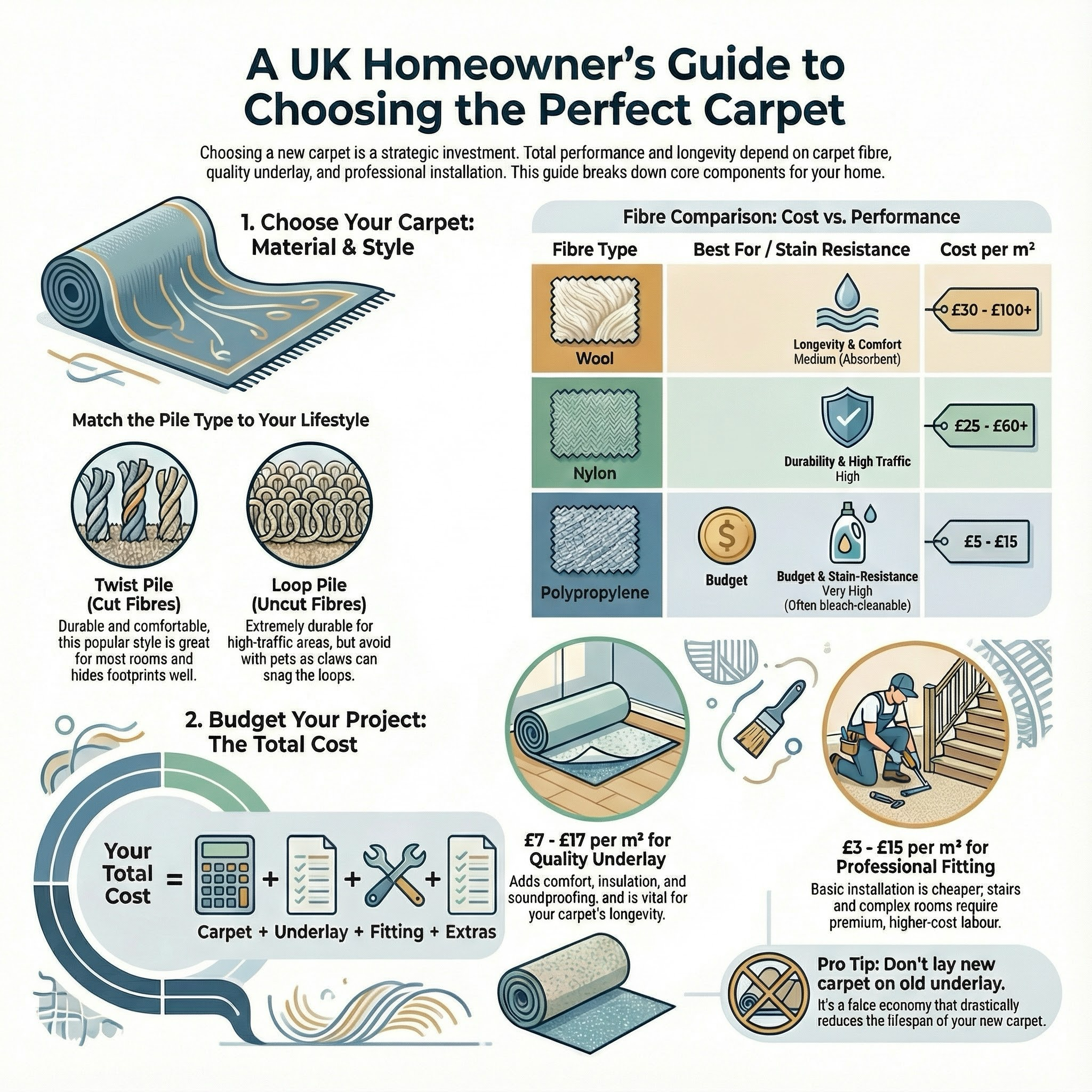
Carpets explained
Beyond aesthetics, refinishing provides a vital protective barrier against moisture and foot traffic. In the UK’s damp climate, a high-quality seal prevents boards from warping and makes the floor significantly easier to clean than carpet, particularly for households with pets or allergy sufferers.
Prices for floor sanding in the UK are typically calculated per square metre, though most contractors will have a minimum day rate for small rooms or hallways. Costs vary based on the condition of the wood and the type of finish requested.
| Service Item | Low £ (per m²) | High £ (per m²) | Notes |
|---|---|---|---|
| Standard Sand & Seal | £25 | £40 | Includes 3 coats of clear lacquer/oil. |
| Sanding & Staining | £35 | £50 | Includes custom colour application. |
| Gap Filling (Resin) | £5 | £12 | Price depends on gap width/quantity. |
| Pine Strip Repairs | £15 | £25 | Per linear metre of replaced board. |
| Minimum Call-out Fee | £350 | £550 | Standard for rooms under 12-15m². |
Factors affecting the final quote include the "hardness" of the wood (oak takes longer than pine), the presence of thick bitumen or paint, and the number of hearths or intricate corners that require manual detailing.
While hire shops offer floor sanders, DIY results often suffer from "chatter marks" or deep gouges caused by inexperienced handling of heavy machinery. Professional-grade equipment features sophisticated dust-extraction systems that keep your home significantly cleaner than standard rental units.
Professional floor finishers use "continuous belt" sanders which provide a much flatter finish than the "drum" sanders typically found in DIY hire centres.
Furthermore, professionals have the expertise to identify wood species and recommend the correct finish. Using the wrong lacquer on a resinous wood can lead to "tannin pull" or peeling, which is costly to rectify.
Modern professional sanding is virtually dust-free. High-end machines are connected to powerful vacuum units that capture the vast majority of particles before they enter the air.
Yes, provided the "wear layer" (the top real wood part) is at least 3mm thick. Most engineered floors can be sanded 1–3 times during their lifespan.
It is best to complete all painting except for the final "gloss" or "top coat" on the skirting boards. Sanding machines may occasionally scuff skirtings, so a final touch-up is usually required after the floor is finished.
Avoid wet mopping; use a damp microfibre mop with a pH-neutral wood cleaner. Place felt pads under all furniture legs and avoid wearing high heels or outdoor shoes on the wood.
Lacquer sits on top of the wood like a varnish, providing a hard-wearing, waterproof seal. Oil penetrates the grain for a more natural look and is easier to "spot repair" if a scratch occurs, though it may require more frequent maintenance.
Sanding removes surface stains and shallow water marks. However, deep-seated "black" pet urine stains or heavy water damage often penetrate the full thickness of the wood and may require the affected boards to be replaced.
This guide was written with AI assistance and is intended for general information only. Prices are estimates based on UK averages and may vary by region. Always get at least three quotes and consult a qualified professional before starting any work.
Ask follow-ups in plain English. The AI explains options, sequencing and what to ask the carpets — so you walk in informed.
New flooring is one of the most impactful upgrades you can make to a UK home. Beyond the immediate aesthetic boost, high-quality flooring improves insulation, r...
READ GUIDE →GuideLaminate flooring remains one of the most popular choices for UK homeowners, offering the aesthetic of real hardwood with significantly higher durability and ea...
READ GUIDE →GuideInstalling new carpet is one of the most effective ways to instantly improve the comfort and insulation of your home. Whether you are opting for a durable wool-...
READ GUIDE →GuideFloor screeding is the process of applying a blended mixture of cement and graded sand (or a specialized liquid compound) to a structural concrete subfloor. For...
READ GUIDE →GuideModern vinyl flooring has evolved far beyond the basic "lino" of the past. Today, UK homeowners can choose from high-end sheet vinyl, Luxury Vinyl Tiles (LVT), ...
READ GUIDE →GuideRefinishing a wooden floor is one of the most effective ways to restore character and add significant value to a UK home. Whether you have discovered original V...
READ GUIDE →