Instant
01 · Ask
Ask the AI a follow-up
Got more questions about flooring Renovation? Describe the bit you're unsure about — the AI explains options, sequencing and what to ask the carpets.

Lift, prep, repair sub-floor and install — full flooring refresh for one room or the whole house.
You've read the brief on flooring Renovation. Now lean on us to find the right carpets — and stay in control of the job.
Got more questions about flooring Renovation? Describe the bit you're unsure about — the AI explains options, sequencing and what to ask the carpets.
Costs, timelines, pitfalls and the right questions to ask before any carpets starts on flooring Renovation.
Itemised quotes from up to 3 local carpetss on flooring Renovation — so you can compare like-for-like, not lump sums.
Ready when you are
Enter your postcode and get free quotes from local pros.
Four moves that separate a smooth job from a nightmare.
If a gap isn't left around the perimeter, laminate and wood floors will buckle and "peak" when the weather changes.
If the subfloor isn't perfectly smooth, imperfections will show through thin LVT or vinyl over time.
Laying wood or LVT over a "green" (damp) concrete screed will lead to adhesive failure or warped boards.
Occurs when flooring is laid over an uneven subfloor without proper levelling, leading to joint failure.
Indicative UK ranges and what affects price.
By job type
Quote spread is typically ± 18% — always get 3 quotes.
Carpets quick-view
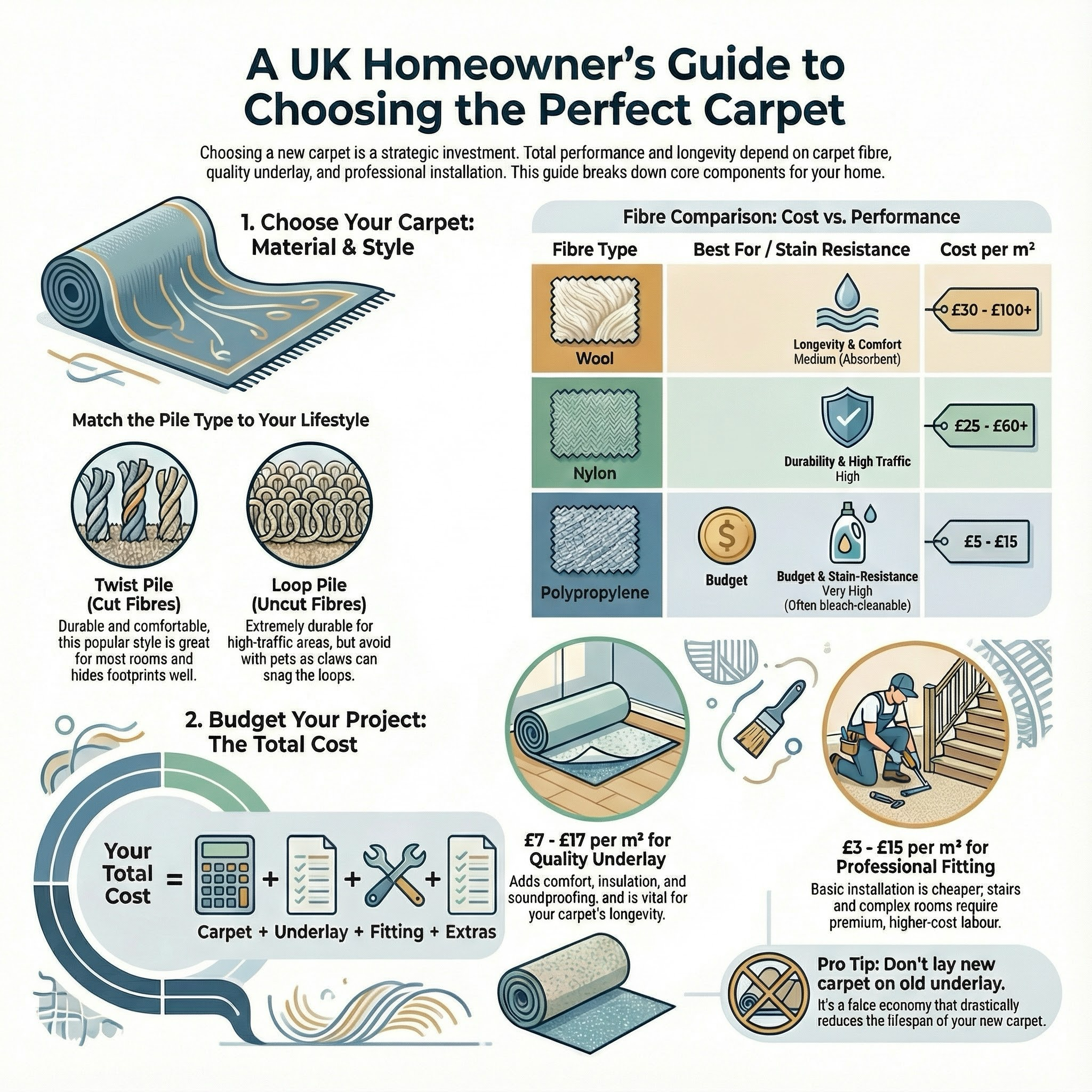
Carpets explained
In the UK's damp climate, choosing the right material and ensuring proper moisture protection is essential to prevent warping or mould. This guide outlines the professional process, realistic costs for 2025/26, and the regulatory standards you need to know before hiring a contractor.
| Item / Service | Low £ | High £ | Notes |
|---|---|---|---|
| Labour (Day Rate) | £150 | £300 | Higher in London and SE. |
| Carpet (Inc. Underlay) | £25 | £65 | Per m²; wool blends cost more. |
| Laminate Flooring | £30 | £70 | Per m²; price includes mid-range boards. |
| LVT (Click or Glue-down) | £45 | £95 | Per m²; includes intensive floor prep. |
| Engineered Wood | £80 | £160 | Per m²; depends on oak thickness/grade. |
| Subfloor Prep (Screeding) | £15 | £25 | Per m² for materials and labour. |
Total costs are heavily influenced by the condition of the subfloor and the complexity of the room's layout. Expect to pay a premium for "herringbone" or "parquet" patterns, which can increase labour time by 50% or more compared to standard straight planks.
While "click-lock" laminate is a popular DIY project, professional installation is highly recommended for LVT, carpet, and solid wood. Professionals possess the specialist tools—such as power stretchers for carpets or moisture meters for concrete—that ensure a long-lasting finish.
If you are installing flooring in a bathroom or kitchen, professional fitting is vital to ensure water-tight seals that prevent subfloor rot.
It is generally discouraged. Laying over old flooring can cause height issues with doors and appliances, and if the old floor moves or fails, your new floor will too. It is always best to strip back to the original subfloor.
For the cleanest finish, yes. Removing skirtings allows the floor to be laid underneath them. If you leave them on, the fitter will use "scotia" or "beading" to cover the expansion gap, which some homeowners find less attractive.
Yes. LVT (Luxury Vinyl Tile) is waterproof and much more durable in high-moisture areas. Laminate, even "water-resistant" types, can swell if water seeps into the joints for prolonged periods.
The general rule is one day of drying time for every millimetre of thickness for the first 40mm. A professional will use a hygrometer to confirm the floor is below 75% Relative Humidity (RH) before fitting.
Some fitters include furniture moving in their service, but many expect rooms to be completely clear. Always clarify this beforehand, as it may incur an extra "handling fee" or require a second person on-site.
This guide was written with AI assistance and is intended for general information only. Prices are estimates based on UK averages and may vary by region. Always get at least three quotes and consult a qualified professional before starting any work.
Ask follow-ups in plain English. The AI explains options, sequencing and what to ask the carpets — so you walk in informed.
New flooring is one of the most impactful upgrades you can make to a UK home. Beyond the immediate aesthetic boost, high-quality flooring improves insulation, r...
READ GUIDE →GuideLaminate flooring remains one of the most popular choices for UK homeowners, offering the aesthetic of real hardwood with significantly higher durability and ea...
READ GUIDE →GuideInstalling new carpet is one of the most effective ways to instantly improve the comfort and insulation of your home. Whether you are opting for a durable wool-...
READ GUIDE →GuideFloor screeding is the process of applying a blended mixture of cement and graded sand (or a specialized liquid compound) to a structural concrete subfloor. For...
READ GUIDE →GuideModern vinyl flooring has evolved far beyond the basic "lino" of the past. Today, UK homeowners can choose from high-end sheet vinyl, Luxury Vinyl Tiles (LVT), ...
READ GUIDE →GuideRefinishing a wooden floor is one of the most effective ways to restore character and add significant value to a UK home. Whether you have discovered original V...
READ GUIDE →