Instant
01 · Ask
Ask the AI a follow-up
Got more questions about hessian matting fitting? Describe the bit you're unsure about — the AI explains options, sequencing and what to ask the carpets.

Sisal, jute or coir matting — stretched, edge-bound and finished to a clean line.
You've read the brief on hessian matting fitting. Now lean on us to find the right carpets — and stay in control of the job.
Got more questions about hessian matting fitting? Describe the bit you're unsure about — the AI explains options, sequencing and what to ask the carpets.
Costs, timelines, pitfalls and the right questions to ask before any carpets starts on hessian matting fitting.
Itemised quotes from up to 3 local carpetss on hessian matting fitting — so you can compare like-for-like, not lump sums.
Ready when you are
Enter your postcode and get free quotes from local pros.
Four moves that separate a smooth job from a nightmare.
Usually caused by poor cutting or lack of a proper threshold bar to protect the "end grain" of the fibres.
Occurs when natural hessian is installed in a damp recess without a proper moisture barrier or breathable adhesive.
Hessian is thick; failing to measure the "undercut" of the door can lead to the door getting stuck on the new mat.
While some shedding is normal for new natural fibres, excessive loss often indicates a low-grade, thin-backed product.
Indicative UK ranges and what affects price.
By job type
Quote spread is typically ± 18% — always get 3 quotes.
Carpets quick-view
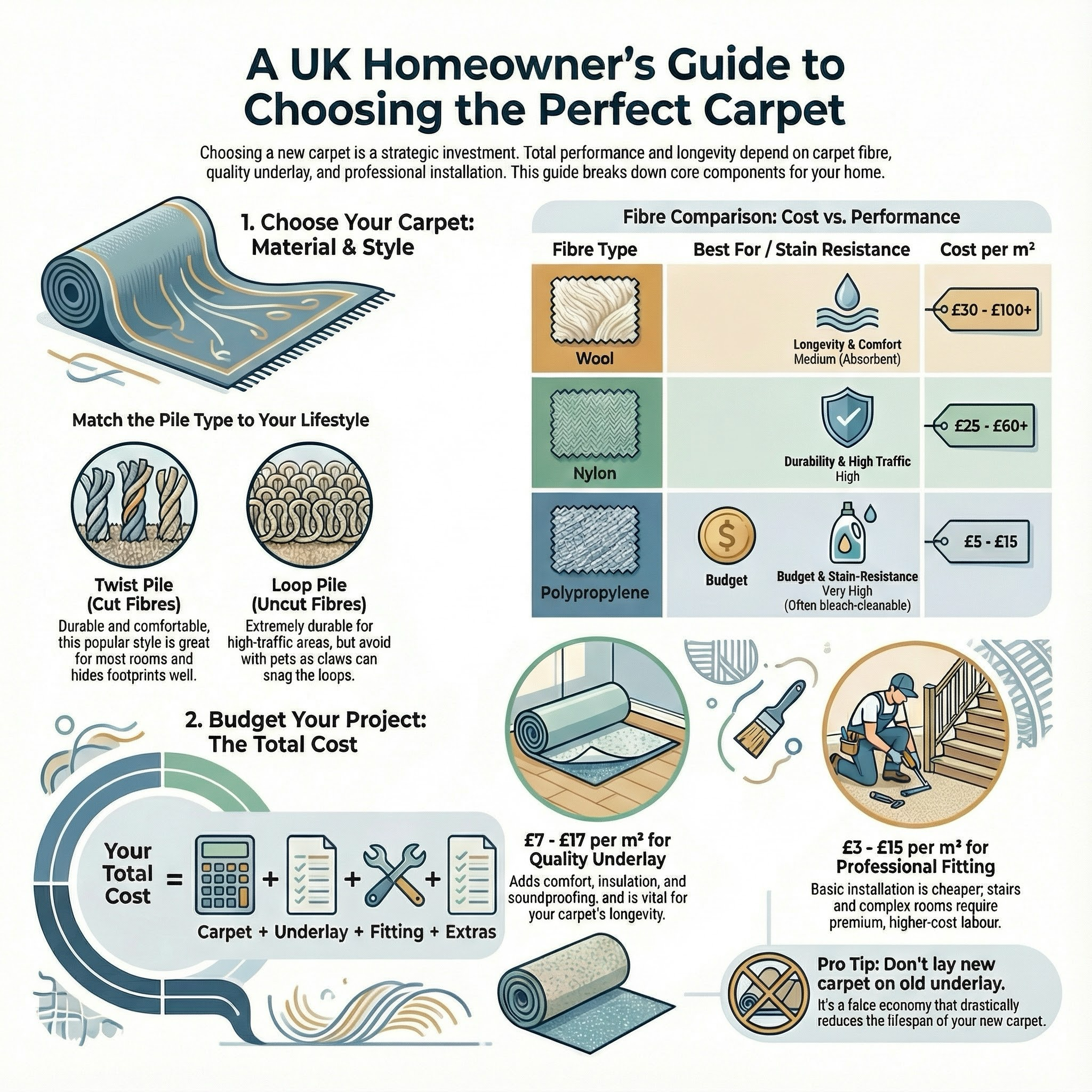
Carpets explained
Whether you are installing a small mat well or a full-width hallway runner, professional fitting ensures the mat sits flush with the floor. This prevents tripping hazards and ensures the heavy-duty material doesn't shift or fray over time.
| Item | Low £ | High £ | Notes |
|---|---|---|---|
| Labour (Minimum Charge) | £75 | £120 | Common for small mat well installations. |
| Hessian/Coir Matting (per m²) | £30 | £65 | Varies by thickness (17mm to 30mm). |
| Adhesives & Grippers | £20 | £50 | Specialist high-tack glue for natural fibres. |
| Threshold Bars | £15 | £45 | Brass, chrome, or oak finishes. |
| Waste Disposal | £10 | £40 | Removal of old, heavy matting. |
Prices are influenced heavily by the thickness of the matting and the complexity of the cuts. A simple rectangular mat well is significantly cheaper than a hallway with multiple doorways and alcoves that require intricate scribing.
While buying a pre-cut mat is a simple DIY task, fitting "off the roll" hessian is physically demanding. The material is incredibly tough to cut accurately, and blunt blades often lead to jagged, fraying edges.
Professional fitters have the heavy-duty equipment needed to ensure a tight fit. If your matting is part of a commercial entrance or a communal area, professional installation is essential to meet UK Health and Safety standards regarding trip hazards.
In the UK, the terms are often used interchangeably for entrance matting. However, coir is made from coconut husks and is much stiffer and more "scrubby," while true hessian is made from jute and is generally softer and used more for backing or decorative rugs.
It is not recommended. Natural fibres like hessian and coir act as powerful insulators (high TOG rating), which can cause your underfloor heating to overheat or become highly inefficient.
Regular vacuuming is essential to remove grit that can grind down the fibres. For stains, use a dry cleaning powder; avoid over-wetting the mat, as natural fibres can shrink or water-stain easily.
Natural fibre mats will "shed" loose fibres for the first few weeks. This is normal and will subside with regular vacuuming. If it continues for months, the mat may be of inferior quality.
For mat wells, a PVC or rubber-backed mat is usually best as it holds the fibres in place and prevents moisture from reaching the subfloor. For loose-laid rugs, a non-slip mesh underlay is required.
Pro Tip: Always order 5-10% more material than your measurements suggest. Natural fibres can be slightly irregular, and you'll need the excess for precision trimming around door frames.
This guide was written with AI assistance and is intended for general information only. Prices are estimates based on UK averages and may vary by region. Always get at least three quotes and consult a qualified professional before starting any work.
Ask follow-ups in plain English. The AI explains options, sequencing and what to ask the carpets — so you walk in informed.
New flooring is one of the most impactful upgrades you can make to a UK home. Beyond the immediate aesthetic boost, high-quality flooring improves insulation, r...
READ GUIDE →GuideLaminate flooring remains one of the most popular choices for UK homeowners, offering the aesthetic of real hardwood with significantly higher durability and ea...
READ GUIDE →GuideInstalling new carpet is one of the most effective ways to instantly improve the comfort and insulation of your home. Whether you are opting for a durable wool-...
READ GUIDE →GuideFloor screeding is the process of applying a blended mixture of cement and graded sand (or a specialized liquid compound) to a structural concrete subfloor. For...
READ GUIDE →GuideModern vinyl flooring has evolved far beyond the basic "lino" of the past. Today, UK homeowners can choose from high-end sheet vinyl, Luxury Vinyl Tiles (LVT), ...
READ GUIDE →GuideRefinishing a wooden floor is one of the most effective ways to restore character and add significant value to a UK home. Whether you have discovered original V...
READ GUIDE →