Instant
01 · Ask
Ask the AI a follow-up
Got more questions about parquet floor repair? Describe the bit you're unsure about — the AI explains options, sequencing and what to ask the carpets.

Loose, cupping or missing blocks — re-glued, sanded back and re-finished to match the original.
You've read the brief on parquet floor repair. Now lean on us to find the right carpets — and stay in control of the job.
Got more questions about parquet floor repair? Describe the bit you're unsure about — the AI explains options, sequencing and what to ask the carpets.
Costs, timelines, pitfalls and the right questions to ask before any carpets starts on parquet floor repair.
Itemised quotes from up to 3 local carpetss on parquet floor repair — so you can compare like-for-like, not lump sums.
Ready when you are
Enter your postcode and get free quotes from local pros.
Four moves that separate a smooth job from a nightmare.
Older adhesives become brittle over time, causing blocks to "pop" up. These must be scraped clean before re-bonding.
Wood is hygroscopic. If the room is too damp, blocks will swell and "tent" (lift in a V-shape). The source of moisture must be fixed first.
Using standard wood filler often results in the filler cracking and falling out. Always use a resin mixed with real wood dust.
Parquet blocks have a "wear layer" above the tongue and groove. Sanding too aggressively can ruin the floor's lifespan.
Indicative UK ranges and what affects price.
By job type
Quote spread is typically ± 18% — always get 3 quotes.
Carpets quick-view
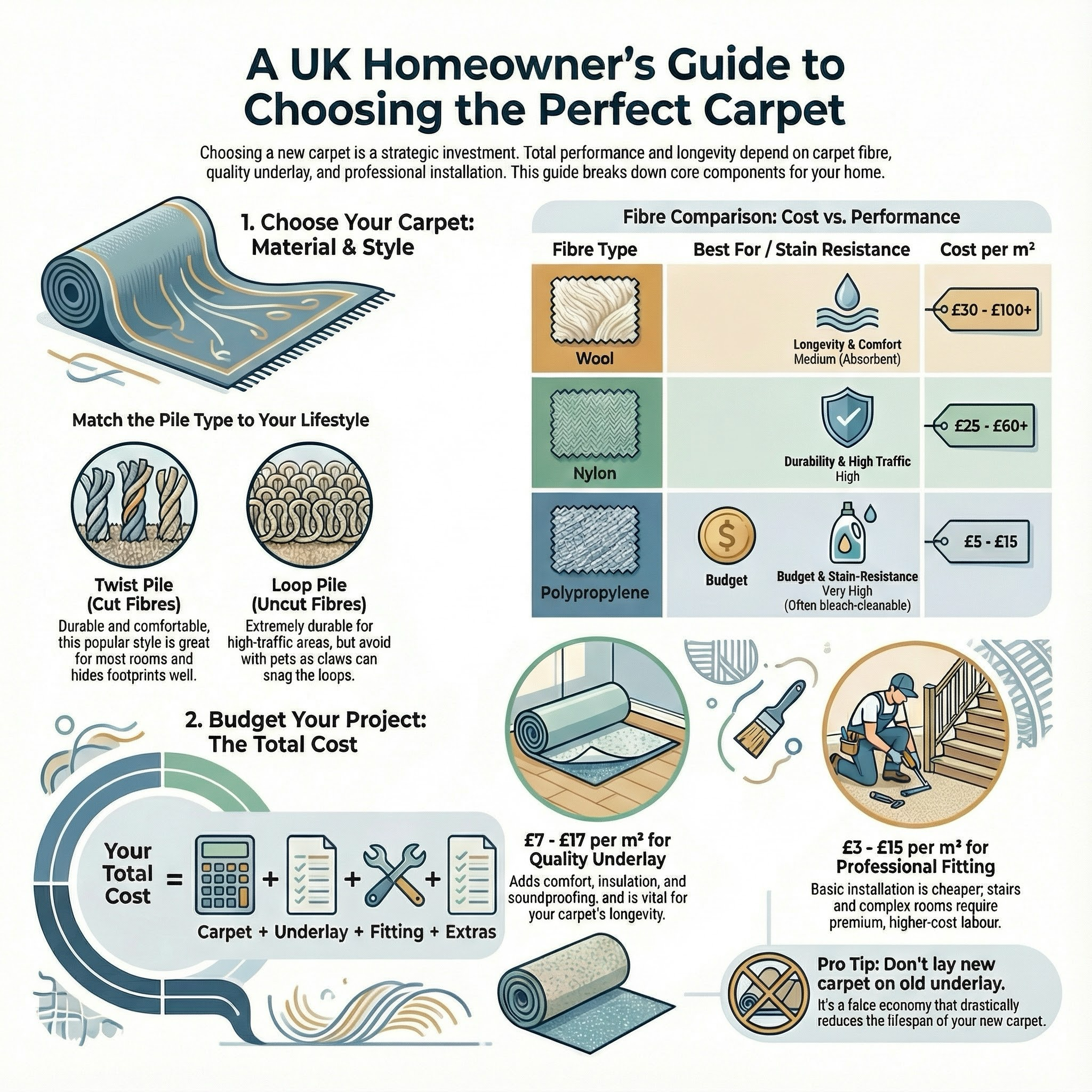
Carpets explained
Repairing a parquet floor is a specialist craft that preserves the character and value of your property. Rather than replacing the entire floor, targeted repairs can restore the structural integrity and aesthetic beauty of patterns like Herringbone, Chevron, or Basket Weave.
The cost of parquet repair depends heavily on the extent of the damage and whether you require a full room sand and seal to blend the repairs perfectly. All prices below include VAT at 20%.
| Item | Low £ | High £ | Notes |
|---|---|---|---|
| Call-out / Minor Repair | £150 | £250 | Fixing a few loose blocks (up to 2 hours). |
| Labour (Per Day) | £250 | £450 | Experienced floor restorer rates vary by region. |
| Reclaimed Timber Blocks | £40 | £120 | Per square metre; rare species cost significantly more. |
| Full Sand & Seal (Small Room) | £500 | £850 | Includes minor repairs and professional finishing. |
| Subfloor Levelling/DPM | £150 | £400 | Required if damp or unevenness is the cause of failure. |
Note: Complexity of the pattern (e.g., a double border or intricate marquetry) will increase labour costs. Expect to pay a premium of 20-30% in London and the South East.
While a keen DIYer can glue down a single loose block, larger parquet repairs are best left to professionals. Parquet patterns require mathematical precision; a 1mm error at the start of a row can lead to massive gaps by the time you reach the wall.
Professional floor restorers use "dust-free" sanding equipment which captures 99% of particles, saving your home from the fine, invasive dust produced by DIY rental machines.
Furthermore, many older UK floors are set in bitumen. Modern adhesives will not bond to old bitumen, and its removal requires specific chemical knowledge and PPE to handle safely.
Look for a flooring specialist rather than a general carpenter, as they will have the specific sanding machinery required for parquet.
Yes, usually. The main issues are gripper rod holes around the perimeter and adhesive residue. These can be filled and sanded out during the restoration process.
If you lift a loose block and the underside is covered in a thick, black, tar-like substance, it is bitumen. This was the standard adhesive in the UK from the 1920s through to the 1960s.
Freshly sanded new wood will always look lighter than 50-year-old wood. However, a skilled pro will use reclaimed timber or apply a subtle tint/stain to blend the repair with the original patina.
Yes, but you must use specific high-temperature flexible adhesives. Standard glues will fail as the wood expands and contracts with the heat cycles.
Absolutely. Reclaimed parquet blocks are widely available in the UK. Even if 20% of the floor is missing, it is usually cheaper and more desirable to repair than to install a modern laminate or engineered floor.
This guide was written with AI assistance and is intended for general information only. Prices are estimates based on UK averages and may vary by region. Always get at least three quotes and consult a qualified professional before starting any work.
Ask follow-ups in plain English. The AI explains options, sequencing and what to ask the carpets — so you walk in informed.
New flooring is one of the most impactful upgrades you can make to a UK home. Beyond the immediate aesthetic boost, high-quality flooring improves insulation, r...
READ GUIDE →GuideLaminate flooring remains one of the most popular choices for UK homeowners, offering the aesthetic of real hardwood with significantly higher durability and ea...
READ GUIDE →GuideInstalling new carpet is one of the most effective ways to instantly improve the comfort and insulation of your home. Whether you are opting for a durable wool-...
READ GUIDE →GuideFloor screeding is the process of applying a blended mixture of cement and graded sand (or a specialized liquid compound) to a structural concrete subfloor. For...
READ GUIDE →GuideModern vinyl flooring has evolved far beyond the basic "lino" of the past. Today, UK homeowners can choose from high-end sheet vinyl, Luxury Vinyl Tiles (LVT), ...
READ GUIDE →GuideRefinishing a wooden floor is one of the most effective ways to restore character and add significant value to a UK home. Whether you have discovered original V...
READ GUIDE →