Instant
01 · Ask
Ask the AI a follow-up
Got more questions about parquet Floor Restoration? Describe the bit you're unsure about — the AI explains options, sequencing and what to ask the carpets.

Full sand-and-finish on Victorian or Edwardian parquet — gaps filled, blocks re-set, lacquered or oiled.
You've read the brief on parquet Floor Restoration. Now lean on us to find the right carpets — and stay in control of the job.
Got more questions about parquet Floor Restoration? Describe the bit you're unsure about — the AI explains options, sequencing and what to ask the carpets.
Costs, timelines, pitfalls and the right questions to ask before any carpets starts on parquet Floor Restoration.
Itemised quotes from up to 3 local carpetss on parquet Floor Restoration — so you can compare like-for-like, not lump sums.
Ready when you are
Enter your postcode and get free quotes from local pros.
Four moves that separate a smooth job from a nightmare.
Old parquet was often set in black bitumen. If the sander gets too hot, the bitumen can melt and seep up between the blocks, staining the finish.
These are tiny horizontal ripples caused by a poorly maintained sander or an unbalanced drum. They only become visible once the lacquer is applied.
Applying a modern lacquer over a floor that was previously waxed without deep-sanding will cause the finish to peel or "fish-eye."
If blocks aren't properly secured before sanding, the machine can catch them, potentially throwing a block across the room and damaging the sander.
Indicative UK ranges and what affects price.
By job type
Quote spread is typically ± 18% — always get 3 quotes.
Carpets quick-view
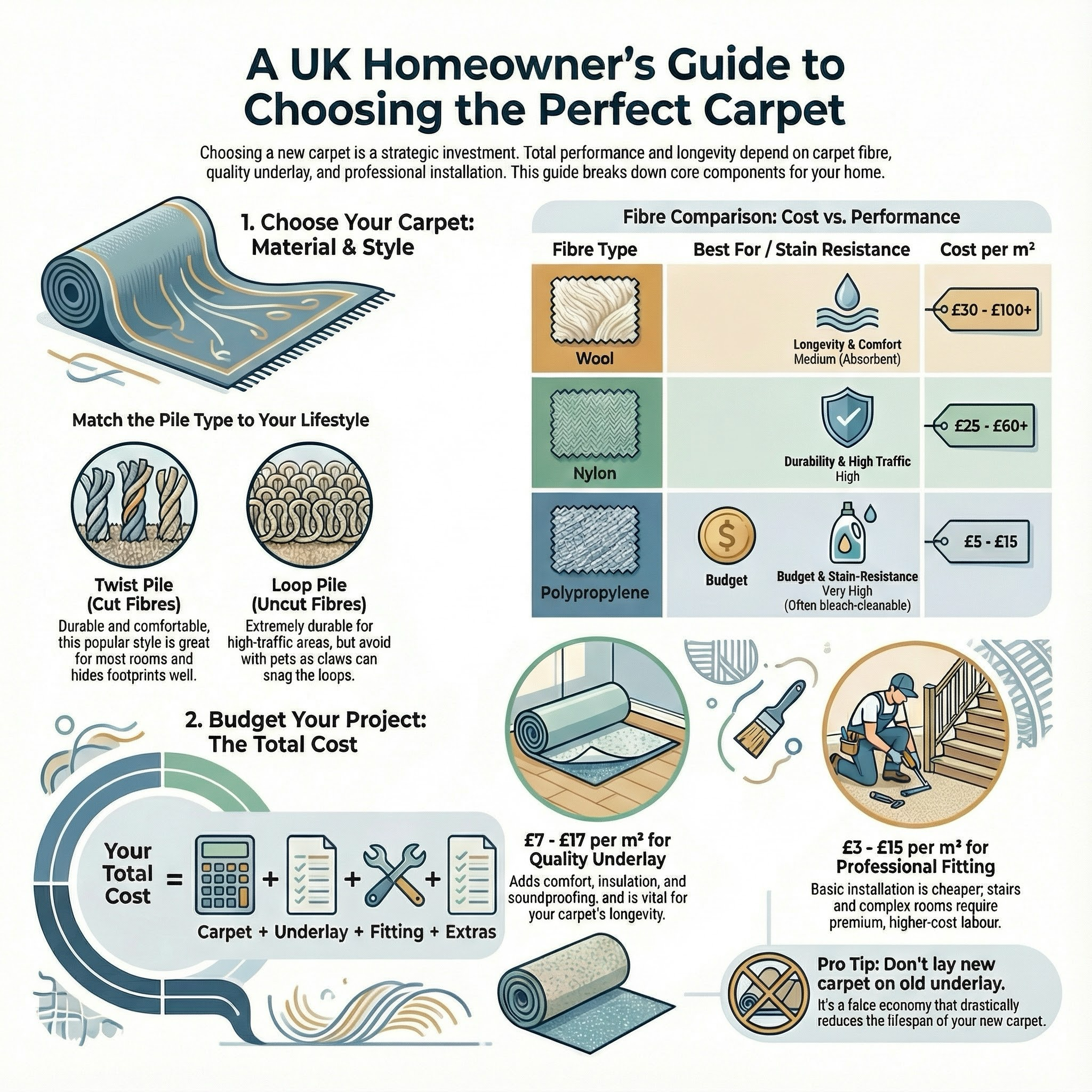
Carpets explained
Restoring a parquet floor is a precision task that requires more than just a standard floor sander. Because the wood grain runs in multiple directions, professional techniques are essential to avoid permanent gouging or "chatter" marks that can ruin the aesthetic of the timber.
Pricing for parquet restoration is typically calculated per square metre, though most tradespeople will have a minimum call-out fee to cover the transport of heavy machinery and setup time. These prices include VAT at the standard 20% rate.
| Item | Low £ | High £ | Notes |
|---|---|---|---|
| Sanding & Sealing (per m²) | £35 | £55 | Includes basic lacquer or oil finish. |
| Gap Filling (per m²) | £10 | £18 | Full resin-dust slurry across the whole floor. |
| Block Replacement (per block) | £15 | £30 | Includes sourcing matching reclaimed wood. |
| Staining/Toning (per m²) | £8 | £15 | Optional cost to change the wood's colour. |
| Minimum Project Charge | £450 | £650 | Standard for small hallways or landings. |
Costs are primarily driven by the condition of the floor and the type of finish selected. Hardwax oils are often slightly more expensive than standard water-based lacquers but offer a more natural look and easier spot-repairs in the future.
While hiring a floor sander from a local tool hire shop is possible, it is rarely recommended for parquet. Standard drum sanders are designed to go with the grain; because parquet blocks run in different directions, a DIYer can easily "dig in" and create deep, permanent scars in the wood.
Professional floor restorers use "dust-free" extraction systems and planetary trio-sanders specifically designed for multi-directional grain, ensuring a flat, furniture-grade finish that is impossible to achieve with DIY rental equipment.
Yes. That orange tint is usually caused by old solvent-based varnishes that have aged and oxidised. Sanding back to the raw wood and using a modern water-based "invisible" lacquer or a white-tinted oil will keep the wood looking natural and pale.
If you hire a professional with a high-end extraction system (like a Bona DCS), there is virtually no dust. The machines are connected to powerful vacuums that capture particles at the source, meaning you won't need to empty your cupboards or cover your curtains.
Absolutely. A specialist can source reclaimed blocks of the same species and age. These are cleaned of old bitumen, cut to size, and fitted into the gaps. Once sanded and finished, they are usually indistinguishable from the original floor.
Lacquer (varnish) provides a hard, "plastic" protective layer that is very low maintenance. Hardwax oil penetrates the wood and looks more natural, but requires "re-oiling" every 2-3 years in high-traffic areas. For kitchens, lacquer is usually preferred for its water resistance.
Ideally, do the "messy" work first. However, since modern sanding is dust-free, many homeowners choose to paint the walls first and do the floors last to avoid any paint drips on their newly restored wood. Just ensure the skirting boards are painted after the floor is finished.
This guide was written with AI assistance and is intended for general information only. Prices are estimates based on UK averages and may vary by region. Always get at least three quotes and consult a qualified professional before starting any work.
Ask follow-ups in plain English. The AI explains options, sequencing and what to ask the carpets — so you walk in informed.
New flooring is one of the most impactful upgrades you can make to a UK home. Beyond the immediate aesthetic boost, high-quality flooring improves insulation, r...
READ GUIDE →GuideLaminate flooring remains one of the most popular choices for UK homeowners, offering the aesthetic of real hardwood with significantly higher durability and ea...
READ GUIDE →GuideInstalling new carpet is one of the most effective ways to instantly improve the comfort and insulation of your home. Whether you are opting for a durable wool-...
READ GUIDE →GuideFloor screeding is the process of applying a blended mixture of cement and graded sand (or a specialized liquid compound) to a structural concrete subfloor. For...
READ GUIDE →GuideModern vinyl flooring has evolved far beyond the basic "lino" of the past. Today, UK homeowners can choose from high-end sheet vinyl, Luxury Vinyl Tiles (LVT), ...
READ GUIDE →GuideRefinishing a wooden floor is one of the most effective ways to restore character and add significant value to a UK home. Whether you have discovered original V...
READ GUIDE →