Instant
01 · Ask
Ask the AI a follow-up
Got more questions about wood Floor Restoration? Describe the bit you're unsure about — the AI explains options, sequencing and what to ask the carpets.

Strip, sand, gap-fill, stain and seal — for pine, oak or parquet, by a specialist floor fitter.
You've read the brief on wood Floor Restoration. Now lean on us to find the right carpets — and stay in control of the job.
Got more questions about wood Floor Restoration? Describe the bit you're unsure about — the AI explains options, sequencing and what to ask the carpets.
Costs, timelines, pitfalls and the right questions to ask before any carpets starts on wood Floor Restoration.
Itemised quotes from up to 3 local carpetss on wood Floor Restoration — so you can compare like-for-like, not lump sums.
Ready when you are
Enter your postcode and get free quotes from local pros.
Four moves that separate a smooth job from a nightmare.
Horizontal ripples caused by poorly maintained sanding drums or incorrect technique.
Circular scratches left by "edging" machines that weren't properly blended into the main floor area.
Oil or resin seeping back out of gaps after the finish has been applied, usually due to high humidity.
Applying a water-based lacquer over an old oil-based stain can cause the finish to peel and flake within weeks.
Indicative UK ranges and what affects price.
By job type
Quote spread is typically ± 18% — always get 3 quotes.
Carpets quick-view
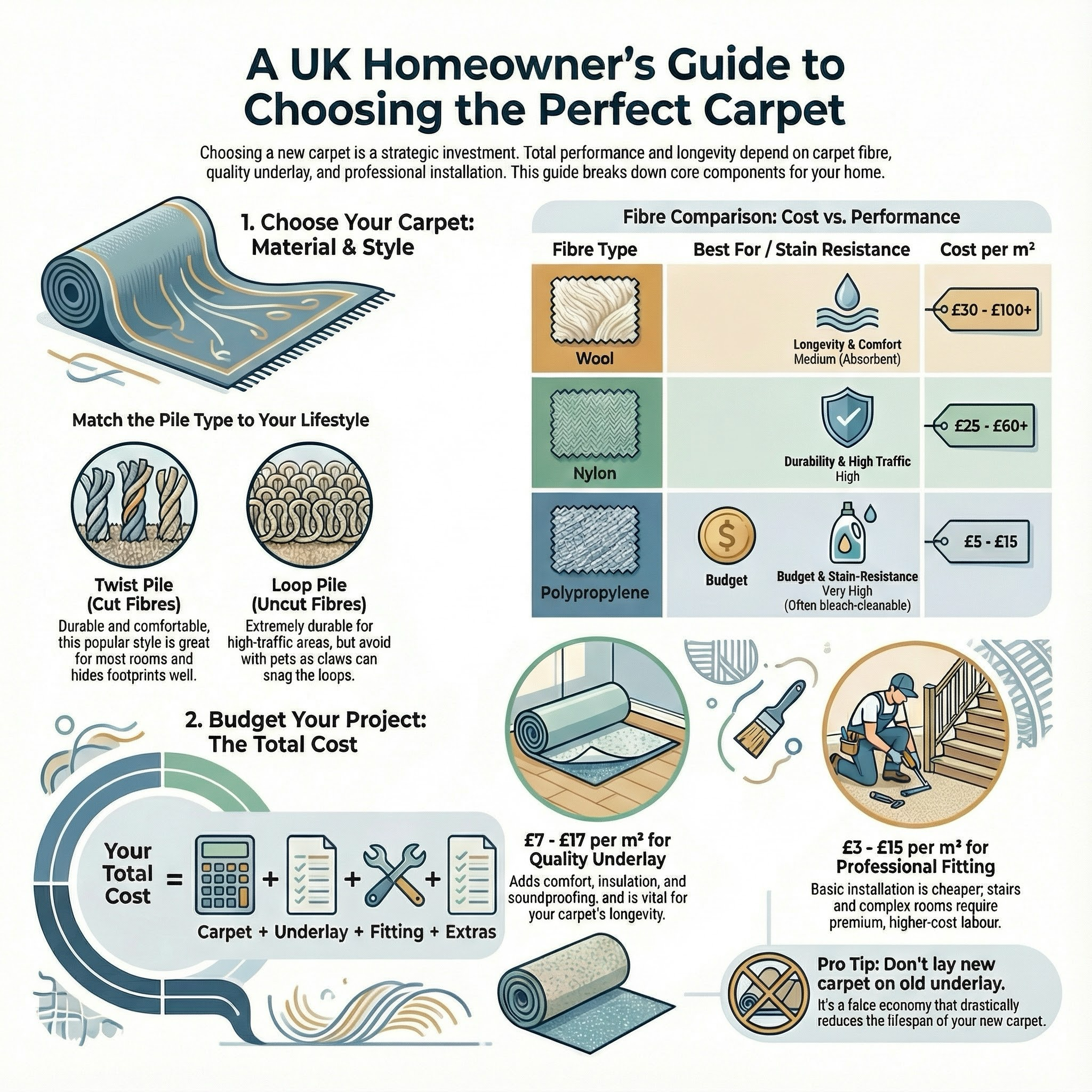
Carpets explained
A high-quality restoration doesn't just improve aesthetics; it provides a durable, hygienic surface that can last for decades. In the UK's damp climate, correctly sealed wood also helps protect the structural integrity of your floorboards against moisture and wear.
Pricing for wood floor restoration is usually calculated per square metre (m²), though many contractors have a minimum day rate for smaller rooms like hallways or bathrooms.
| Service Type | Low £ (per m²) | High £ (per m²) | Notes |
|---|---|---|---|
| Sanding & Sealing (3 coats) | £28 | £45 | Includes standard lacquer or oil finish. |
| Gap Filling (Resin/Sliver) | £6 | £12 | Depends on the width of the gaps. |
| Staining / Colouring | £8 | £15 | Additional cost for changing the wood tone. |
| Small Room Minimum Charge | £350 | £550 | Applies to areas under 12-15m². |
| Board Replacement | £25 | £60 | Per linear metre of reclaimed timber. |
Costs are influenced by the floor's current condition, the type of wood (hardwoods like oak take longer than softwoods), and your choice of finish. Prices in London and the South East typically sit at the higher end of these ranges.
Pro Tip: Most finishes require 72 hours to fully "cure." Avoid placing heavy furniture or rugs on the floor during this window to prevent permanent marks.
While hiring a floor sander from a local tool hire shop is possible, it is rarely recommended for beginners. Professional "belt" sanders are extremely powerful and can easily gouge permanent "trench" marks into your floor if held still for even a second.
Furthermore, professional contractors use industrial dust extraction systems that are 98-99% dust-free. DIY machines often create a significant amount of fine airborne dust that can settle in soft furnishings and electronics throughout the entire house.
Yes, provided the "wear layer" (the top real wood slice) is at least 3mm thick. Most high-quality engineered floors can be sanded 1-3 times, but "veneered" floors with a very thin layer cannot be restored.
With modern "Bona" or "Lagler" dust-free systems, there is very little mess. You may find a light film on surfaces, but it won't require a professional deep clean of the house.
It is generally best to do all "messy" decorating first, leaving the final coat on the skirting boards until after the floor is finished. This prevents sanding machines from scuffing fresh paint.
Lacquer (varnish) sits on top of the wood and is best for high-traffic areas like kitchens. Hard-wax oil soaks into the grain for a more natural look and is easier to "spot repair" if scratched.
Sanding can remove surface stains, but deep "black" urine or water stains often penetrate the full depth of the board. In these cases, the affected boards usually need to be replaced with reclaimed timber.
This guide was written with AI assistance and is intended for general information only. Prices are estimates based on UK averages and may vary by region. Always get at least three quotes and consult a qualified professional before starting any work.
Ask follow-ups in plain English. The AI explains options, sequencing and what to ask the carpets — so you walk in informed.
New flooring is one of the most impactful upgrades you can make to a UK home. Beyond the immediate aesthetic boost, high-quality flooring improves insulation, r...
READ GUIDE →GuideLaminate flooring remains one of the most popular choices for UK homeowners, offering the aesthetic of real hardwood with significantly higher durability and ea...
READ GUIDE →GuideInstalling new carpet is one of the most effective ways to instantly improve the comfort and insulation of your home. Whether you are opting for a durable wool-...
READ GUIDE →GuideFloor screeding is the process of applying a blended mixture of cement and graded sand (or a specialized liquid compound) to a structural concrete subfloor. For...
READ GUIDE →GuideModern vinyl flooring has evolved far beyond the basic "lino" of the past. Today, UK homeowners can choose from high-end sheet vinyl, Luxury Vinyl Tiles (LVT), ...
READ GUIDE →GuideRefinishing a wooden floor is one of the most effective ways to restore character and add significant value to a UK home. Whether you have discovered original V...
READ GUIDE →