Instant
01 · Ask
Ask the AI a follow-up
Got more questions about wooden Floor Repair? Describe the bit you're unsure about — the AI explains options, sequencing and what to ask the carpets.

Cupping, gaps, board damage or squeak — fixed by a specialist without replacing whole sections.
You've read the brief on wooden Floor Repair. Now lean on us to find the right carpets — and stay in control of the job.
Got more questions about wooden Floor Repair? Describe the bit you're unsure about — the AI explains options, sequencing and what to ask the carpets.
Costs, timelines, pitfalls and the right questions to ask before any carpets starts on wooden Floor Repair.
Itemised quotes from up to 3 local carpetss on wooden Floor Repair — so you can compare like-for-like, not lump sums.
Ready when you are
Enter your postcode and get free quotes from local pros.
Four moves that separate a smooth job from a nightmare.
New wood is often lighter than old wood. A pro will use "ageing" stains to blend the repair seamlessly.
This is caused by moisture issues. Repairs will fail unless the underlying damp source is fixed first.
Using cheap filler in large gaps often leads to it cracking and falling out. Resin mixed with floor dust is more flexible and durable.
"Chatter marks" or swirls from poor sanding technique will show up prominently once the finish is applied.
Indicative UK ranges and what affects price.
By job type
Quote spread is typically ± 18% — always get 3 quotes.
Carpets quick-view
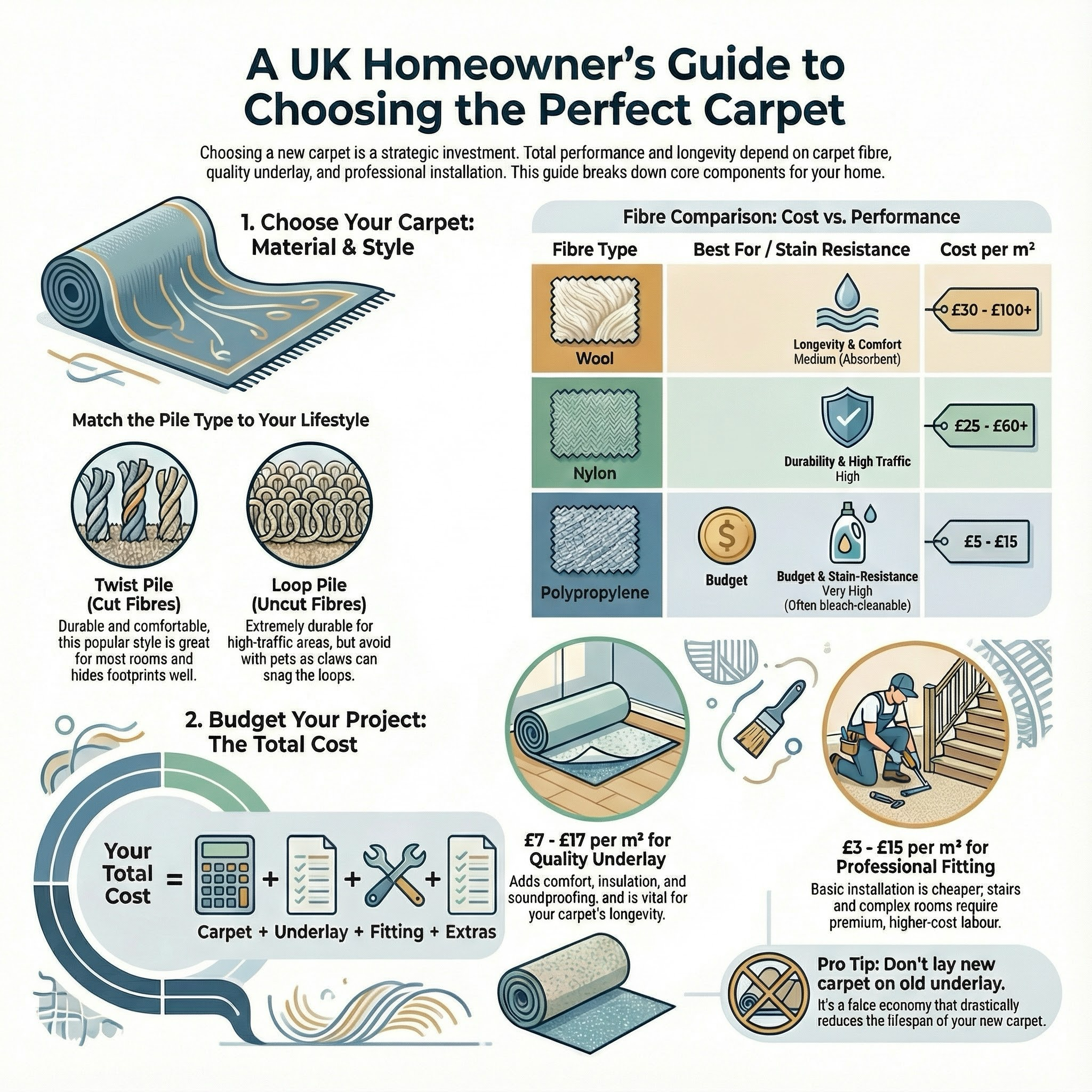
Carpets explained
Repairing your wooden floor is often a more sustainable and cost-effective alternative to a full replacement. Whether you are dealing with a single rotting board or widespread surface wear, professional restoration can return your flooring to its former glory while preserving the character of your property.
| Item | Low £ | High £ | Notes |
|---|---|---|---|
| Call-out / Minimum Charge | £70 | £125 | Covers small patch repairs or initial assessment. |
| Labour (per hour) | £40 | £75 | Higher rates apply in London and the South East. |
| Replacement Boards (per m²) | £20 | £60 | Depends on wood species (e.g., Pine vs. Reclaimed Oak). |
| Full Room Sand & Refinish | £25 | £50 | Price per m² including professional sealants. |
| Waste Disposal | £0 | £90 | Removal of old timber and dust bags. |
Total project costs typically range from £450 to £1,300 for mid-sized rooms. Prices are influenced by the timber species, the extent of sub-floor damage, and the type of finish (oil vs. high-traffic lacquer) required.
Small surface scratches can often be handled with a DIY touch-up kit. However, structural repairs or replacing boards in the middle of a room require precision joinery and heavy-duty sanding equipment.
Professional floorers use "dust-free" sanding machines that capture 98% of particulates, which is impossible to achieve with DIY hire tools. For engineered floors, the "wear layer" is thin; one mistake with a DIY sander can ruin the entire floor permanently.
Expert Tip: Always hire a professional if your floor is parquetry or herringbone. The complex grain patterns make DIY sanding and filling extremely difficult to get right.
Yes, individual boards can be "surgically" removed and replaced. The challenge is matching the colour and sheen of the surrounding floor, which may require sanding back a slightly larger area to blend the finish.
Squeaks are usually caused by boards rubbing against each other or loose nails. This often happens in older UK homes as the timber dries out and shrinks. Re-securing the boards to the joists usually solves the problem.
Lacquers provide a hard-wearing "film" on top of the wood, making them great for kitchens. Oils soak into the grain for a natural look and are easier to spot-repair if a small scratch occurs later.
A professional will check the "wear layer" (the thickness of the wood above the tongue and groove). If it is less than 2mm, further sanding could expose the fixings or the plywood core in engineered boards.
Modern professional sanding equipment is 98-99% dust-free. While a tiny amount of fine dust is inevitable, you won't need to cover your entire house in plastic sheets if the tradesperson uses high-end extraction units.
Yes. Small gaps are filled with a resin/sawdust mix. Larger gaps in traditional floorboards are often filled with "slivers"—thin wedges of matching wood glued and hammered into the space before sanding.
This guide was written with AI assistance and is intended for general information only. Prices are estimates based on UK averages and may vary by region. Always get at least three quotes and consult a qualified professional before starting any work.
Ask follow-ups in plain English. The AI explains options, sequencing and what to ask the carpets — so you walk in informed.
New flooring is one of the most impactful upgrades you can make to a UK home. Beyond the immediate aesthetic boost, high-quality flooring improves insulation, r...
READ GUIDE →GuideLaminate flooring remains one of the most popular choices for UK homeowners, offering the aesthetic of real hardwood with significantly higher durability and ea...
READ GUIDE →GuideInstalling new carpet is one of the most effective ways to instantly improve the comfort and insulation of your home. Whether you are opting for a durable wool-...
READ GUIDE →GuideFloor screeding is the process of applying a blended mixture of cement and graded sand (or a specialized liquid compound) to a structural concrete subfloor. For...
READ GUIDE →GuideModern vinyl flooring has evolved far beyond the basic "lino" of the past. Today, UK homeowners can choose from high-end sheet vinyl, Luxury Vinyl Tiles (LVT), ...
READ GUIDE →GuideRefinishing a wooden floor is one of the most effective ways to restore character and add significant value to a UK home. Whether you have discovered original V...
READ GUIDE →