Instant
01 · Ask
Ask the AI a follow-up
Got more questions about chimney Cap Installation? Describe the bit you're unsure about — the AI explains options, sequencing and what to ask the chimney sweep.

Bird/rain cowl, anti-downdraft cap or HETAS terminal — fitted with scaffold and bedded properly.
You've read the brief on chimney Cap Installation. Now lean on us to find the right chimney sweep — and stay in control of the job.
Got more questions about chimney Cap Installation? Describe the bit you're unsure about — the AI explains options, sequencing and what to ask the chimney sweep.
Costs, timelines, pitfalls and the right questions to ask before any chimney sweep starts on chimney Cap Installation.
Itemised quotes from up to 3 local chimney sweeps on chimney Cap Installation — so you can compare like-for-like, not lump sums.
Ready when you are
Enter your postcode and get free quotes from local pros.
Four moves that separate a smooth job from a nightmare.
Using a galvanised steel cap on a solid fuel fire; the soot will corrode it within years. Always choose stainless steel.
A cap that is too small will restrict the "draw," causing the fire to smoke or go out.
Using cheap spring clips that can pop off during high winds, potentially damaging your roof or a neighbour's car.
Fitting a new cap to a crumbling chimney crown is a wasted effort; the cement should be repaired first.
Indicative UK ranges and what affects price.
By job type
Quote spread is typically ± 18% — always get 3 quotes.
Chimney Sweep quick-view
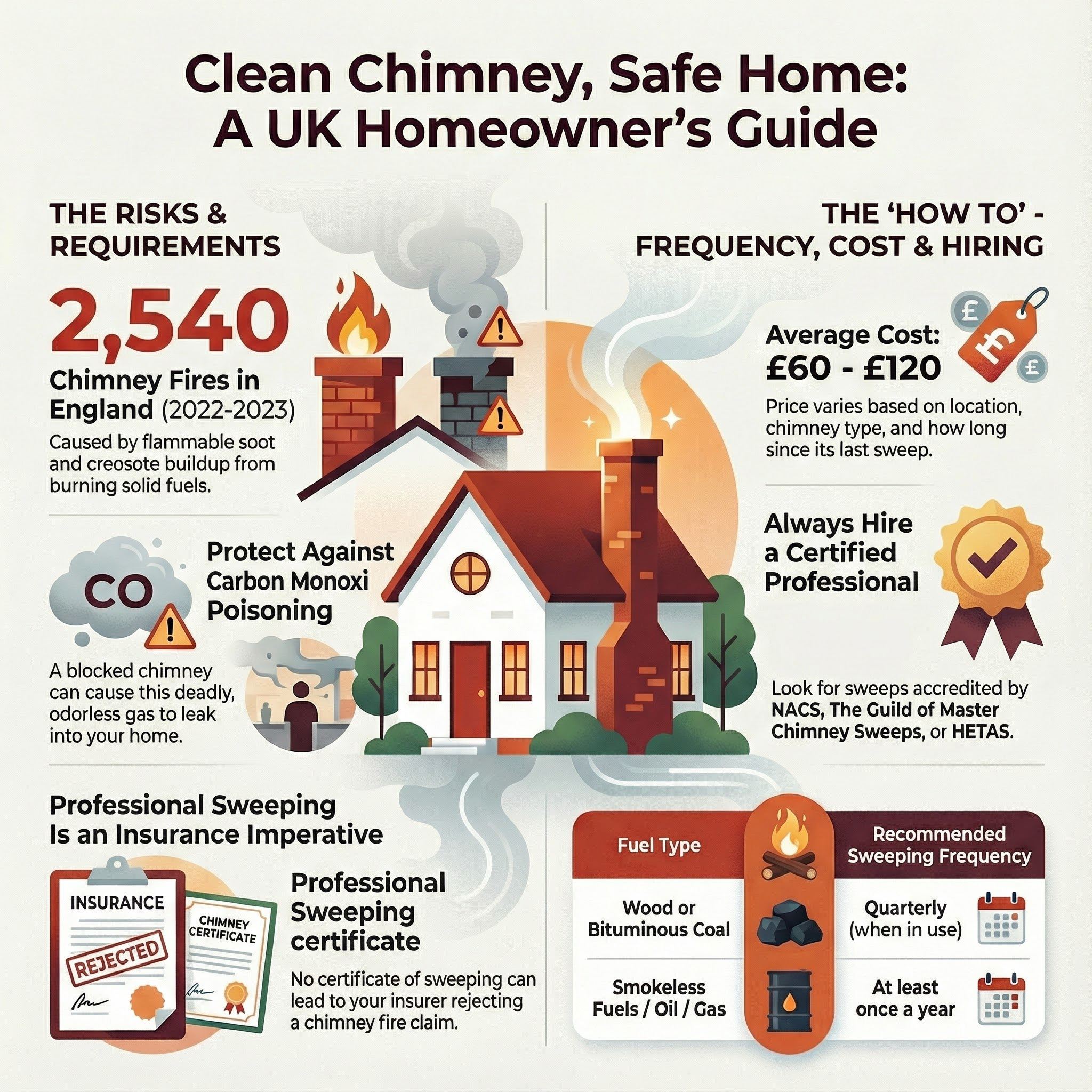
Chimney Sweep explained
Left unprotected, an open chimney pot is a magnet for debris and damp, which can eventually lead to structural damage or carbon monoxide risks. Installing a high-quality cap is a cost-effective way to extend the life of your stack and ensure your fireplace operates safely.
Prices vary based on the type of cowl required and the height of your property. Specialist anti-downdraft cowls or those designed specifically for gas fires generally cost more than standard bird guards.
| Item / Service | Low £ | High £ | Notes |
|---|---|---|---|
| Standard Bird Guard/Rain Cap | £150 | £250 | Includes basic materials and labour. |
| Anti-Downdraft Cowl | £220 | £400 | Required for chimneys with smoke blow-back. |
| Gas Terminal Fitting | £180 | £300 | Must be a specific GC1 rated terminal. |
| Multi-Flue Capping | £350 | £600+ | For large stacks with multiple pots. |
| Scaffolding (if required) | £400 | £800 | Only needed for difficult access or high stacks. |
Note: Prices include VAT at 20%. The main cost drivers are the height of the chimney and whether specialist access equipment like a cherry picker is needed.
While the caps themselves are available at DIY stores, professional installation is strongly recommended. Working at height is inherently dangerous, and an incorrectly fitted cap can restrict ventilation, leading to a build-up of toxic carbon monoxide.
If your chimney is used for a gas appliance, the law requires a Gas Safe registered engineer to ensure the terminal meets specific ventilation standards. For wood burners, a HETAS-qualified installer is best.
Yes. An unused chimney should be capped with a "disused flue" vent. This allows the chimney to breathe (preventing damp) while stopping rain and birds from entering.
Yes, but you need a specific "anti-downdraft" cowl. These are designed to use the wind to create a vacuum that pulls smoke up and out, rather than letting the wind push it down.
Absolutely. A bird guard with a mesh screen is the most effective way to stop jackdaws and pigeons from filling your flue with twigs and debris.
Stainless steel is the gold standard. It resists the corrosive chemicals found in wood and coal smoke, whereas aluminium or galvanised steel will degrade much faster.
It should be inspected annually during your routine chimney sweep. The sweep will check for signs of corrosion, loose fixings, or soot build-up on the mesh.
This guide was written with AI assistance and is intended for general information only. Prices are estimates based on UK averages and may vary by region. Always get at least three quotes and consult a qualified professional before starting any work.
Ask follow-ups in plain English. The AI explains options, sequencing and what to ask the chimney sweep — so you walk in informed.
Regular chimney sweeping is more than just a traditional household chore; it is a critical safety requirement for any UK homeowner with a functional fireplace o...
READ GUIDE →GuideRegular chimney sweeping is more than just a traditional chore; it is a vital safety requirement for any UK home with a working fireplace, wood-burning stove, o...
READ GUIDE →GuideRegular chimney maintenance is about more than just a clear flue; it is a critical safety measure for any UK home with a working fireplace or wood-burning stove...
READ GUIDE →GuideRegular chimney sweeping is a vital maintenance task for any UK homeowner with an open fire, wood-burning stove, or multi-fuel appliance. Beyond ensuring your f...
READ GUIDE →GuideA blocked chimney is more than just a nuisance; it is a serious fire hazard and a leading cause of carbon monoxide poisoning in UK homes. Whether caused by soot...
READ GUIDE →GuideCommercial chimney cleaning is a critical maintenance task for UK businesses and large residential properties, including pubs, hotels, and apartment blocks with...
READ GUIDE →