Instant
01 · Ask
Ask the AI a follow-up
Got more questions about chimney Fire Prevention? Describe the bit you're unsure about — the AI explains options, sequencing and what to ask the chimney sweep.

Annual sweep, smoke test, CO alarm and burning the right fuel — what stops a chimney going up.
You've read the brief on chimney Fire Prevention. Now lean on us to find the right chimney sweep — and stay in control of the job.
Got more questions about chimney Fire Prevention? Describe the bit you're unsure about — the AI explains options, sequencing and what to ask the chimney sweep.
Costs, timelines, pitfalls and the right questions to ask before any chimney sweep starts on chimney Fire Prevention.
Itemised quotes from up to 3 local chimney sweeps on chimney Fire Prevention — so you can compare like-for-like, not lump sums.
Ready when you are
Enter your postcode and get free quotes from local pros.
Four moves that separate a smooth job from a nightmare.
A sticky, tar-like substance caused by burning unseasoned (wet) wood. It is highly flammable and the leading cause of chimney fires.
Jackdaws frequently nest in chimneys during spring. It is illegal to remove an active nest with eggs or chicks, so timing is vital.
Moisture entering the chimney can mix with soot to create an acidic slurry that eats through mortar joints and flue liners.
Internal bricks can flake off due to heat stress, potentially causing a blockage or a fire path into the building structure.
Indicative UK ranges and what affects price.
By job type
Quote spread is typically ± 18% — always get 3 quotes.
Chimney Sweep quick-view
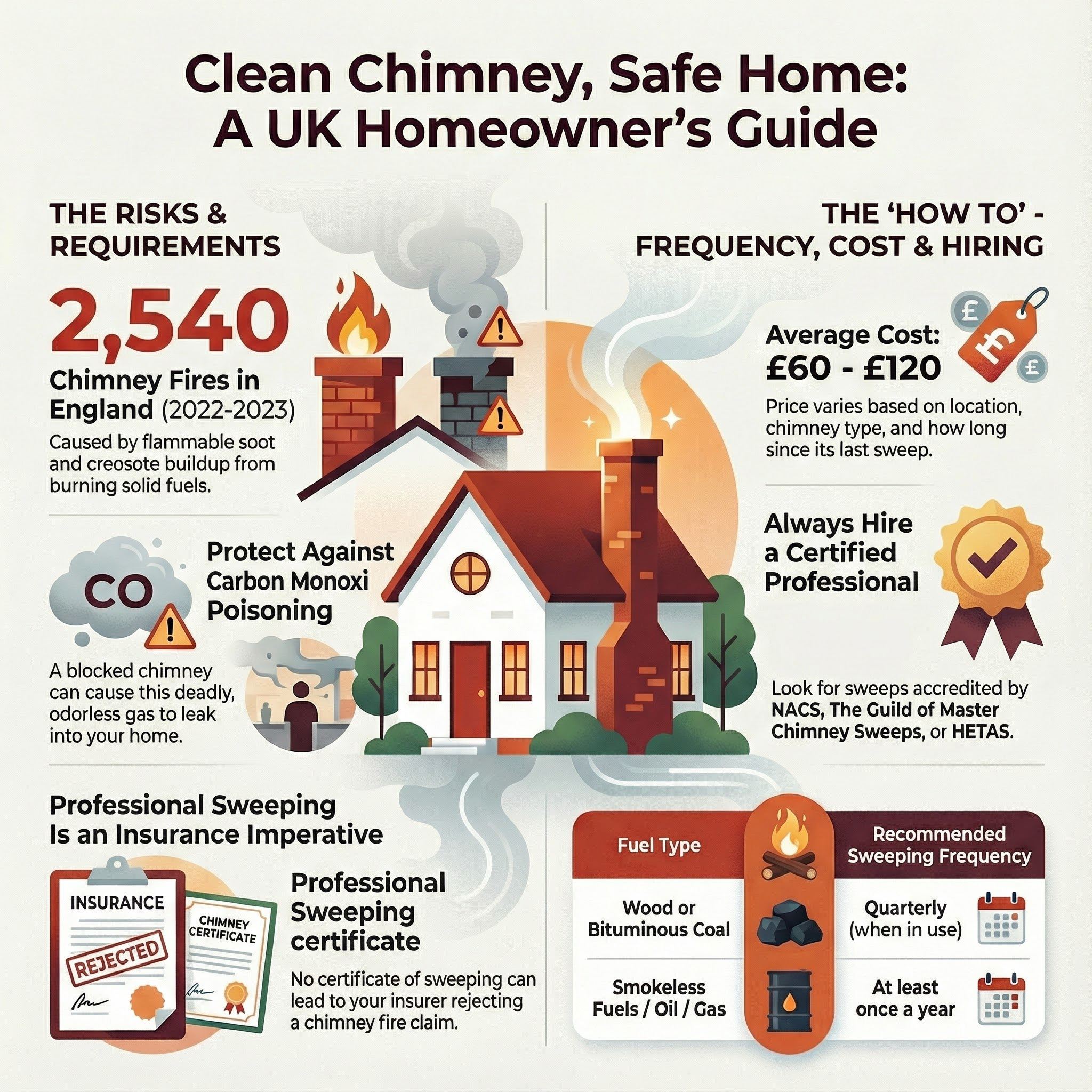
Chimney Sweep explained
For homeowners, a clean chimney also improves fuel efficiency and is often a mandatory requirement for building insurance. Whether you use an open hearth or a modern eco-design stove, proactive fire prevention is a small investment that protects your property and your family.
Prices vary depending on your location—expect to pay a premium in London and the South East—and the type of appliance being serviced. These estimates include VAT and represent current 2025/26 UK market rates.
| Service Type | Low £ | High £ | Notes |
|---|---|---|---|
| Standard Sweep (Open Fire/Stove) | £65 | £95 | Includes smoke test and certificate. |
| Bird Nest Removal | £100 | £180 | Often charged by the hour; includes debris disposal. |
| CCTV Flue Inspection | £150 | £250 | Detailed internal survey for cracks or leaks. |
| Creosote Chemical Treatment | £40 | £80 | Added to standard sweep for heavy tar build-up. |
Factors that increase the price include difficult roof access, the presence of "dead" birds or wildlife, and chimneys that have not been swept for several years. Most sweeps offer a discount for multiple chimneys in the same property.
While DIY chimney rods are available at hardware stores, professional sweeping is strongly recommended for safety and legal reasons. A professional sweep has the training to spot structural defects or dangerous carbon monoxide risks that an amateur might miss.
Insurance Warning: Many UK home insurance policies are voided if a chimney fire occurs and you cannot produce a valid sweeping certificate from a recognised professional body.
Furthermore, handling soot requires industrial-grade HEPA filtration vacuums to prevent fine particles from settling in your soft furnishings, which can be a significant health hazard.
Don't just hire the cheapest person with a van; ensure they are qualified and follow industry standards.
For wood-burning stoves or open fires using logs, you should sweep at least twice a year during the burning season. For smokeless fuels, once a year is usually sufficient.
A professional sweep uses extensive sheeting and powerful vacuums to create a "sealed" environment. When done correctly, there should be zero soot or dust in your room.
Spring and summer are ideal. Sweeps are often fully booked for weeks during the "autumn rush" in September and October, so booking early avoids the wait.
No. You should only burn seasoned wood with a moisture content below 20%. Burning "wet" wood creates excessive smoke and rapid creosote build-up, increasing fire risks.
It involves lighting a smoke pellet in the fireplace to check if the smoke exits correctly through the pot. This confirms there are no major leaks or blockages in the flue.
A cowl is highly recommended to prevent birds from nesting and to stop rain from entering the flue. Some cowls also help resolve "down-draught" issues caused by wind.
This guide was written with AI assistance and is intended for general information only. Prices are estimates based on UK averages and may vary by region. Always get at least three quotes and consult a qualified professional before starting any work.
Ask follow-ups in plain English. The AI explains options, sequencing and what to ask the chimney sweep — so you walk in informed.
Regular chimney sweeping is more than just a traditional household chore; it is a critical safety requirement for any UK homeowner with a functional fireplace o...
READ GUIDE →GuideRegular chimney sweeping is more than just a traditional chore; it is a vital safety requirement for any UK home with a working fireplace, wood-burning stove, o...
READ GUIDE →GuideA chimney cap—often referred to as a cowl or bird guard—is a vital line of defence for your UK home. It prevents rainwater from entering the flue, stops birds f...
READ GUIDE →GuideRegular chimney sweeping is a vital maintenance task for any UK homeowner with an open fire, wood-burning stove, or multi-fuel appliance. Beyond ensuring your f...
READ GUIDE →GuideA blocked chimney is more than just a nuisance; it is a serious fire hazard and a leading cause of carbon monoxide poisoning in UK homes. Whether caused by soot...
READ GUIDE →GuideCommercial chimney cleaning is a critical maintenance task for UK businesses and large residential properties, including pubs, hotels, and apartment blocks with...
READ GUIDE →