Instant
01 · Ask
Open fire, wood-burner or multi-fuel?
Different chimneys, different frequencies. Describe what you've got and the AI tells you what to ask for.

Sweeping, smoke tests, inspections and cowl fits — HETAS-friendly, certificate issued on the day.
Read the brief on certification, frequency and CCTV — then let Three local sweeps quote.
Different chimneys, different frequencies. Describe what you've got and the AI tells you what to ask for.
NACS vs APICS vs HETAS, sweeping frequency, CCTV diagnosis, insurance certs. Know what's covered.
Three local sweeps quote on the same appliance — sweep, inspection, cert — so you're protected.
Ready when you are
Enter your postcode and get free quotes from local pros.
Four moves that separate a smooth job from a nightmare.
A NACS or APICS certificate is what insurers want to see after a chimney fire. Don't accept 'cleared' verbally — get the paperwork.
Smokeless solid fuel: once a year. Wood: twice. Open coal fire: quarterly. Skip these and you risk fire and prosecution under DCLG rules.
An unfamiliar chimney should be CCTV-inspected to spot cracks, missing pots, bird nests. £30 extra; saves £3k repointing surprises.
If you've a wood-burner or multi-fuel stove, the sweep should be HETAS-registered. Other certs aren't enough for solid-fuel appliances.
Indicative UK ranges and what affects price.
By job type
Quote spread is typically ± 18% — always get 3 quotes.
Visual breakdown of costs, timelines and the questions you should be asking.
Chimney Sweep quick-view
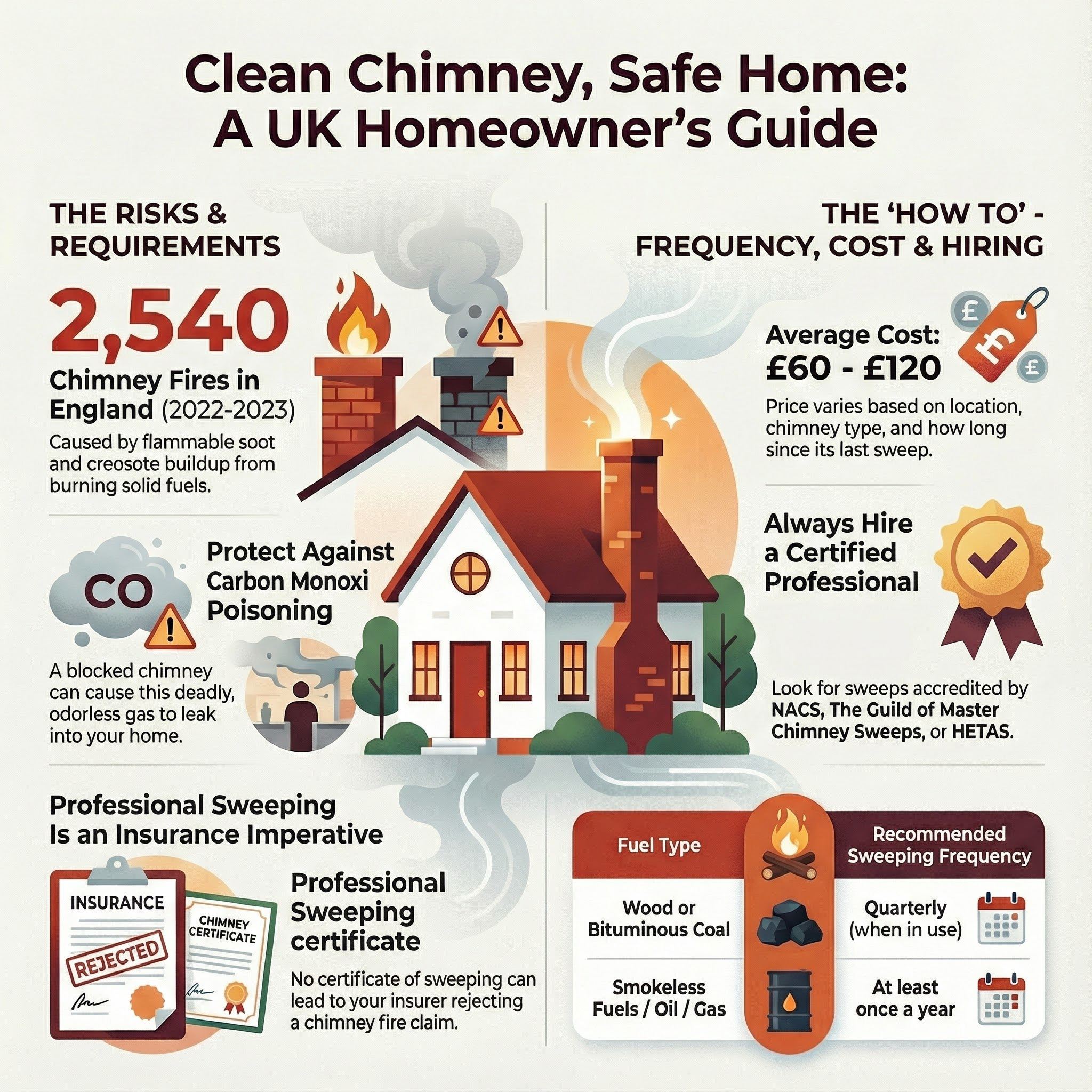
Chimney Sweep explained
Everything you need to know before hiring a chimney sweep.
Professional chimney sweeps play a vital role in maintaining the safety and efficiency of UK homes with solid fuel appliances. While the image of a traditional sweep remains, modern professionals use advanced power-sweeping technology and CCTV cameras to ensure flues are clear of soot, creosote, and dangerous obstructions.
Regular sweeping is not just about cleanliness; it is a critical safety requirement. A clean chimney prevents chimney fires and ensures that toxic gases, including carbon monoxide, are safely vented out of the property rather than leaking back into living spaces.
Whether you have a traditional open fireplace, a modern wood-burning stove, or a multi-fuel burner, a qualified sweep provides essential maintenance. They also offer specialist services such as bird nest removal, cowl installation, and integrity testing for older masonry flues.
A professional chimney sweep follows a methodical process to ensure your home stays clean while the flue is thoroughly cleared. Here is the typical workflow for a standard sweeping appointment:
While DIY chimney cleaning kits are available, they often lack the reach and flexibility to clean the "smoke shelf" or navigate bends in the flue. Hiring a professional ensures the job is done to industry standards, significantly reducing the risk of a chimney fire.
Professional sweeps are trained to identify structural issues, such as crumbling mortar or cracked liners, that a homeowner might miss. They also understand the specific requirements for different fuels; for example, burning unseasoned wood creates "wet" soot and tar that requires specialist removal techniques.
Crucially, most UK home insurance providers insist on professional sweeping at least once a year. If a fire occurs and you cannot provide a valid certificate from a recognised trade body (such as HETAS or the Guild of Master Chimney Sweeps), your claim may be rejected.
Chimney sweeping costs vary depending on your location, the type of appliance, and the level of soot buildup. Most sweeps charge a flat fee for a standard service, with additional costs for repairs or nest removals.
| Service | Low £ | High £ | Notes |
|---|---|---|---|
| Standard Sweep (Open Fire) | £60 | £90 | Includes smoke test and certificate. |
| Wood Burner/Lined Stove Sweep | £70 | £100 | Requires care to avoid damaging the liner. |
| Bird Nest Removal | £100 | £180 | Often charged per hour due to complexity. |
| CCTV Flue Inspection | £120 | £250 | Full video report of internal condition. |
| Cowl Fitting | £150 | £300 | Includes the cost of the cowl and labour. |
Prices may increase if the property has difficult access (requiring high ladders or scaffolding) or if the chimney has been neglected for several years, leading to heavy creosote glaze that requires chemical treatment.
Not all chimney sweeps are equal. Because the industry is not strictly regulated by law, it is important to check for voluntary accreditations and insurance.
Questions to ask before booking:
For standard wood-burning stoves or open fires using seasoned wood, you should have the chimney swept at least once a year. If you burn coal or "smokeless" fuel, twice a year is recommended. If you use your fire daily throughout winter, a mid-season sweep is a wise safety precaution.
Yes. While gas fires do not produce soot in the same way as wood, the flue can still become blocked by bird nests, fallen masonry, or cobwebs. A blocked gas flue can cause deadly carbon monoxide to enter your home. Most gas engineers recommend a sweep before they service the fire.
A smoke draw test involves lighting a small smoke pellet in the fireplace after it has been swept. The sweep checks that the smoke travels smoothly up the flue and exits the chimney pot correctly, ensuring there are no major leaks or downdraught issues.
You should stop using the fire at least 24 hours before the appointment to ensure it is completely cold. Clear the grate of any old ash, move ornaments from the mantelpiece, and clear a workspace around the hearth for the sweep’s equipment.
Describe the job in plain English. The AI asks a few smart questions, then tells you whether a chimney sweep is the right call, what it should cost, and what to ask before they start.
Bird nests in chimneys. UK costs and legal considerations.
READ GUIDE →GuideCO alarms for fire safety. UK costs and 2022 regulations.
READ GUIDE →GuideA blocked chimney is more than just a nuisance; it is a serious fire hazard and a leading cause of carbon monoxide poisoning in UK homes. Whether caused by soot...
READ GUIDE →GuideCCTV inspection of chimneys. UK costs and benefits.
READ GUIDE →GuideA chimney cap—often referred to as a cowl or bird guard—is a vital line of defence for your UK home. It prevents rainwater from entering the flue, stops birds f...
READ GUIDE →GuideRegular chimney maintenance is about more than just a clear flue; it is a critical safety measure for any UK home with a working fireplace or wood-burning stove...
READ GUIDE →GuideRegular chimney sweeping is more than just a traditional chore; it is a vital safety requirement for any UK home with a working fireplace, wood-burning stove, o...
READ GUIDE →GuideChimney lining for fire protection. UK costs and benefits.
READ GUIDE →GuideChimney repair and repointing. UK costs and heritage.
READ GUIDE →GuideRegular chimney sweeping is a vital maintenance task for any UK homeowner with an open fire, wood-burning stove, or multi-fuel appliance. Beyond simply keeping ...
READ GUIDE →GuideChimney sweeping for safety and efficiency. UK costs and frequency.
READ GUIDE →GuideRegular chimney sweeping is more than just a traditional household chore; it is a critical safety requirement for any UK homeowner with a functional fireplace o...
READ GUIDE →GuideRegular chimney sweeping is a vital maintenance task for any UK homeowner with an open fire, wood-burning stove, or multi-fuel appliance. Beyond ensuring your f...
READ GUIDE →GuideCommercial chimney cleaning is a critical maintenance task for UK businesses and large residential properties, including pubs, hotels, and apartment blocks with...
READ GUIDE →GuideFire safety practices for chimneys. UK guide.
READ GUIDE →GuideConverting open fire to wood burner. UK costs and benefits.
READ GUIDE →GuideWood burner annual service combined with sweep. UK costs.
READ GUIDE →