Instant
01 · Ask
Ask the AI a follow-up
Got more questions about chimney flue cleaning? Describe the bit you're unsure about — the AI explains options, sequencing and what to ask the chimney sweep.

Power rotary or traditional rod-and-brush — soot bagged, hearth covered, certificate issued on the day.
You've read the brief on chimney flue cleaning. Now lean on us to find the right chimney sweep — and stay in control of the job.
Got more questions about chimney flue cleaning? Describe the bit you're unsure about — the AI explains options, sequencing and what to ask the chimney sweep.
Costs, timelines, pitfalls and the right questions to ask before any chimney sweep starts on chimney flue cleaning.
Itemised quotes from up to 3 local chimney sweeps on chimney flue cleaning — so you can compare like-for-like, not lump sums.
Ready when you are
Enter your postcode and get free quotes from local pros.
Four moves that separate a smooth job from a nightmare.
Caused by burning "wet" or unseasoned wood. This sticky substance is highly flammable and often requires specialist chemical treatment to remove.
These birds love the warmth of UK chimneys. A nest can completely block a flue, leading to carbon monoxide backing up into the home.
In older Victorian or Edwardian properties, the internal "pargeting" (lime mortar lining) can fail, causing debris to block the flue.
Fitting the wrong type of cowl can restrict the "draw" of the chimney or, conversely, allow birds and rain to enter.
Indicative UK ranges and what affects price.
By job type
Quote spread is typically ± 18% — always get 3 quotes.
Chimney Sweep quick-view
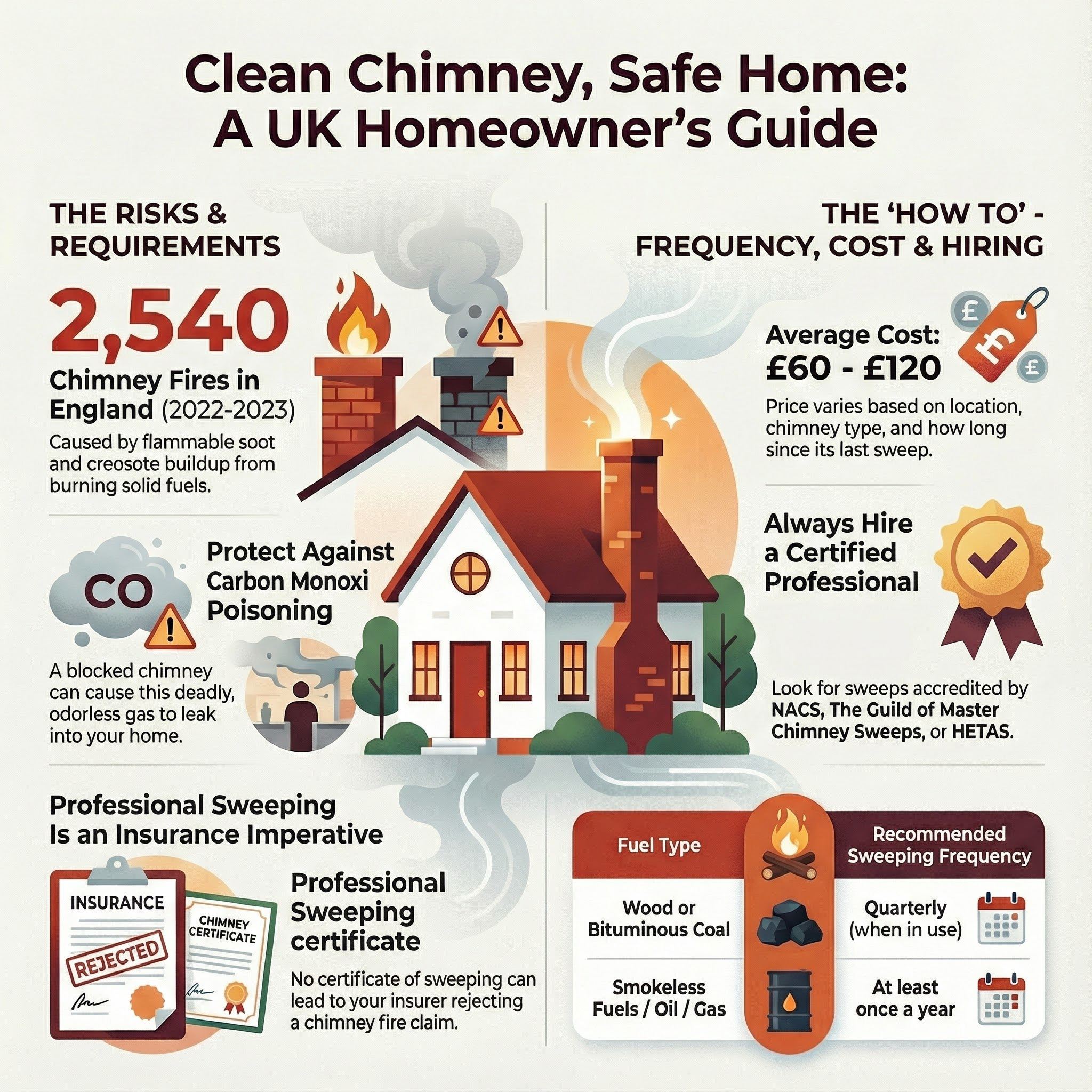
Chimney Sweep explained
In the UK, most home insurance providers now mandate annual professional sweeping to maintain coverage. Beyond safety, a clean flue ensures your appliance operates at peak efficiency, preventing smoke from billowing back into your living room and reducing fuel consumption.
Prices for chimney sweeping vary based on your location and the type of appliance. Expect to pay a premium in London and the South East, or if the sweep discovers a bird nest that requires extensive removal time.
| Item | Low £ | High £ | Notes |
|---|---|---|---|
| Standard Sweep (Single Flue) | £65 | £110 | Includes smoke test and certificate. |
| Bird Nest Removal | £40 | £90 | Additional charge on top of the standard sweep fee. |
| CCTV Flue Inspection | £120 | £250 | Used for surveying damage or checking new liners. |
| Inglenook / Large Open Fire | £100 | £160 | Takes longer due to the volume of soot and size. |
| Creosote Chemical Treatment | £150 | £300 | Required for heavy tar buildup that brushes can't move. |
Note: Most professional sweeps include VAT in their quotes, but always confirm this before booking, especially with larger regional firms.
While you can buy DIY chimney rods at many UK hardware stores, it is strongly discouraged for several reasons. Professional sweeps use industrial vacuums that trap fine carcinogenic soot particles that domestic vacuums cannot handle, preventing a massive clean-up job in your home.
More importantly, a DIY sweep does not provide the Certificate of Chimney Sweeping required by most UK insurance policies. If you have a chimney fire and cannot produce a professional certificate dated within the last 12 months, your insurer may refuse to pay for the damage.
For smokeless coal, once a year is sufficient. For wood-burning stoves or open fires burning seasoned wood, twice a year is recommended—once before the winter season begins and once after it ends.
A professional sweep will use "sheet and seal" techniques and industrial vacuums. If done correctly, there should be zero dust or soot in your room. You should, however, clear the hearth of ornaments before they arrive.
Yes. Liners still accumulate soot and creosote. They require specific soft-bristle power-sweeping tools to avoid scratching or damaging the steel, which a professional sweep will carry.
This involves lighting a smoke pellet at the base of the flue once the sweep is finished. The sweep checks that the smoke rises cleanly and exits the pot, ensuring there are no major blockages or air-pressure issues.
You should only burn seasoned wood with a moisture content below 20%. Burning "green" or unseasoned wood will quickly coat your newly cleaned flue in dangerous tar and creosote.
This guide was written with AI assistance and is intended for general information only. Prices are estimates based on UK averages and may vary by region. Always get at least three quotes and consult a qualified professional before starting any work.
Ask follow-ups in plain English. The AI explains options, sequencing and what to ask the chimney sweep — so you walk in informed.
Regular chimney sweeping is more than just a traditional chore; it is a vital safety requirement for any UK home with a working fireplace, wood-burning stove, o...
READ GUIDE →GuideA chimney cap—often referred to as a cowl or bird guard—is a vital line of defence for your UK home. It prevents rainwater from entering the flue, stops birds f...
READ GUIDE →GuideRegular chimney maintenance is about more than just a clear flue; it is a critical safety measure for any UK home with a working fireplace or wood-burning stove...
READ GUIDE →GuideRegular chimney sweeping is a vital maintenance task for any UK homeowner with an open fire, wood-burning stove, or multi-fuel appliance. Beyond ensuring your f...
READ GUIDE →GuideA blocked chimney is more than just a nuisance; it is a serious fire hazard and a leading cause of carbon monoxide poisoning in UK homes. Whether caused by soot...
READ GUIDE →GuideCommercial chimney cleaning is a critical maintenance task for UK businesses and large residential properties, including pubs, hotels, and apartment blocks with...
READ GUIDE →