Instant
01 · Ask
Ask the AI a follow-up
Got more questions about chimney Flue Cleaning? Describe the bit you're unsure about — the AI explains options, sequencing and what to ask the chimney sweep.

How a sweep actually works, what the certificate proves and how often a flue needs sweeping by fuel type.
You've read the brief on chimney Flue Cleaning. Now lean on us to find the right chimney sweep — and stay in control of the job.
Got more questions about chimney Flue Cleaning? Describe the bit you're unsure about — the AI explains options, sequencing and what to ask the chimney sweep.
Costs, timelines, pitfalls and the right questions to ask before any chimney sweep starts on chimney Flue Cleaning.
Itemised quotes from up to 3 local chimney sweeps on chimney Flue Cleaning — so you can compare like-for-like, not lump sums.
Ready when you are
Enter your postcode and get free quotes from local pros.
Four moves that separate a smooth job from a nightmare.
A tar-like substance that is highly flammable; usually caused by burning wet wood. It often requires chemical treatment or power sweeping.
Jackdaws love UK chimneys. Removal is legally restricted during nesting season (March to August) if active nests are present.
Crumbling mortar or "spalling" brickwork can lead to leaks. Regular sweeps will check the exterior condition of your stack.
Using a liner that is too large or too small for the appliance can cause poor draw and rapid soot buildup.
Indicative UK ranges and what affects price.
By job type
Quote spread is typically ± 18% — always get 3 quotes.
Chimney Sweep quick-view
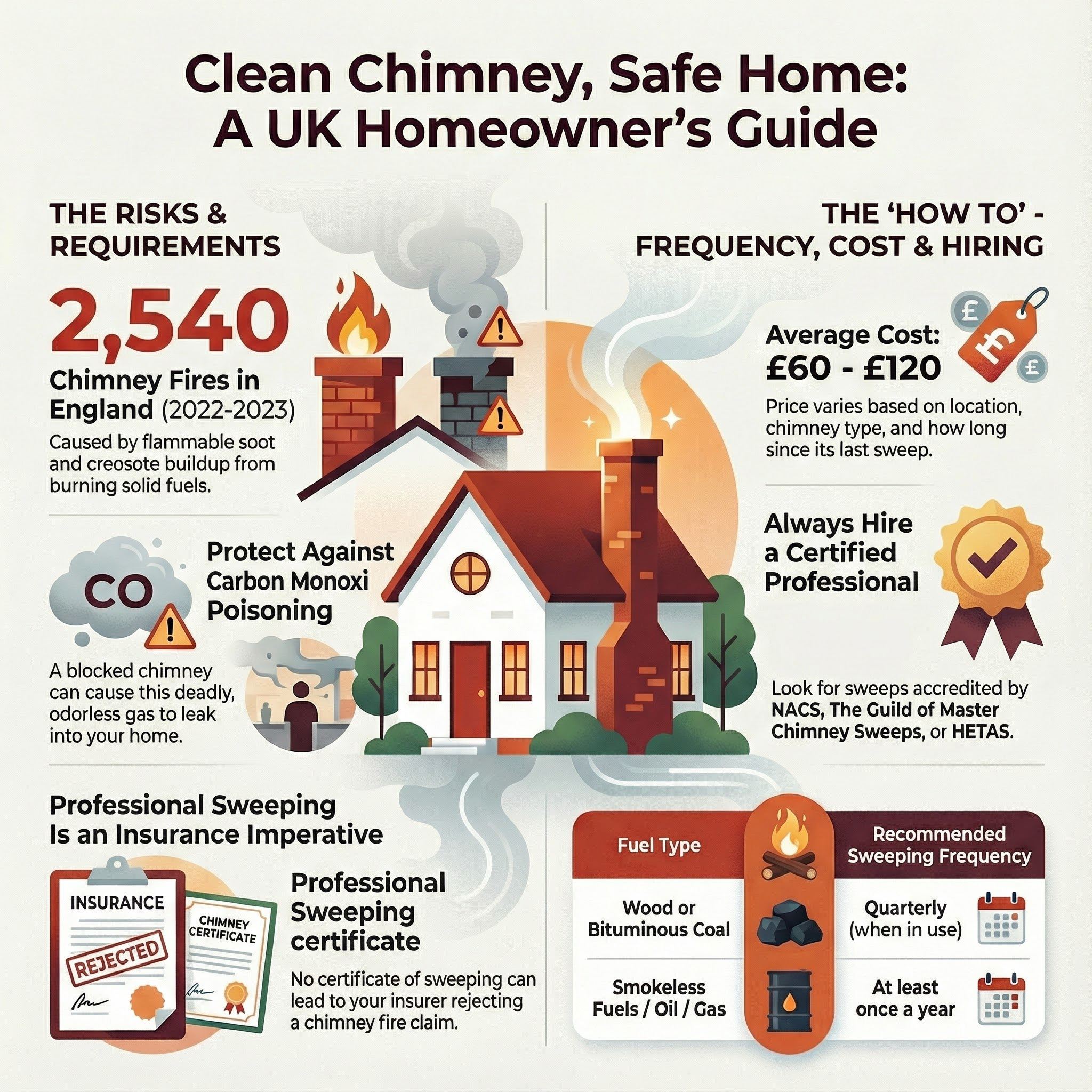
Chimney Sweep explained
With the rise in popularity of eco-design stoves across the UK, maintaining your flue is also a legal and insurance necessity. Neglecting this service can lead to poor fuel efficiency, smoke blowback, and potential damage to your chimney liner that could cost thousands to repair.
| Service Type | Low £ | High £ | Notes |
|---|---|---|---|
| Standard Sweep (Open Fire) | £60 | £100 | Standard annual maintenance. |
| Wood Burner / Multi-fuel Stove | £70 | £120 | Includes cleaning the baffle plate. |
| Power Sweep (Heavy Creosote) | £90 | £150 | Uses rotary brushes for stubborn buildup. |
| Bird Nest Removal | £100 | £250 | Cost depends on the size and height of the nest. |
| CCTV Flue Inspection | £150 | £350 | Required for checking structural integrity. |
Prices vary based on your location in the UK, with London and the South East typically seeing higher rates. The type of fuel you burn and the height of your property will also influence the final quote.
Pro Tip: Book your sweep in the spring or summer. Many UK sweeps offer "off-peak" discounts, and you won't be stuck in the 6-week waiting list that usually hits in October.
While you can buy chimney rods at most DIY stores, professional sweeping is strongly recommended. A professional sweep has the high-suction vacuums required to prevent soot from ruining your carpets and furniture.
Crucially, most UK home insurance providers require a Certificate of Sweeping from a registered professional. If you have a chimney fire and cannot provide this certificate, your insurance claim may be rejected. Furthermore, professionals can spot dangerous cracks in liners or carbon monoxide leaks that a DIYer might miss.
For smokeless coal, once a year. For wood-burning stoves, at least twice a year when in use. For standard bituminous coal, twice a year is recommended by most UK fire services.
No. A professional sweep uses specialist sheeting and high-powered vacuums to ensure all soot stays contained. Your hearth should be as clean as it was when they arrived.
Yes, rain does not affect the draw of a chimney significantly. However, if your chimney is leaking water, you should have it inspected for a missing cowl or damaged flashing.
Power sweeping uses a drill-powered flexible rod system with nylon heads that expand to the shape of the flue. it is much more effective at removing hard deposits than traditional hand-brushing.
Yes. While they don't produce soot, gas flues can become blocked by debris, cobwebs, or falling masonry, which can lead to deadly carbon monoxide buildup.
This guide was written with AI assistance and is intended for general information only. Prices are estimates based on UK averages and may vary by region. Always get at least three quotes and consult a qualified professional before starting any work.
Ask follow-ups in plain English. The AI explains options, sequencing and what to ask the chimney sweep — so you walk in informed.
Regular chimney sweeping is more than just a traditional household chore; it is a critical safety requirement for any UK homeowner with a functional fireplace o...
READ GUIDE →GuideA chimney cap—often referred to as a cowl or bird guard—is a vital line of defence for your UK home. It prevents rainwater from entering the flue, stops birds f...
READ GUIDE →GuideRegular chimney maintenance is about more than just a clear flue; it is a critical safety measure for any UK home with a working fireplace or wood-burning stove...
READ GUIDE →GuideRegular chimney sweeping is a vital maintenance task for any UK homeowner with an open fire, wood-burning stove, or multi-fuel appliance. Beyond ensuring your f...
READ GUIDE →GuideA blocked chimney is more than just a nuisance; it is a serious fire hazard and a leading cause of carbon monoxide poisoning in UK homes. Whether caused by soot...
READ GUIDE →GuideCommercial chimney cleaning is a critical maintenance task for UK businesses and large residential properties, including pubs, hotels, and apartment blocks with...
READ GUIDE →