Instant
01 · Ask
Ask the AI a follow-up
Got more questions about condensation Control Assessment? Describe the bit you're unsure about — the AI explains options, sequencing and what to ask the damp proofer.

On-site survey — humidity, ventilation, insulation and a plan to stop condensation returning.
You've read the brief on condensation Control Assessment. Now lean on us to find the right damp proofer — and stay in control of the job.
Got more questions about condensation Control Assessment? Describe the bit you're unsure about — the AI explains options, sequencing and what to ask the damp proofer.
Costs, timelines, pitfalls and the right questions to ask before any damp proofer starts on condensation Control Assessment.
Itemised quotes from up to 3 local damp proofers on condensation Control Assessment — so you can compare like-for-like, not lump sums.
Ready when you are
Enter your postcode and get free quotes from local pros.
Four moves that separate a smooth job from a nightmare.
Homeowners often pay for unnecessary chemical damp-proofing when the issue is actually just poor airflow.
Many people block air bricks to stop draughts, inadvertently causing massive condensation build-up in sub-floors.
Cheap "off-the-shelf" extractor fans often lack the power to clear a modern, well-insulated bathroom.
A single load of laundry can release litres of water into the air; without a plan for this moisture, mould is inevitable.
Indicative UK ranges and what affects price.
By job type
Quote spread is typically ± 18% — always get 3 quotes.
Damp Proofer quick-view
Damp Proofer explained
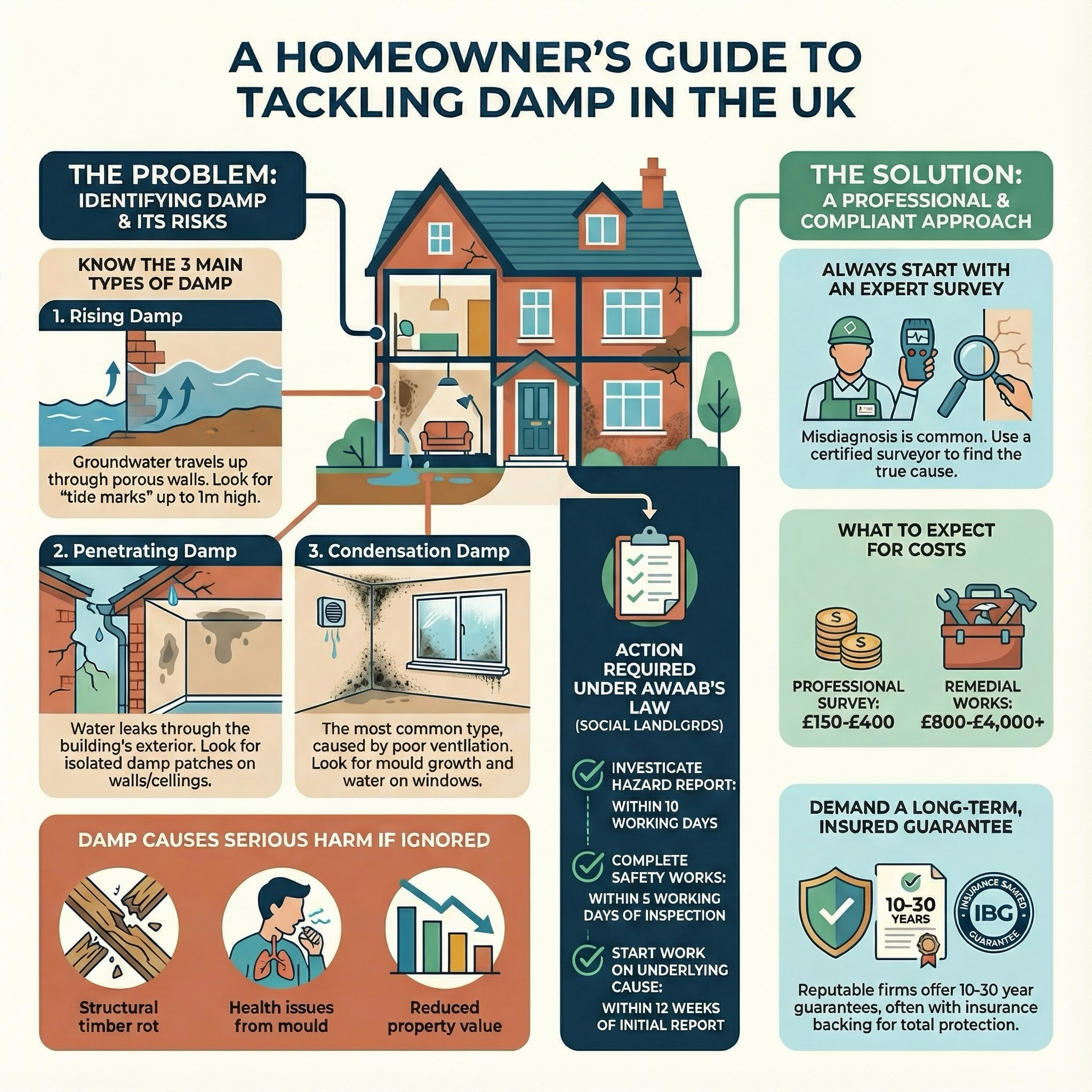
A professional condensation control assessment goes beyond just spotting wet patches. It uses specialist equipment to identify the root cause—whether it is poor ventilation, inadequate insulation, or "cold bridging"—and provides a tailored plan to permanently dry out your property.
The cost of an assessment often depends on whether you require a simple verbal consultation or a full written report for insurance or mortgage purposes. Prices below include VAT and reflect current UK market rates for 2025/26.
| Item | Low £ | High £ | Notes |
|---|---|---|---|
| Basic Assessment | £150 | £250 | Visual inspection and verbal advice for standard homes. |
| Comprehensive Survey | £300 | £550 | Includes thermal imaging and a formal written report. |
| PIV System Installation | £650 | £1,100 | Positive Input Ventilation unit for loft or hallway. |
| Humidistat Extractor Fan | £250 | £450 | High-quality fan including core drilling and wiring. |
| Anti-Mould Treatment | £150 | £400 | Professional cleaning and fungicidal wash per room. |
Several factors can influence the final price, including the size of the property, the severity of existing mould growth, and the ease of access to loft spaces or external walls for ventilation upgrades.
Homeowners can manage minor condensation by using dehumidifiers and ensuring windows are opened during cooking or showering. However, if black mould is present or windows are constantly streaming, professional intervention is essential.
Professional expertise is required for:
Warning: Never attempt to clean large areas of black mould (over 1 square metre) yourself. Disturbing the spores without professional PPE can lead to serious health risks.
Not all "damp proofers" are experts in condensation. Some may try to sell you expensive damp-proof courses (DPC) that won't solve a ventilation issue. Look for a specialist with the following:
Questions to ask:
It is a shared responsibility. Landlords must provide adequate ventilation (fans, air bricks, trickle vents). Tenants are expected to use these facilities correctly and avoid activities that cause excessive moisture without ventilation.
Positive Input Ventilation (PIV) sits in your loft and gently pushes filtered, dry air into the home. It creates a slight positive pressure that forces moist air out through natural gaps, and it is highly effective at curing whole-house condensation.
Anti-mould paint is a preventative measure, not a cure. It contains biocides that stop spores from growing, but it won't stop the moisture from forming. You must fix the ventilation issue first.
Modern homes are built to be airtight for energy efficiency. While this keeps heat in, it also traps moisture. Older homes were "breathable" due to open chimneys and draughty windows, which naturally vented moisture.
Ideally, your home's relative humidity should stay between 40% and 60%. Anything consistently above 70% will almost certainly lead to mould growth on cold surfaces.
This guide was written with AI assistance and is intended for general information only. Prices are estimates based on UK averages and may vary by region. Always get at least three quotes and consult a qualified professional before starting any work.
Ask follow-ups in plain English. The AI explains options, sequencing and what to ask the damp proofer — so you walk in informed.
Dry rot ( Serpula lacrymans ) is one of the most serious threats to UK homes. Unlike wet rot, dry rot has the unique ability to spread through masonry and plast...
READ GUIDE →GuideEmergency damp proofing is a critical intervention for UK homeowners facing sudden moisture ingress or structural failure. Left unchecked, damp can lead to timb...
READ GUIDE →GuideStructural waterproofing is the specialised process of protecting a building's foundations and below-ground spaces from groundwater ingress. For UK homeowners, ...
READ GUIDE →GuidePenetrating damp is a common headache for UK homeowners, often caused by water "soaking" through external walls into the property. Unlike rising damp, which cli...
READ GUIDE →GuideDamp is one of the most common issues facing UK homeowners, particularly given our wet climate and ageing housing stock. Whether you are buying a new property o...
READ GUIDE →GuideDamp is more than just an unsightly patch on the wall; it is a warning sign of underlying structural issues that can impact your health and your home's value. A...
READ GUIDE →