Instant
01 · Ask
Ask the AI a follow-up
Got more questions about emergency Damp Proofing? Describe the bit you're unsure about — the AI explains options, sequencing and what to ask the damp proofer.

Sudden leak, flooding or storm damp — assessed and stabilised same day, treatment plan to follow.
You've read the brief on emergency Damp Proofing. Now lean on us to find the right damp proofer — and stay in control of the job.
Got more questions about emergency Damp Proofing? Describe the bit you're unsure about — the AI explains options, sequencing and what to ask the damp proofer.
Costs, timelines, pitfalls and the right questions to ask before any damp proofer starts on emergency Damp Proofing.
Itemised quotes from up to 3 local damp proofers on emergency Damp Proofing — so you can compare like-for-like, not lump sums.
Ready when you are
Enter your postcode and get free quotes from local pros.
Four moves that separate a smooth job from a nightmare.
This occurs when new patios or flower beds are built above the level of the damp proof course, allowing moisture to bypass the barrier.
Injecting a DPC when the real issue is a leaking gutter or high external ground levels.
Using standard gypsum plaster after a damp treatment instead of a specialist salt-retardant mix, leading to "salt damp" returning within months.
Blocking air bricks while trying to "seal" a house, which actually traps moisture and accelerates timber rot.
Indicative UK ranges and what affects price.
By job type
Quote spread is typically ± 18% — always get 3 quotes.
Damp Proofer quick-view
Damp Proofer explained
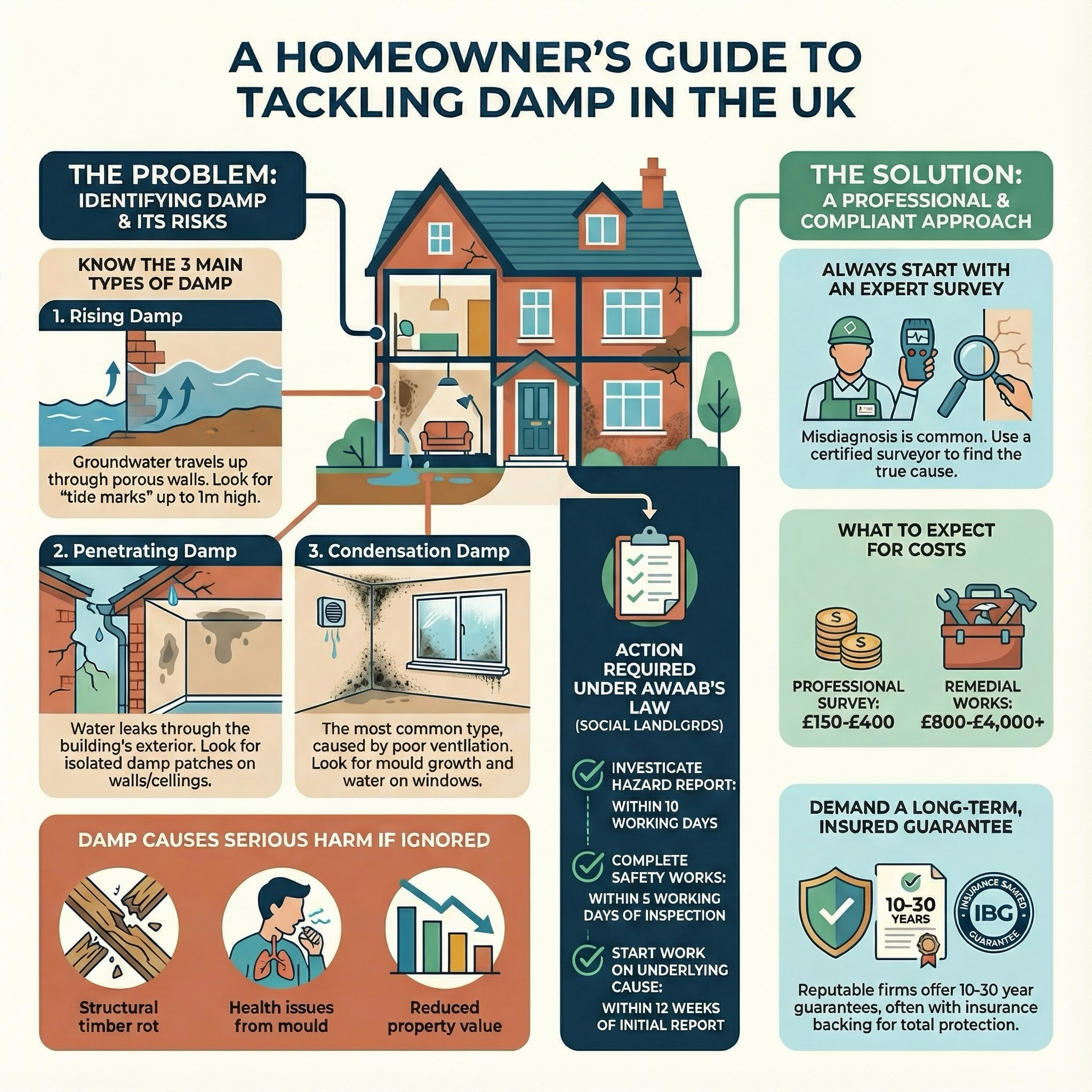
A specialist emergency response focuses on identifying the root cause—whether it is penetrating damp from a storm, a breached damp proof course (DPC), or a plumbing failure—and applying immediate remedial measures to stabilise the property. Acting quickly can save thousands in long-term structural repairs and redecoration costs.
| Item | Low £ | High £ | Notes |
|---|---|---|---|
| Emergency Call-out & Survey | £150 | £350 | Includes initial diagnostic and moisture report. |
| Chemical DPC Injection (per m) | £80 | £140 | Includes drilling and cream/fluid injection. |
| Tanking Slurry Application (per m²) | £70 | £120 | Specialist waterproof coating for internal walls. |
| Dehumidifier Rental (per week) | £60 | £130 | Commercial grade units for rapid drying. |
| Total (Small Emergency Repair) | £500 | £950 | Typical cost for a single-room intervention. |
Prices vary based on the thickness of the walls and the severity of the moisture saturation. Remember that these costs cover the damp proofing itself; subsequent replastering with salt-resistant mortar is often an additional expense.
Damp proofing is rarely a suitable DIY project because misdiagnosis is incredibly common and expensive to fix.
While DIY "damp-proof" paints are available, they often mask the problem, causing moisture to build up behind the paint and blow the plaster off the wall. Professional damp proofers have the diagnostic tools to distinguish between rising damp, penetrating damp, and condensation, ensuring the right treatment is applied the first time.
Generally, home insurance covers damp only if it is the result of a "sudden peril" like a burst pipe or storm damage to the roof. It rarely covers rising damp or issues caused by lack of maintenance.
No. You must allow the wall to dry completely, which can take weeks. Using a breathable "trade matt" emulsion is often recommended initially, as gloss or vinyl paints will trap moisture and bubble.
Rising damp travels upwards from the ground through capillary action in the masonry. Penetrating damp enters horizontally through walls, usually due to structural defects like cracked bricks or failed seals.
Usually not. However, the process can be noisy and dusty, especially if salt-contaminated plaster needs to be hacked off. High-capacity dehumidifiers can also be quite loud.
A professional should return after a few weeks to re-test the moisture levels with a meter. You should also see a visible reduction in damp patches and a decrease in the "musty" smell.
This guide was written with AI assistance and is intended for general information only. Prices are estimates based on UK averages and may vary by region. Always get at least three quotes and consult a qualified professional before starting any work.
Ask follow-ups in plain English. The AI explains options, sequencing and what to ask the damp proofer — so you walk in informed.
Dry rot ( Serpula lacrymans ) is one of the most serious threats to UK homes. Unlike wet rot, dry rot has the unique ability to spread through masonry and plast...
READ GUIDE →GuideStructural waterproofing is the specialised process of protecting a building's foundations and below-ground spaces from groundwater ingress. For UK homeowners, ...
READ GUIDE →GuidePenetrating damp is a common headache for UK homeowners, often caused by water "soaking" through external walls into the property. Unlike rising damp, which cli...
READ GUIDE →GuideDamp is one of the most common issues facing UK homeowners, particularly given our wet climate and ageing housing stock. Whether you are buying a new property o...
READ GUIDE →GuideDamp is more than just an unsightly patch on the wall; it is a warning sign of underlying structural issues that can impact your health and your home's value. A...
READ GUIDE →GuideCondensation is the most common form of dampness in UK homes, often peaking during the colder months when windows stay shut and heating is turned up. While it m...
READ GUIDE →