Instant
01 · Ask
Ask the AI a follow-up
Got more questions about dry Rot Treatment Guidelines? Describe the bit you're unsure about — the AI explains options, sequencing and what to ask the damp proofer.

Mycelium identified, source moisture removed, timbers stripped or treated — full eradication, not patch.
You've read the brief on dry Rot Treatment Guidelines. Now lean on us to find the right damp proofer — and stay in control of the job.
Got more questions about dry Rot Treatment Guidelines? Describe the bit you're unsure about — the AI explains options, sequencing and what to ask the damp proofer.
Costs, timelines, pitfalls and the right questions to ask before any damp proofer starts on dry Rot Treatment Guidelines.
Itemised quotes from up to 3 local damp proofers on dry Rot Treatment Guidelines — so you can compare like-for-like, not lump sums.
Ready when you are
Enter your postcode and get free quotes from local pros.
Four moves that separate a smooth job from a nightmare.
Mistaking dry rot for wet rot. Wet rot stays localised, but dry rot travels; treating dry rot with wet rot methods will result in failure.
Treating the fungus without fixing the leak or ventilation issue. If the timber stays damp, the rot will return.
Not removing enough "healthy looking" timber. Microscopic hyphae can live inside wood that looks fine to the naked eye.
Blocking up air bricks during the repair process, which traps moisture and creates a "hot house" for new fungal growth.
Indicative UK ranges and what affects price.
By job type
Quote spread is typically ± 18% — always get 3 quotes.
Damp Proofer quick-view
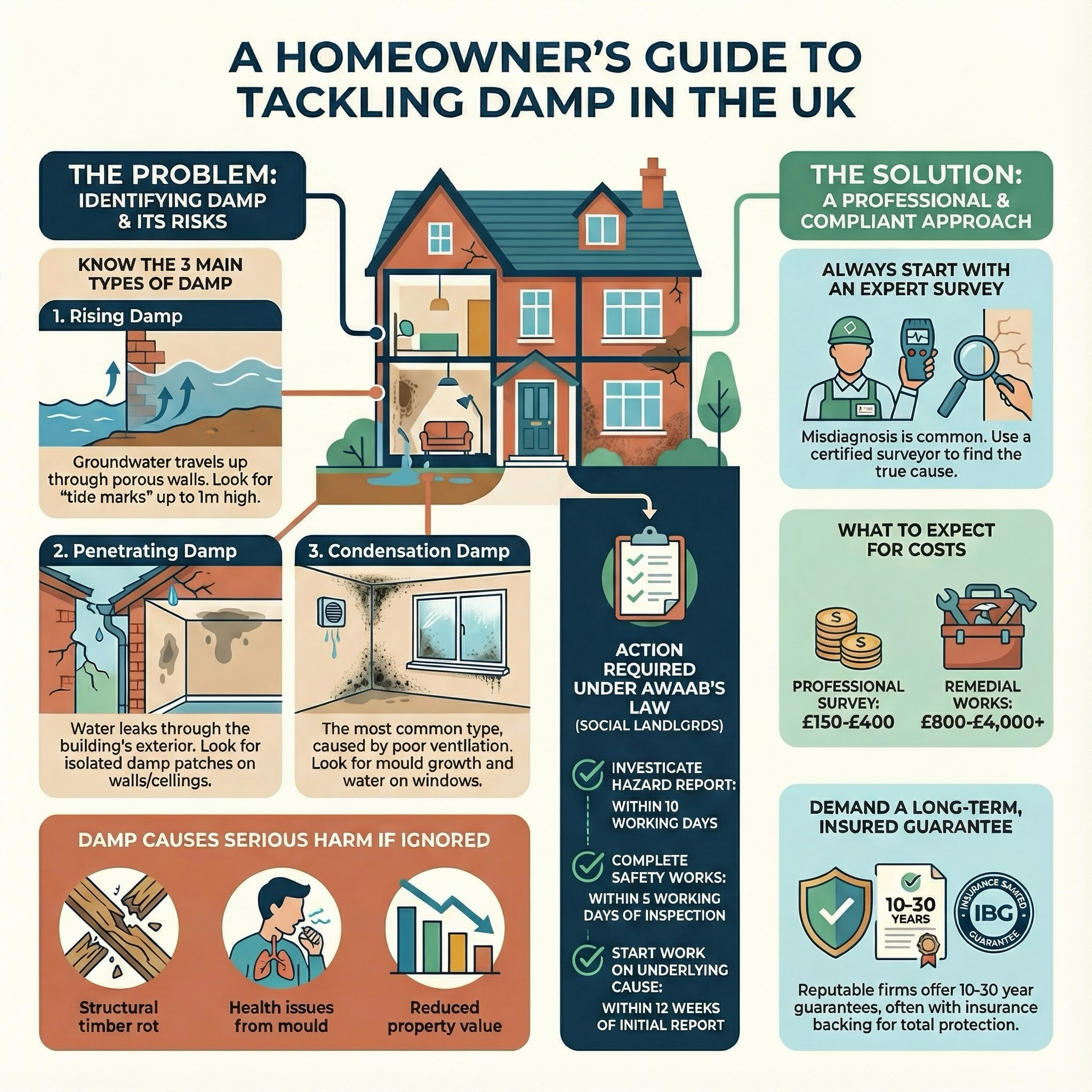
Damp Proofer explained
Dry rot (Serpula lacrymans) is one of the most serious threats to UK homes. Unlike wet rot, dry rot has the unique ability to spread through masonry and plaster to find new timber, meaning a small outbreak can quickly compromise the structural integrity of your entire property.
For UK homeowners, identifying and treating dry rot early is essential to avoid spiralling repair costs. This guide covers the essential steps, realistic costs for 2025/26, and how to ensure the fungus is eradicated for good.
Dry rot treatment is a multi-stage process that focuses on both killing the fungus and removing the moisture source that allowed it to grow. A professional damp proofer or timber specialist will typically follow these steps:
The cost of dry rot treatment varies significantly based on how far the fungus has spread through the walls and floors. Simple surface treatments are rare; most jobs involve significant "strip-out" and reconstruction work.
| Item | Low £ | High £ | Notes |
|---|---|---|---|
| Specialist Timber Survey | £150 | £350 | Often refundable if you book the work. |
| Minor Localised Treatment | £600 | £1,200 | Small area of floorboards or skirting. |
| Structural Floor Repair | £2,000 | £4,500 | Replacing joists and floorboards in one room. |
| Extensive Multi-Room Work | £5,000 | £15,000+ | Large-scale structural timber replacement. |
| Fungicidal Masonry Injection | £30 | £60 | Per linear metre of wall treated. |
What affects the price? The primary cost drivers are the extent of the structural damage and the accessibility of the timber. If joists are embedded in thick stone walls or located under expensive kitchen fitting, the labour costs for "opening up" the area will increase significantly.
The duration of the project depends on the drying-out period required and the scale of the timber replacement.
Dry rot is not a DIY job. While you can buy fungicidal sprays at hardware stores, they rarely penetrate deep enough into the wood or masonry to kill the root of the infection.
Failure to eradicate every trace of dry rot often leads to a "rebound" infection within 12–18 months. Professionals use industrial-grade chemicals and provide insurance-backed guarantees that are essential when you eventually come to sell your home. Furthermore, if structural joists are affected, a professional must ensure the replacements meet UK Building Regulations.
Not all builders are timber specialists. It is vital to hire someone who understands the specific biology of Serpula lacrymans.
Top Question: Ask your tradesperson: "Will you be treating the masonry as well as the timber?" If the answer is no, they are not treating dry rot correctly.
Dry rot treatments must comply with several UK standards to ensure safety and structural integrity.
Usually, no. Most UK insurers view dry rot as a "gradual operating cause" or a maintenance issue rather than "sudden accidental damage." However, if the rot was caused by a sudden burst pipe, you may be able to claim for the plumbing repair, though rarely the rot treatment itself.
Wet rot needs a very high moisture content (around 50%) and stays in the damp area. Dry rot can survive at lower moisture levels (around 20%) and can grow through bricks and mortar to find dry wood in other parts of the house.
While dry rot itself isn't toxic like some black moulds, the damp conditions that cause it can lead to respiratory issues. The massive release of spores during an outbreak can also aggravate asthma or allergies.
Look for a distinct "mushroomy" or earthy smell, deep cracks across the grain of the wood (cuboidal cracking), and grey, skin-like strands on masonry. In advanced stages, you may see a "fruiting body" that looks like a fleshy, orange pancake.
Yes, provided you have a completion certificate and an insurance-backed guarantee from a reputable PCA-registered firm. Without this paperwork, buyers may struggle to get a mortgage, and the property value could be significantly affected.
This guide was written with AI assistance and is intended for general information only. Prices are estimates based on UK averages and may vary by region. Always get at least three quotes and consult a qualified professional before starting any work.
Ask follow-ups in plain English. The AI explains options, sequencing and what to ask the damp proofer — so you walk in informed.
Emergency damp proofing is a critical intervention for UK homeowners facing sudden moisture ingress or structural failure. Left unchecked, damp can lead to timb...
READ GUIDE →GuideStructural waterproofing is the specialised process of protecting a building's foundations and below-ground spaces from groundwater ingress. For UK homeowners, ...
READ GUIDE →GuidePenetrating damp is a common headache for UK homeowners, often caused by water "soaking" through external walls into the property. Unlike rising damp, which cli...
READ GUIDE →GuideDamp is one of the most common issues facing UK homeowners, particularly given our wet climate and ageing housing stock. Whether you are buying a new property o...
READ GUIDE →GuideDamp is more than just an unsightly patch on the wall; it is a warning sign of underlying structural issues that can impact your health and your home's value. A...
READ GUIDE →GuideCondensation is the most common form of dampness in UK homes, often peaking during the colder months when windows stay shut and heating is turned up. While it m...
READ GUIDE →