Instant
01 · Ask
Ask the AI a follow-up
Got more questions about penetrating Damp Treatment? Describe the bit you're unsure about — the AI explains options, sequencing and what to ask the damp proofer.

Damp from outside — failed pointing, gutters or render — found, fixed and the wall dried out.
You've read the brief on penetrating Damp Treatment. Now lean on us to find the right damp proofer — and stay in control of the job.
Got more questions about penetrating Damp Treatment? Describe the bit you're unsure about — the AI explains options, sequencing and what to ask the damp proofer.
Costs, timelines, pitfalls and the right questions to ask before any damp proofer starts on penetrating Damp Treatment.
Itemised quotes from up to 3 local damp proofers on penetrating Damp Treatment — so you can compare like-for-like, not lump sums.
Ready when you are
Enter your postcode and get free quotes from local pros.
Four moves that separate a smooth job from a nightmare.
Treating a wall for penetrating damp when the real issue is internal condensation due to poor ventilation.
Water crossing from the outer leaf to the inner leaf via debris or insulation "snags" inside the wall cavity.
Using modern cement to repoint an old lime-mortar wall, which forces moisture into the bricks and causes them to crumble.
Applying a waterproof coating without fixing the cracked pipe or slipped tile that caused the leak.
Indicative UK ranges and what affects price.
By job type
Quote spread is typically ± 18% — always get 3 quotes.
Damp Proofer quick-view
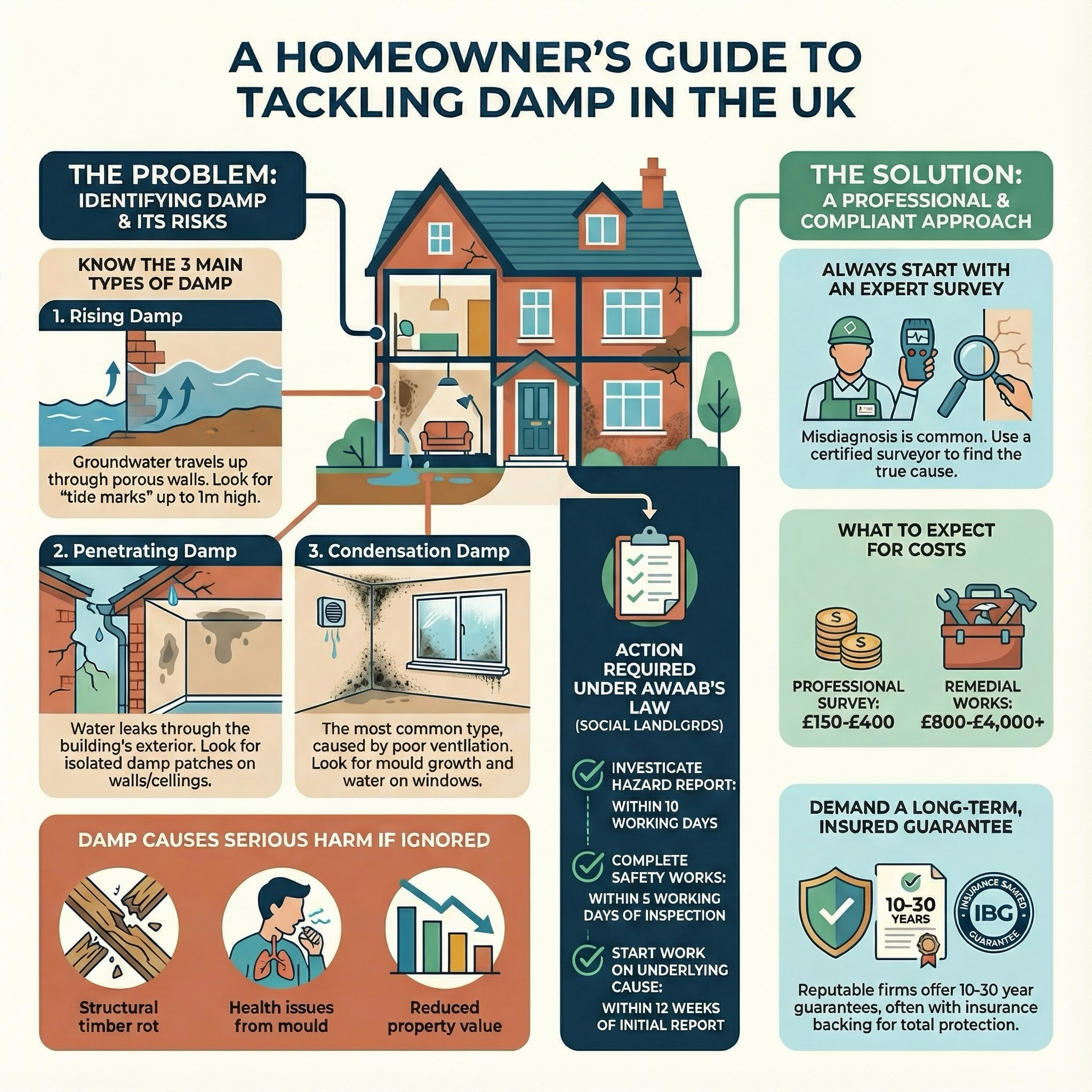
Damp Proofer explained
Left untreated, this moisture causes unsightly staining, "blown" plaster, and structural timber decay. Addressing the root cause and applying professional water-repellent treatments is essential to protect your home’s value and maintain a healthy living environment.
Prices for penetrating damp treatment vary based on the height of the building and the extent of the masonry repairs required. These 2025/26 estimates include VAT and professional labour rates.
| Item | Low £ | High £ | Notes |
|---|---|---|---|
| Specialist Damp Survey | £150 | £350 | Often refundable if work is commissioned. |
| External Cream Treatment (per wall) | £400 | £850 | Includes basic cleaning and application. |
| Repointing (per m²) | £50 | £120 | Essential if mortar is the source of ingress. |
| Internal Re-plastering (per wall) | £450 | £900 | Includes stripping and salt-neutralising. |
| Scaffold Hire (if required) | £600 | £1,200 | Required for safe access to upper floors. |
Factors affecting the final bill include the porosity of your brickwork, the need for scaffolding, and whether the damp has caused secondary issues like dry rot in floor joists.
While DIY "waterproof" paints are available at hardware stores, they often trap moisture inside the brick, worsening the problem over time. Professional-grade silane creams are breathable, which is vital for the health of UK masonry.
Identifying the exact source of ingress requires experience; a professional damp proofer has the thermal imaging and moisture mapping tools to ensure you aren't just masking a symptom. If the work involves structural repairs or chemical injection, hiring a specialist is highly recommended to secure a guarantee.
Ask your tradesperson: "Is this treatment breathable, and will it prevent the bricks from 'spalling' during a freeze-thaw cycle?"
Yes, but it is less common than with condensation. Penetrating damp usually creates brown "tide marks" or salt crusts, but the cold spot it creates on a wall can lead to secondary condensation and black mould growth.
No. Standard paint will bubble and peel within weeks. You must stop the water ingress, let the wall dry, and use a stain-blocking primer before redecorating.
Generally, no. Most UK insurers view penetrating damp as a "maintenance issue" rather than an "event" like a flood or burst pipe. Check your policy for "accidental damage" or "storm damage" clauses.
Rising damp rarely climbs higher than 1 metre above ground level. If the damp patch is high up, near a window, or only appears after heavy rain, it is almost certainly penetrating damp.
This is when the face of the brick flakes off. It happens when bricks become saturated via penetrating damp and the water freezes and expands, shattering the brick surface.
This guide was written with AI assistance and is intended for general information only. Prices are estimates based on UK averages and may vary by region. Always get at least three quotes and consult a qualified professional before starting any work.
Ask follow-ups in plain English. The AI explains options, sequencing and what to ask the damp proofer — so you walk in informed.
Dry rot ( Serpula lacrymans ) is one of the most serious threats to UK homes. Unlike wet rot, dry rot has the unique ability to spread through masonry and plast...
READ GUIDE →GuideEmergency damp proofing is a critical intervention for UK homeowners facing sudden moisture ingress or structural failure. Left unchecked, damp can lead to timb...
READ GUIDE →GuideStructural waterproofing is the specialised process of protecting a building's foundations and below-ground spaces from groundwater ingress. For UK homeowners, ...
READ GUIDE →GuideDamp is one of the most common issues facing UK homeowners, particularly given our wet climate and ageing housing stock. Whether you are buying a new property o...
READ GUIDE →GuideDamp is more than just an unsightly patch on the wall; it is a warning sign of underlying structural issues that can impact your health and your home's value. A...
READ GUIDE →GuideCondensation is the most common form of dampness in UK homes, often peaking during the colder months when windows stay shut and heating is turned up. While it m...
READ GUIDE →