Instant
01 · Ask
Ask the AI a follow-up
Got more questions about damp assessment and quote? Describe the bit you're unsure about — the AI explains options, sequencing and what to ask the damp proofer.

On-site moisture survey with a fixed-price written quote — no upsell, no scare tactics.
You've read the brief on damp assessment and quote. Now lean on us to find the right damp proofer — and stay in control of the job.
Got more questions about damp assessment and quote? Describe the bit you're unsure about — the AI explains options, sequencing and what to ask the damp proofer.
Costs, timelines, pitfalls and the right questions to ask before any damp proofer starts on damp assessment and quote.
Itemised quotes from up to 3 local damp proofers on damp assessment and quote — so you can compare like-for-like, not lump sums.
Ready when you are
Enter your postcode and get free quotes from local pros.
Four moves that separate a smooth job from a nightmare.
The most common error is treating black mould (caused by condensation) with expensive damp-proof injections, which will not solve the problem.
Damp is often caused by external soil or new patios being built above the original damp-proof course, allowing moisture to "bridge" over it.
Using standard gypsum plaster over a damp-proof treatment instead of specialist salt-retardant render will cause the damp to reappear within months.
Many "damp" issues are simply caused by a blocked gutter or a cracked downpipe that has been overlooked.
Indicative UK ranges and what affects price.
By job type
Quote spread is typically ± 18% — always get 3 quotes.
Damp Proofer quick-view
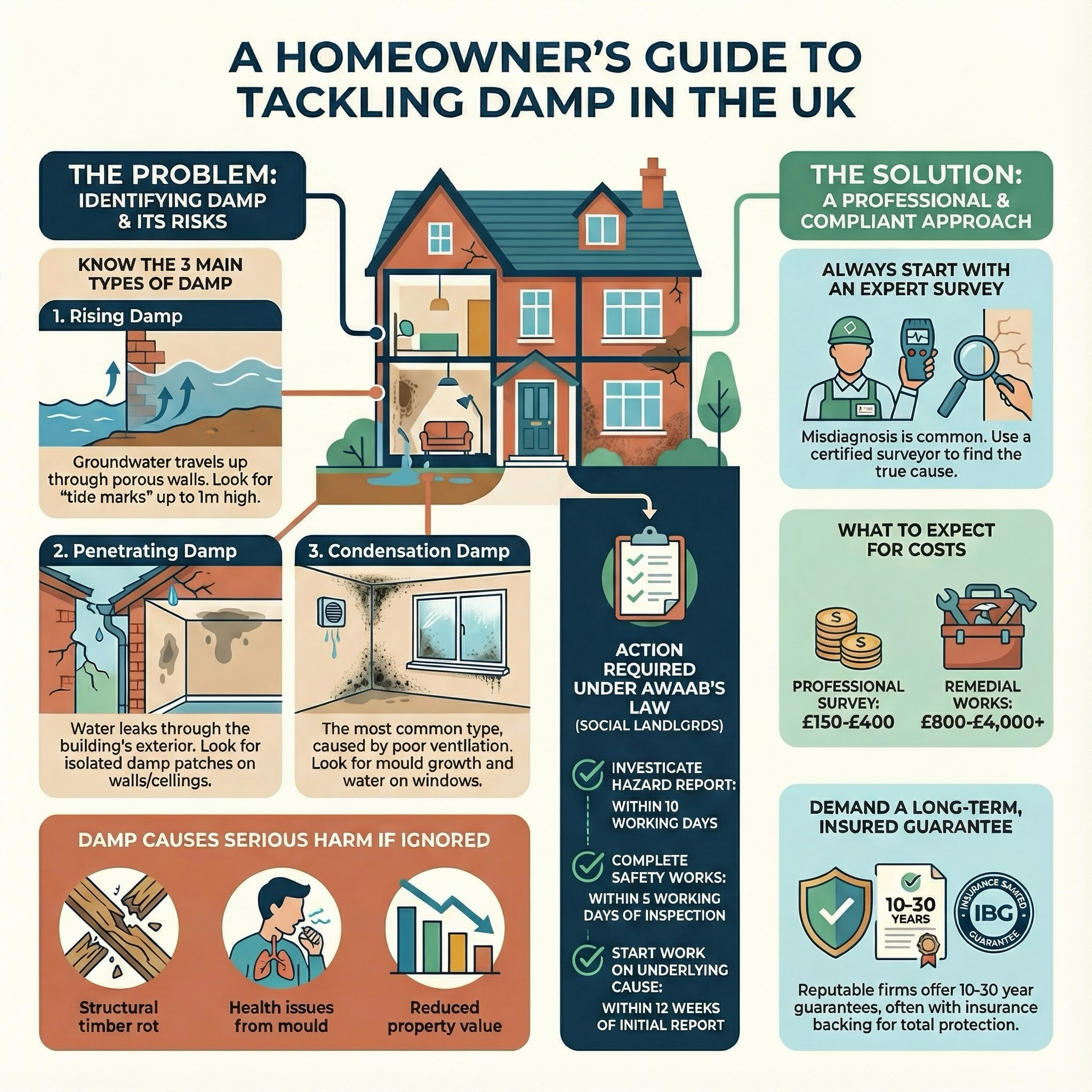
Damp Proofer explained
For UK homeowners, getting a qualified survey is the first step in avoiding expensive, unnecessary treatments. This guide outlines what to expect during an inspection, the typical costs involved, and how to ensure you are hiring a genuine expert rather than a salesperson.
Prices for a damp assessment vary significantly depending on whether you hire an independent surveyor or a specialist contractor. Independent surveys often carry a higher fee but provide unbiased advice without a sales motive.
| Item | Low £ | High £ | Notes |
|---|---|---|---|
| Basic Contractor Survey | £0 | £150 | Often "free" if you book the subsequent repair work. |
| Independent Specialist Survey | £250 | £600 | Comprehensive report for home buyers or complex issues. |
| Hourly Labour Rate | £60 | £100 | For additional site time or invasive investigations. |
| Laboratory Salt Analysis | £50 | £150 | Per sample tested in a lab for accurate diagnosis. |
| Thermal Imaging Hire | £80 | £200 | Specialist equipment for hidden leak detection. |
| Total Estimated Project | £150 | £750 | Highly dependent on property size and survey depth. |
Costs are influenced by property size, the number of affected rooms, and your location in the UK (with London and the South East typically seeing 20% higher rates). Be wary of "free" surveys, as these are often used as lead generation for expensive damp-proofing injections that may not be required.
While you can buy a basic moisture meter for £30, these tools are often misinterpreted by DIYers. They measure electrical resistance, which can be triggered by salts or foil-backed wallpaper, leading to a false diagnosis of "rising damp."
Professional damp proofers understand the "building science" behind moisture movement. In the UK, failing to correctly diagnose damp can lead to "tanking" a wall that actually just needed better ventilation, wasting thousands of pounds.
Some specialist contractors offer "free" surveys, but these are usually sales visits designed to quote for their own treatment services. Independent, PCA-qualified surveyors will charge a fee (typically £200-£500) but provide an unbiased diagnosis with no vested interest in selling you a product.
Rising damp is ground water travelling upwards through porous masonry via capillary action, usually leaving a tide mark up to 1 metre high. Penetrating damp is water entering horizontally through the building envelope, such as through cracked bricks, faulty roofing, or leaking pipes.
Yes, the surveyor will need access to the walls where damp is visible. You should move heavy furniture away from affected areas before they arrive. If the surveyor suspects a sub-floor issue (like wet rot), they may ask to lift a few floorboards, though they will usually ask for permission first.
Yes, lenders often require a damp and timber report if a general RICS homebuyer survey flags potential moisture issues. In these cases, you usually need a report from a PCA-registered surveyor to satisfy the bank's requirements.
No, black mould (Aspergillus niger) is almost exclusively a sign of condensation. It occurs when warm, moist air hits a cold surface. Rising damp usually presents as yellow or brown staining and salt crusts, but rarely black mould, as the salts in ground water often inhibit its growth.
This guide was written with AI assistance and is intended for general information only. Prices are estimates based on UK averages and may vary by region. Always get at least three quotes and consult a qualified professional before starting any work.
Ask follow-ups in plain English. The AI explains options, sequencing and what to ask the damp proofer — so you walk in informed.
Dry rot ( Serpula lacrymans ) is one of the most serious threats to UK homes. Unlike wet rot, dry rot has the unique ability to spread through masonry and plast...
READ GUIDE →GuideEmergency damp proofing is a critical intervention for UK homeowners facing sudden moisture ingress or structural failure. Left unchecked, damp can lead to timb...
READ GUIDE →GuideStructural waterproofing is the specialised process of protecting a building's foundations and below-ground spaces from groundwater ingress. For UK homeowners, ...
READ GUIDE →GuidePenetrating damp is a common headache for UK homeowners, often caused by water "soaking" through external walls into the property. Unlike rising damp, which cli...
READ GUIDE →GuideDamp is one of the most common issues facing UK homeowners, particularly given our wet climate and ageing housing stock. Whether you are buying a new property o...
READ GUIDE →GuideCondensation is the most common form of dampness in UK homes, often peaking during the colder months when windows stay shut and heating is turned up. While it m...
READ GUIDE →