Instant
01 · Ask
Ask the AI a follow-up
Got more questions about damp Proofing Process? Describe the bit you're unsure about — the AI explains options, sequencing and what to ask the damp proofer.

Survey, diagnosis, treatment and re-plaster — what each phase looks like and what it should cost.
You've read the brief on damp Proofing Process. Now lean on us to find the right damp proofer — and stay in control of the job.
Got more questions about damp Proofing Process? Describe the bit you're unsure about — the AI explains options, sequencing and what to ask the damp proofer.
Costs, timelines, pitfalls and the right questions to ask before any damp proofer starts on damp Proofing Process.
Itemised quotes from up to 3 local damp proofers on damp Proofing Process — so you can compare like-for-like, not lump sums.
Ready when you are
Enter your postcode and get free quotes from local pros.
Four moves that separate a smooth job from a nightmare.
Many "rising damp" issues are actually caused by poor ventilation or leaking gutters, leading to unnecessary and expensive work.
High external ground levels or internal plaster touching a solid floor can "bridge" the damp course, allowing moisture to bypass it.
Using standard gypsum plaster over a new DPC will fail, as it cannot cope with residual salts in the brickwork.
Injecting a wall without fixing a leaking pipe or blocked air brick will result in the damp returning within months.
Indicative UK ranges and what affects price.
By job type
Quote spread is typically ± 18% — always get 3 quotes.
Damp Proofer quick-view
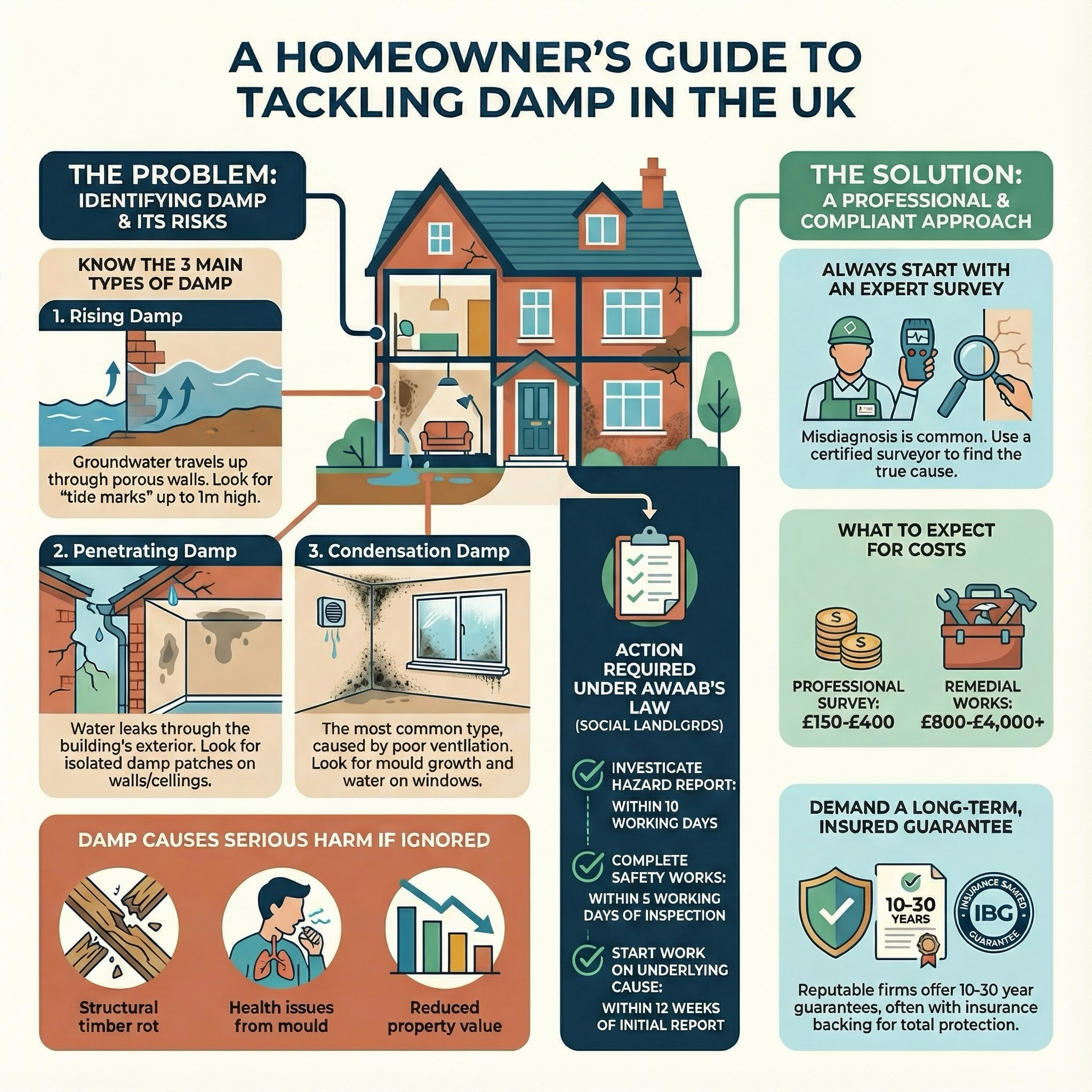
Damp Proofer explained
Professional damp proofing involves identifying the root cause—whether it is rising damp, penetrating damp, or condensation—and applying a permanent barrier to keep your home dry. Effective treatment not only protects your health but is often a mandatory requirement for securing a mortgage or selling a property.
| Item | Low £ | High £ | Notes |
|---|---|---|---|
| Specialist Damp Survey | £150 | £350 | Often refundable if you book the remedial work. |
| Chemical DPC (per metre) | £80 | £150 | Includes drilling and injection only. |
| Damp Membrane (per m²) | £60 | £100 | Includes materials and specialist fixings. |
| Full Room Treatment | £2,500 | £5,000 | Stripping, DPC, and specialist re-plastering. |
| External French Drain | £1,200 | £2,500 | Required if external ground levels are too high. |
Total costs are heavily influenced by the size of the affected area and the thickness of your walls. Expect to pay more for properties with flint or stone walls, as these require more complex injection patterns and specialist materials.
While DIY injection kits are available at hardware stores, they are rarely a permanent fix for rising damp. Professional damp proofers use high-pressure equipment and specialist salt-resistant renders that are not available to the general public.
Note: Most mortgage lenders and insurance companies will only accept damp-proofing certificates issued by a qualified professional with a long-term guarantee.
Yes, it is a dusty and intrusive process. Removing old plaster and drilling into masonry creates significant debris, so rooms should be cleared and furniture covered with heavy-duty plastic sheeting.
No. You must wait for the new render and plaster to dry completely. It is usually recommended to use a breathable "trade matte" emulsion for the first 6–12 months before applying vinyl paints or wallpaper.
Rising damp usually leaves a "tide mark" and causes skirting boards to rot. Condensation typically appears as black mould in corners, behind furniture, or around window frames where air circulation is poor.
Be wary of "free" surveys from contractors, as they have an incentive to find problems. A paid, independent survey is often more reliable for an accurate, unbiased diagnosis.
It will stop mould caused by structural moisture ingress. However, if your mould is caused by high humidity and poor ventilation (condensation), you will also need to install extractor fans or PIV systems.
This guide was written with AI assistance and is intended for general information only. Prices are estimates based on UK averages and may vary by region. Always get at least three quotes and consult a qualified professional before starting any work.
Ask follow-ups in plain English. The AI explains options, sequencing and what to ask the damp proofer — so you walk in informed.
Dry rot ( Serpula lacrymans ) is one of the most serious threats to UK homes. Unlike wet rot, dry rot has the unique ability to spread through masonry and plast...
READ GUIDE →GuideEmergency damp proofing is a critical intervention for UK homeowners facing sudden moisture ingress or structural failure. Left unchecked, damp can lead to timb...
READ GUIDE →GuideStructural waterproofing is the specialised process of protecting a building's foundations and below-ground spaces from groundwater ingress. For UK homeowners, ...
READ GUIDE →GuidePenetrating damp is a common headache for UK homeowners, often caused by water "soaking" through external walls into the property. Unlike rising damp, which cli...
READ GUIDE →GuideDamp is one of the most common issues facing UK homeowners, particularly given our wet climate and ageing housing stock. Whether you are buying a new property o...
READ GUIDE →GuideDamp is more than just an unsightly patch on the wall; it is a warning sign of underlying structural issues that can impact your health and your home's value. A...
READ GUIDE →