Instant
01 · Ask
Ask the AI a follow-up
Got more questions about mould Remediation Process? Describe the bit you're unsure about — the AI explains options, sequencing and what to ask the damp proofer.

What proper mould remediation looks like — containment, removal, treatment and re-test.
You've read the brief on mould Remediation Process. Now lean on us to find the right damp proofer — and stay in control of the job.
Got more questions about mould Remediation Process? Describe the bit you're unsure about — the AI explains options, sequencing and what to ask the damp proofer.
Costs, timelines, pitfalls and the right questions to ask before any damp proofer starts on mould Remediation Process.
Itemised quotes from up to 3 local damp proofers on mould Remediation Process — so you can compare like-for-like, not lump sums.
Ready when you are
Enter your postcode and get free quotes from local pros.
Four moves that separate a smooth job from a nightmare.
Wiping away mould without fixing the leaking pipe or poor ventilation ensures it will return within weeks.
Applying new plaster or paint to a wall that is still internally damp will lead to immediate failure of the finish.
Household bleach often only kills surface mould; the water in the bleach can actually penetrate deeper into timber or plaster, feeding the roots (mycelium).
Aggressively scrubbing dry mould without containment can release millions of spores into the air, spreading the problem to other rooms.
Indicative UK ranges and what affects price.
By job type
Quote spread is typically ± 18% — always get 3 quotes.
Damp Proofer quick-view
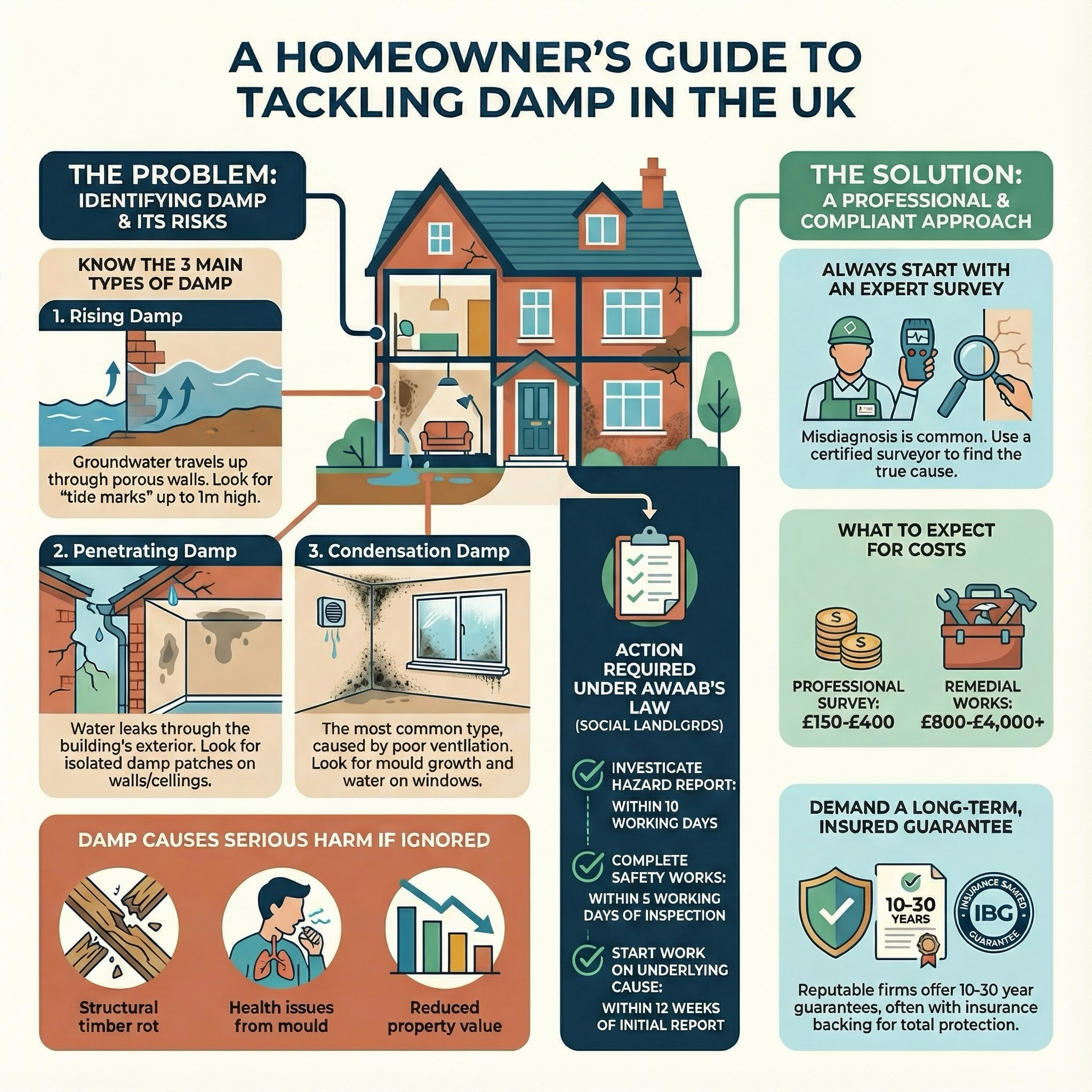
Damp Proofer explained
For UK homeowners, tackling mould promptly is essential to prevent respiratory issues and avoid the "sick building syndrome" often associated with poorly ventilated properties. This guide outlines what to expect when hiring a specialist damp proofer or mould remediator to restore your home to a healthy state.
| Item | Low £ | High £ | Notes |
|---|---|---|---|
| Professional Mould Survey | £150 | £400 | Includes moisture mapping and report. |
| Small Area Remediation (e.g., Bathroom) | £300 | £650 | Cleaning and fungicidal treatment. |
| Large Room Remediation | £700 | £1,500 | Includes strip-out of affected plasterboard. |
| Whole House Fogging/Treatment | £1,200 | £3,500+ | Prices vary by property size and severity. |
| PIV System Installation | £600 | £1,000 | To prevent future condensation-led mould. |
Prices generally include VAT and labour. Total costs are heavily influenced by the extent of the infestation, the accessibility of the mould (e.g., inside cavity walls or lofts), and whether structural repairs are needed to stop the original leak or damp source.
Small patches of surface mould (less than 1 square metre) caused by simple condensation can often be handled with a DIY mould spray and improved ventilation. However, if the mould covers a large area, returns frequently, or follows a flood, a professional is required. Professionals have the PPE and industrial-grade HEPA vacuums necessary to handle toxic species like Stachybotrys chartarum (black mould) without cross-contaminating your home.
Note: If you are a tenant, the Landlord and Tenant Act 1985 requires landlords to ensure the property is "fit for human habitation," which includes keeping it free from serious mould growth.
For minor treatments, you can usually stay in the home. However, for large-scale remediation involving "fogging" or heavy structural removal, you may need to vacate the affected rooms for 24–48 hours to avoid inhaling spores or chemicals.
Most UK policies only cover mould if it is the direct result of a "covered peril," such as a burst pipe. Mould caused by poor maintenance, rising damp, or general condensation is typically excluded.
A mould wash is a biocidal treatment designed to kill the fungi. Anti-mould paint is a preventative topcoat containing fungicides that stop spores from germinating on the surface in the future.
A dehumidifier will not kill existing mould; it only removes the moisture that allows it to grow. You must physically remove the mould first, then use a dehumidifier or improved ventilation to keep the humidity below 50-60%.
Not always, but a musty, earthy odour is a common sign of "hidden" mould behind wallpaper, under floorboards, or behind built-in wardrobes where air circulation is poor.
This guide was written with AI assistance and is intended for general information only. Prices are estimates based on UK averages and may vary by region. Always get at least three quotes and consult a qualified professional before starting any work.
Ask follow-ups in plain English. The AI explains options, sequencing and what to ask the damp proofer — so you walk in informed.
Dry rot ( Serpula lacrymans ) is one of the most serious threats to UK homes. Unlike wet rot, dry rot has the unique ability to spread through masonry and plast...
READ GUIDE →GuideEmergency damp proofing is a critical intervention for UK homeowners facing sudden moisture ingress or structural failure. Left unchecked, damp can lead to timb...
READ GUIDE →GuideStructural waterproofing is the specialised process of protecting a building's foundations and below-ground spaces from groundwater ingress. For UK homeowners, ...
READ GUIDE →GuidePenetrating damp is a common headache for UK homeowners, often caused by water "soaking" through external walls into the property. Unlike rising damp, which cli...
READ GUIDE →GuideDamp is one of the most common issues facing UK homeowners, particularly given our wet climate and ageing housing stock. Whether you are buying a new property o...
READ GUIDE →GuideDamp is more than just an unsightly patch on the wall; it is a warning sign of underlying structural issues that can impact your health and your home's value. A...
READ GUIDE →