Instant
01 · Ask
Ask the AI a follow-up
Got more questions about rising damp resolution? Describe the bit you're unsure about — the AI explains options, sequencing and what to ask the damp proofer.

Chemical DPC injection or electro-osmotic — diagnosed first, then treated only if rising damp is real.
You've read the brief on rising damp resolution. Now lean on us to find the right damp proofer — and stay in control of the job.
Got more questions about rising damp resolution? Describe the bit you're unsure about — the AI explains options, sequencing and what to ask the damp proofer.
Costs, timelines, pitfalls and the right questions to ask before any damp proofer starts on rising damp resolution.
Itemised quotes from up to 3 local damp proofers on rising damp resolution — so you can compare like-for-like, not lump sums.
Ready when you are
Enter your postcode and get free quotes from local pros.
Four moves that separate a smooth job from a nightmare.
This occurs when the external ground level (patios or flower beds) is raised above the DPC, allowing moisture to bypass the barrier.
If new plaster touches a solid floor or is applied too low down, it can "wick" moisture up from the ground, bypassing the new DPC.
Failing to remove enough of the old plaster. Salts can travel higher than the visible damp line, so stripping 500mm above the mark is standard.
Treating for rising damp when the issue is actually a leaking pipe, blocked gutter, or poor sub-floor ventilation.
Indicative UK ranges and what affects price.
By job type
Quote spread is typically ± 18% — always get 3 quotes.
Damp Proofer quick-view
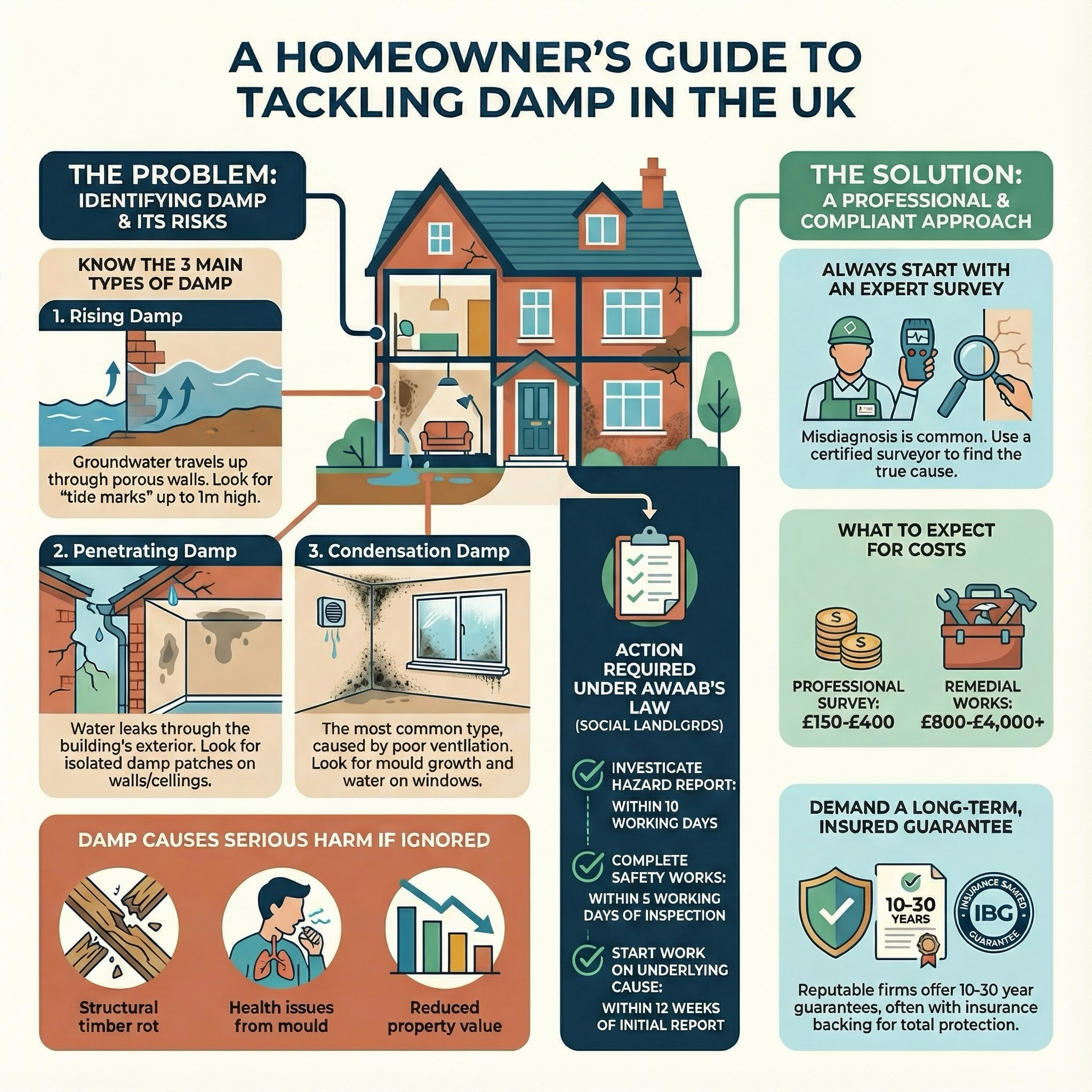
Damp Proofer explained
Resolving rising damp is essential for maintaining the structural integrity of your home and ensuring a healthy living environment. Professional intervention not only stops the moisture but also addresses the residual salts that continue to attract moisture from the air long after the leak is fixed.
| Item | Low £ | High £ | Notes |
|---|---|---|---|
| Specialist Damp Survey | £150 | £350 | Often refundable if you commission the remedial work. |
| Chemical DPC Injection (per metre) | £80 | £150 | Cost varies based on wall thickness and accessibility. |
| Salt-Retardant Replastering (per sqm) | £60 | £100 | Includes hacking off old plaster and disposal. |
| Membrane Tanking (per room) | £800 | £1,800 | A more robust solution for high-risk areas. |
| Waste Disposal (Skip hire) | £200 | £450 | Contaminated plaster is heavy and requires proper disposal. |
| Full Room Treatment (Average) | £1,200 | £3,500 | Based on a standard 4m x 4m room in a UK terrace. |
The total cost is heavily influenced by the extent of the salt contamination and whether internal timber floors have been affected by rot. Prices in London and the South East typically sit 15-20% higher than the national average.
Rising damp resolution is almost exclusively a professional task. While DIY "injection kits" are available, they are frequently misapplied, and most homeowners lack the heavy-duty equipment needed to hack off specialist renders or the expertise to diagnose the root cause accurately.
Professional damp proofing is often a requirement for UK mortgage lenders; DIY work rarely comes with the insurance-backed guarantees they demand.
Furthermore, using the wrong plaster (such as standard gypsum) over a new DPC will result in failure, as the salts remaining in the brickwork will quickly ruin the new finish.
Questions to ask:
No. You must wait for the wall to dry completely. You can usually apply a breathable "contract matt" emulsion after a few weeks, but permanent finishes like silk paint or wallpaper should wait several months.
Not always. It can sometimes hide behind dry-lining or heavy furniture, manifesting only as a musty smell or rot in the floorboards before it appears on the walls.
No. A dehumidifier only removes moisture from the air. It will not stop ground water from being pulled into the masonry; in fact, it can sometimes accelerate the process by drawing more moisture through the wall.
A tide mark is a visible line of salt crystals or staining on a wall, usually about one metre high, which indicates the maximum height the ground water has reached.
Usually not, but it is a very dusty and noisy process. Most homeowners prefer to seal off the affected rooms. If the hallway is being treated, access may be restricted for a day or two.
This guide was written with AI assistance and is intended for general information only. Prices are estimates based on UK averages and may vary by region. Always get at least three quotes and consult a qualified professional before starting any work.
Ask follow-ups in plain English. The AI explains options, sequencing and what to ask the damp proofer — so you walk in informed.
Dry rot ( Serpula lacrymans ) is one of the most serious threats to UK homes. Unlike wet rot, dry rot has the unique ability to spread through masonry and plast...
READ GUIDE →GuideEmergency damp proofing is a critical intervention for UK homeowners facing sudden moisture ingress or structural failure. Left unchecked, damp can lead to timb...
READ GUIDE →GuideStructural waterproofing is the specialised process of protecting a building's foundations and below-ground spaces from groundwater ingress. For UK homeowners, ...
READ GUIDE →GuidePenetrating damp is a common headache for UK homeowners, often caused by water "soaking" through external walls into the property. Unlike rising damp, which cli...
READ GUIDE →GuideDamp is one of the most common issues facing UK homeowners, particularly given our wet climate and ageing housing stock. Whether you are buying a new property o...
READ GUIDE →GuideDamp is more than just an unsightly patch on the wall; it is a warning sign of underlying structural issues that can impact your health and your home's value. A...
READ GUIDE →