Instant
01 · Ask
Ask the AI a follow-up
Got more questions about woodworm Treatment? Describe the bit you're unsure about — the AI explains options, sequencing and what to ask the damp proofer.

Common furniture beetle, deathwatch beetle or woodboring weevil — sprayed, fumigated or paste-treated.
You've read the brief on woodworm Treatment. Now lean on us to find the right damp proofer — and stay in control of the job.
Got more questions about woodworm Treatment? Describe the bit you're unsure about — the AI explains options, sequencing and what to ask the damp proofer.
Costs, timelines, pitfalls and the right questions to ask before any damp proofer starts on woodworm Treatment.
Itemised quotes from up to 3 local damp proofers on woodworm Treatment — so you can compare like-for-like, not lump sums.
Ready when you are
Enter your postcode and get free quotes from local pros.
Four moves that separate a smooth job from a nightmare.
Many homeowners pay for treatment on old exit holes where the beetles have long since gone.
Woodworm need timber with a moisture content above 12%; failing to fix a damp problem means the treatment may eventually fail.
Failing to clear dust or old insulation from timbers prevents the chemical from soaking into the wood fibres.
Returning to the property or laying carpets before the treatment has fully dried can lead to chemical smells or skin irritation.
Indicative UK ranges and what affects price.
By job type
Quote spread is typically ± 18% — always get 3 quotes.
Damp Proofer quick-view
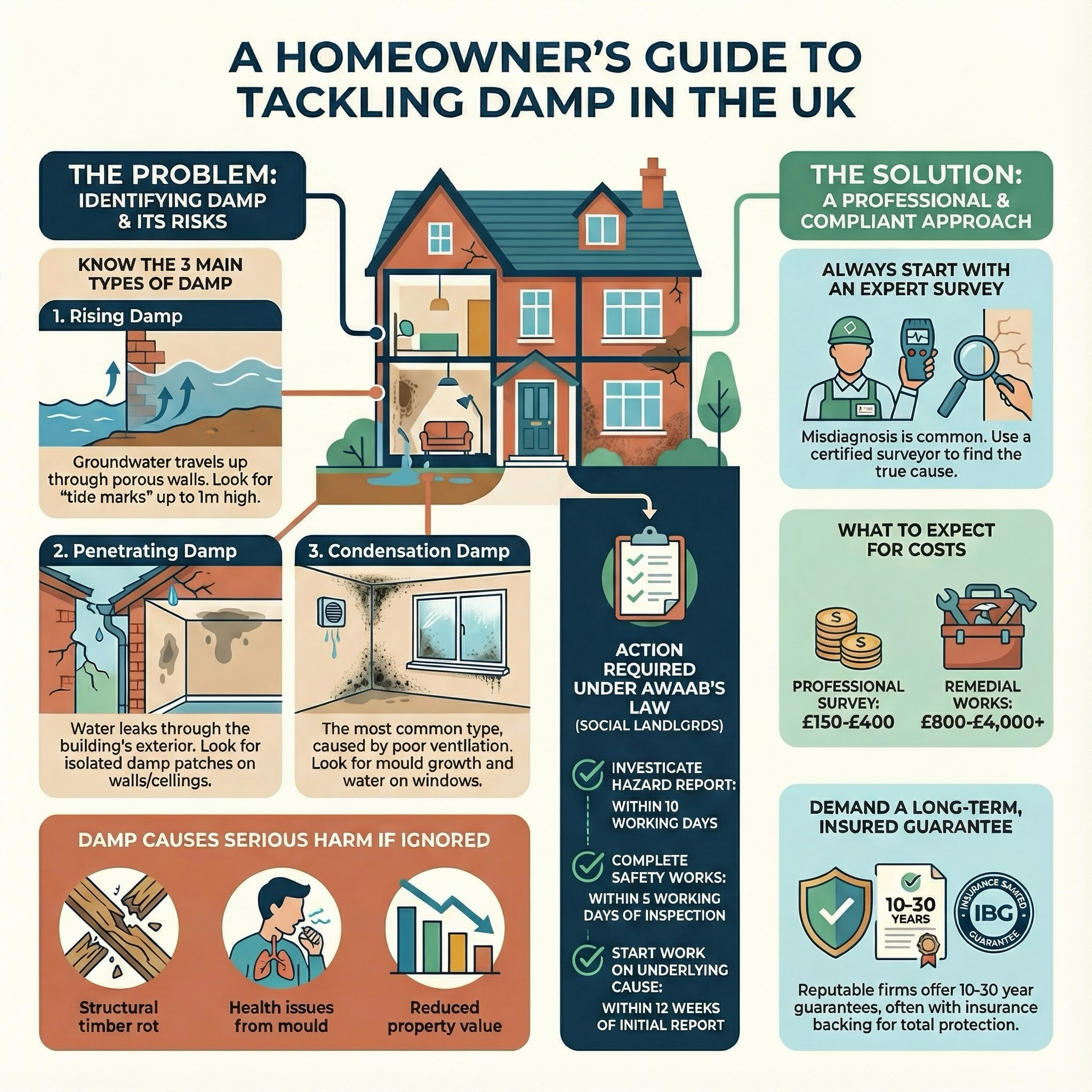
Damp Proofer explained
Professional treatment is essential not only to eradicate the current infestation but to provide long-term protection. In the UK, woodworm is often a symptom of underlying dampness, making it a critical issue for homeowners to address before it affects the resale value or safety of the building.
The cost of woodworm treatment in the UK varies based on the size of the area and the accessibility of the timbers. Most reputable firms will charge a fixed fee per room or a flat rate for a complete loft space.
| Item | Low £ | High £ | Notes |
|---|---|---|---|
| Professional Survey | £150 | £300 | Often refundable if you book the treatment. |
| Single Room Treatment | £400 | £750 | Includes floorboard lifting and spraying. |
| Full Loft Treatment | £600 | £1,200 | Depends on insulation removal and joist access. |
| Whole House (3-Bed Semi) | £1,800 | £3,500 | Comprehensive treatment of all accessible timber. |
| Timber Joist Replacement | £250 | £500 | Per joist, including labour and materials. |
Prices are influenced by the severity of the infestation and the type of beetle involved. Deathwatch Beetle infestations often require deeper, more expensive paste treatments compared to the Common Furniture Beetle.
While DIY spray kits are available for small items of furniture, structural woodworm treatment should be left to professionals. Professional-grade chemicals are more effective, and a specialist can provide the 10–30 year insurance-backed guarantees usually required by mortgage lenders during a house sale.
Expert Tip: Always check if your damp proofer is a member of the Property Care Association (PCA). This ensures they follow strict codes of practice and can offer valid guarantees.
Look for "frass," which looks like fine sawdust or pencil lead dust around the holes. If the holes have clean, bright edges rather than dark, dusty ones, it is likely an active infestation.
Typically, you will need to vacate the treated rooms for 8 to 24 hours depending on the chemical used. Your contractor will provide a specific "re-entry time" based on the product’s safety data sheet.
Yes, adult beetles can fly and may lay eggs in structural timbers if the conditions (moisture and wood type) are suitable. It is always best to treat infested furniture immediately.
Modern water-based treatments are virtually odourless. However, you should still ensure the area is well-ventilated during and immediately after the application.
Once the treatment is completely dry, it is safe for pets. However, pets must be kept away from the area during the application and for the duration of the specified drying period.
Woodworm is an insect infestation that creates tunnels, while Dry Rot is a fungus that eats the cellulose in wood, making it brittle and crumbly. Both thrive in damp conditions and often occur together.
This guide was written with AI assistance and is intended for general information only. Prices are estimates based on UK averages and may vary by region. Always get at least three quotes and consult a qualified professional before starting any work.
Ask follow-ups in plain English. The AI explains options, sequencing and what to ask the damp proofer — so you walk in informed.
Dry rot ( Serpula lacrymans ) is one of the most serious threats to UK homes. Unlike wet rot, dry rot has the unique ability to spread through masonry and plast...
READ GUIDE →GuideEmergency damp proofing is a critical intervention for UK homeowners facing sudden moisture ingress or structural failure. Left unchecked, damp can lead to timb...
READ GUIDE →GuideStructural waterproofing is the specialised process of protecting a building's foundations and below-ground spaces from groundwater ingress. For UK homeowners, ...
READ GUIDE →GuidePenetrating damp is a common headache for UK homeowners, often caused by water "soaking" through external walls into the property. Unlike rising damp, which cli...
READ GUIDE →GuideDamp is one of the most common issues facing UK homeowners, particularly given our wet climate and ageing housing stock. Whether you are buying a new property o...
READ GUIDE →GuideDamp is more than just an unsightly patch on the wall; it is a warning sign of underlying structural issues that can impact your health and your home's value. A...
READ GUIDE →