Instant
01 · Ask
Ask the AI a follow-up
Got more questions about interior Painting? Describe the bit you're unsure about — the AI explains options, sequencing and what to ask the decorator.

Prep, fill, prime and finish — single room or whole house — by professional decorators with proper coverage.
You've read the brief on interior Painting. Now lean on us to find the right decorator — and stay in control of the job.
Got more questions about interior Painting? Describe the bit you're unsure about — the AI explains options, sequencing and what to ask the decorator.
Costs, timelines, pitfalls and the right questions to ask before any decorator starts on interior Painting.
Itemised quotes from up to 3 local decorators on interior Painting — so you can compare like-for-like, not lump sums.
Ready when you are
Enter your postcode and get free quotes from local pros.
Four moves that separate a smooth job from a nightmare.
Cracks and nail holes show through fresh paint within months. Quality job = fill, sand, prime.
Some cheap quotes "include" one coat. Walls show roller marks within a year.
Mist coat (watered-down emulsion) is essential. Without it, top coats peel.
Cheap decorators don't mask properly. Quality decorators mask floors, skirting, sockets, switches.
Indicative UK ranges and what affects price.
By job type
Quote spread is typically ± 18% — always get 3 quotes.
Decorator quick-view
Decorator explained
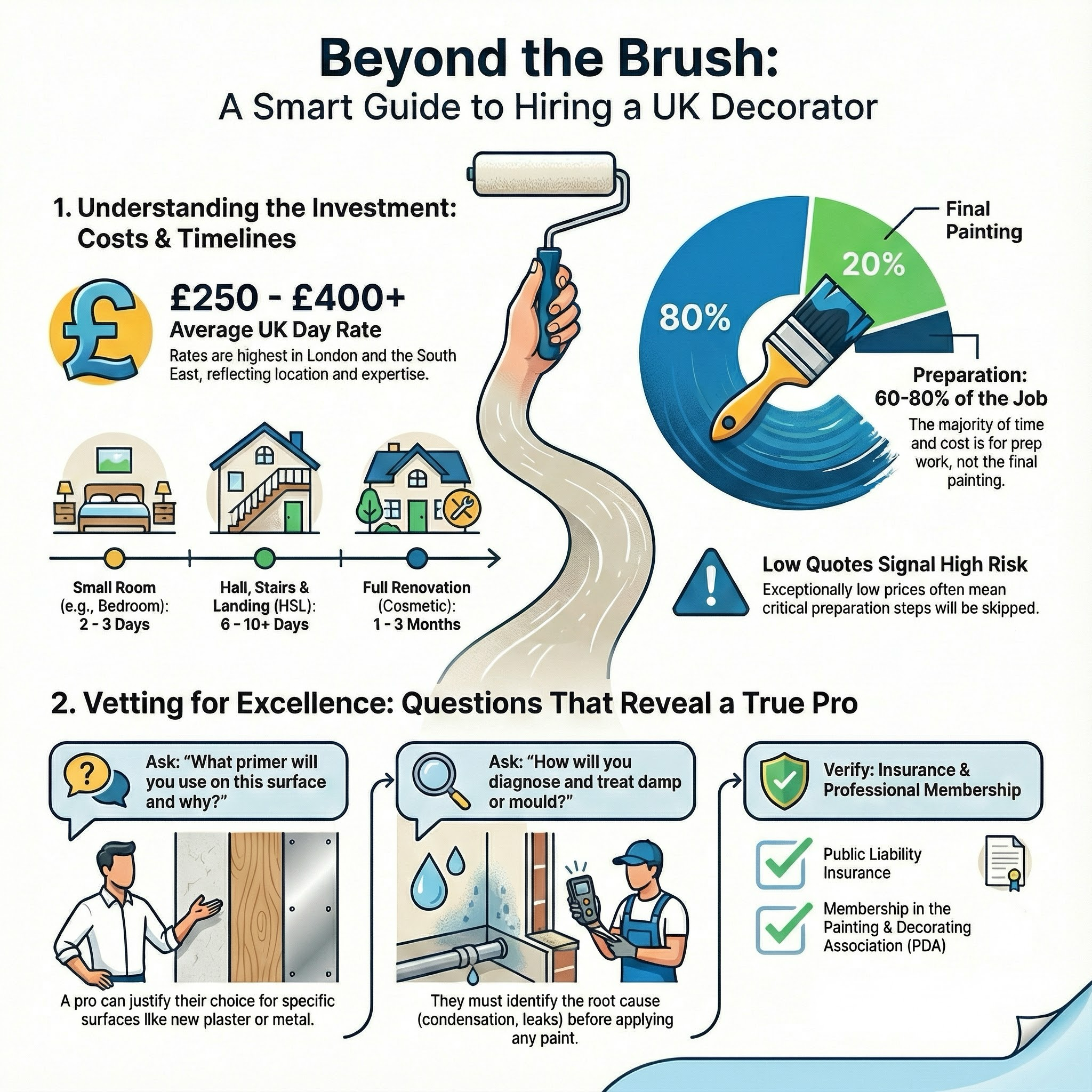
Interior painting transforms a room more than any other home upgrade for the money. A typical UK room costs £200–£1,200 for a professional decorator to paint, depending on size, condition and finish required. The hidden cost is prep — and that's where cheap quotes cut corners.
A quality interior paint job is 60% prep, 40% paint. The decorator covers floors and furniture, fills cracks and nail holes with Easi-Fill or similar, sands smooth, dusts off, masks edges, primes any new plaster or bare wood, applies two top coats with brush and roller, and inspects under good light for missed areas. Cheap quotes skip the filling, sanding, and primer steps.
| Item | Low (£) | High (£) | Notes |
|---|---|---|---|
| Small bedroom (3m × 3m) | 180 | 450 | Walls and ceiling |
| Standard bedroom (4m × 4m) | 250 | 600 | Walls and ceiling |
| Living room (5m × 5m) | 350 | 900 | Walls and ceiling |
| Kitchen-diner (open plan) | 500 | 1,500 | Higher prep, more cutting in |
| Hallway, stairs, landing | 500 | 1,500 | Most complex due to access |
| Premium paint upgrade | +£50 | +£300 | Farrow & Ball vs trade emulsion |
| Whole house redecorate | 2,500 | 9,000 | 5–6 rooms plus hall |
Single bedroom: 1–2 days. Living room: 2 days. Hallway, stairs and landing: 2–3 days. Whole house: 1–2 weeks for one decorator, 5–7 days with two.
DIY-able for a single room over a weekend. Professional finish requires experienced cutting-in (line between wall and ceiling), even coverage, and clean line at woodwork. The visible difference between DIY and pro is the line at the cornice and skirting.
A painter and decorator — ideally Dulux Select, Crown Trade, or similar accredited. Ask about prep — quality decorators talk about it more than paint colour. Get the spec in writing: brand, finish (matt, eggshell), number of coats. Insist on a paint sample on the actual wall, not just a paint chip.
No specific Building Regs. Lead-paint regulations apply to pre-1960s properties — sand wet, not dry, on any old paint. Listed buildings need consent for major colour changes.
Quality two-coat job with proper prep: 7–10 years. Cheap rushed job: 2–3 years before it shows.
Trade-grade Dulux Diamond Matt or Crown Trade Vinyl Matt for cost-performance. Farrow & Ball Estate Emulsion for the premium designer look. Little Greene for heritage colours.
Two coats minimum over existing painted walls. Three coats over bare plaster (mist coat + two finish coats). Light over dark or vivid colours: three coats minimum.
Matt for living rooms and bedrooms (low sheen, hides imperfections). Eggshell for kitchens and bathrooms (washable, moisture-resistant). Silk is outdated — shows roller marks.
Helpful but not essential — quality decorators cover and move furniture as part of the job. Empty rooms speed the work 20–30%.
Walls touch-dry in 1–2 hours; fully cured in 7 days. Avoid leaning furniture against walls for 48 hours.
This guide was written with AI assistance and is intended for general information only. Prices are estimates based on UK averages and may vary by region. Always get at least three quotes and consult a qualified professional before starting any work.
Ask follow-ups in plain English. The AI explains options, sequencing and what to ask the decorator — so you walk in informed.
Exterior paint protects the building and refreshes the look. UK costs by house size, masonry vs render and what survives UK weather.
READ GUIDE →GuideWallpaper transforms rooms with pattern, texture and colour. UK costs per roll, prep work and matching pattern repeats.
READ GUIDE →GuideAirless spray gives a factory finish on woodwork and walls. UK costs, equipment and when spray beats brush-and-roller.
READ GUIDE →GuidePainting kitchen units transforms the kitchen at a fraction of replacement cost. UK costs, methods and what survives daily use.
READ GUIDE →GuideSkirting, architrave and doors deserve a proper paint job. UK costs, gloss vs eggshell and how to get a brush-mark-free finish.
READ GUIDE →GuideNew plaster needs proper prep before paint. UK costs, mist coats, and why this is the step cheap decorators skip.
READ GUIDE →