Instant
01 · Ask
Ask the AI a follow-up
Got more questions about ceiling light fitting? Describe the bit you're unsure about — the AI explains options, sequencing and what to ask the electrician.

Pendant, downlight or feature fitting — wired, mounted and tested by a qualified electrician.
You've read the brief on ceiling light fitting. Now lean on us to find the right electrician — and stay in control of the job.
Got more questions about ceiling light fitting? Describe the bit you're unsure about — the AI explains options, sequencing and what to ask the electrician.
Costs, timelines, pitfalls and the right questions to ask before any electrician starts on ceiling light fitting.
Itemised quotes from up to 3 local electricians on ceiling light fitting — so you can compare like-for-like, not lump sums.
Ready when you are
Enter your postcode and get free quotes from local pros.
Four moves that separate a smooth job from a nightmare.
Often caused by using non-dimmable bulbs with a dimmer switch or using an old "leading-edge" dimmer with modern LEDs.
Many pre-1966 homes lack an earth wire. In these cases, you must use Class II (double insulated) plastic fittings unless the house is rewired.
Heavy lights attached only to plasterboard can fall. Always ensure the bracket is screwed into a timber joist.
When LED bulbs stay dimly lit even when switched off. This is usually caused by induced voltage and can be fixed with a "snubber" or capacitor.
Indicative UK ranges and what affects price.
By job type
Quote spread is typically ± 18% — always get 3 quotes.
Electrician quick-view
Electrician explained
Most British properties utilise a "loop-in" wiring system, where the ceiling rose acts as a junction point for the entire lighting circuit. Understanding how to handle these multiple live wires—and ensuring heavy new fixtures are structurally secure—is essential for a professional finish and long-term safety.
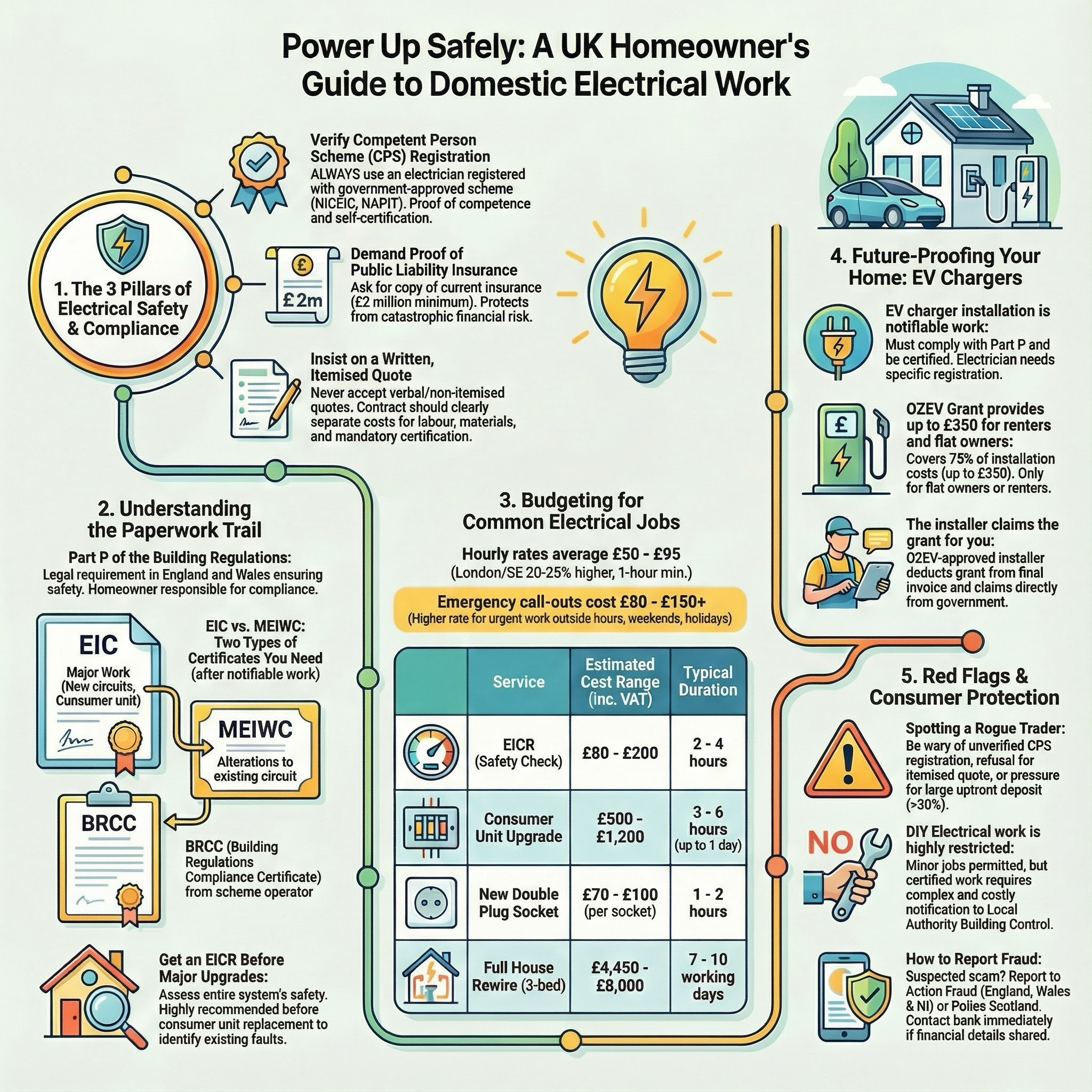
The following table outlines estimated costs for professional ceiling light installation in the UK for 2025/26. Prices include VAT and represent average labour rates, though London and the South East often command a 20-30% premium.
| Service Item | Low £ | High £ | Notes |
|---|---|---|---|
| Standard Pendant Swap (Labour) | £65 | £110 | Simple 1-for-1 replacement of a basic fitting. |
| Complex Chandelier / Large Fitting | £135 | £280 | Includes assembly and additional structural support. |
| Recessed Downlights (per light) | £45 | £85 | Includes drilling, wiring, and the unit itself. |
| Minimum Call-out Fee | £80 | £150 | Covers the first hour of work and travel. |
| New Light Point (Wiring + Fitting) | £160 | £350 | Required for adding a light where none exists. |
Total costs are influenced by the height of the ceiling, the condition of the existing wiring, and whether you require smart lighting integration. If your home requires a partial rewire due to degraded cables, costs will increase significantly.
While UK homeowners are legally allowed to replace a light fitting on a "like-for-like" basis, it is often safer to hire a professional. DIYers frequently struggle with the "loop-in" system, where disconnecting wires without labelling them can kill the power to every other light in the house.
Furthermore, older UK homes often lack an earth wire in the lighting circuit. Installing a modern metal light fitting without a functional earth is a significant shock hazard that only a professional with the right testing equipment can identify and resolve. Any work in bathrooms or the installation of new circuits is notifiable under Part P regulations and must be handled by a professional.
Pro Tip: Always show your electrician the light fitting before they arrive. Some designer fixtures have unusual mounting requirements that may require extra parts or time.
Generally, yes. Homeowners usually source the decorative fitting, while the electrician provides "first fix" materials like cables and connectors. Check if the fitting includes bulbs, as you may need to buy these separately.
These fittings are designed to be safe without an earth wire. They are marked with a "square inside a square" symbol and are the only safe option for metal-style lights in older homes lacking a circuit earth.
No. Bathroom lights must have specific IP ratings based on their distance from water sources (Zones 0, 1, and 2). An electrician will ensure your chosen fitting meets these safety standards.
Buzzing is usually a sign of an overloaded switch or an incompatibility between the dimmer and the LED bulbs. Replacing the switch with a "trailing-edge" LED dimmer usually solves the issue.
A standard fitting swap creates very little dust. However, installing downlights or moving a light position involves cutting plasterboard, which creates significant dust. Most professionals use vacuum-assisted drills to minimise this.
If you are moving a light or installing a heavy fixture that requires a new timber support, the electrician may need to lift floorboards in the room above or enter the loft space.
This guide was written with AI assistance and is intended for general information only. Prices are estimates based on UK averages and may vary by region. Always get at least three quotes and consult a qualified professional before starting any work.
Ask follow-ups in plain English. The AI explains options, sequencing and what to ask the electrician — so you walk in informed.
What Is Emergency Lighting? Emergency lighting is a safety system designed to illuminate escape routes, exits, and high-risk areas when the normal mains power f...
READ GUIDE →GuideA full house rewire or a consumer unit (fuse box) upgrade is one of the most critical safety investments a UK homeowner can make. As our reliance on electrical ...
READ GUIDE →GuideWhile many floor lamps are marketed as simple flat-pack items, high-end designer models, heavy arched lamps, and vintage restorations often require professional...
READ GUIDE →GuideGeneral electrical work encompasses everything from minor repairs and socket additions to installing new circuits for home improvements. For UK homeowners, ensu...
READ GUIDE →GuideElectric boilers are an increasingly popular choice for UK homeowners, particularly in modern flats or properties without a mains gas connection. While they are...
READ GUIDE →GuideReplacing a bathroom light switch is a common home improvement task that balances aesthetics with vital safety requirements. Given the high levels of moisture a...
READ GUIDE →