Instant
01 · Ask
Ask the AI a follow-up
Got more questions about ceiling light replacement? Describe the bit you're unsure about — the AI explains options, sequencing and what to ask the electrician.

Old fitting out, new fitting in — isolated, swapped, tested and made-good.
You've read the brief on ceiling light replacement. Now lean on us to find the right electrician — and stay in control of the job.
Got more questions about ceiling light replacement? Describe the bit you're unsure about — the AI explains options, sequencing and what to ask the electrician.
Costs, timelines, pitfalls and the right questions to ask before any electrician starts on ceiling light replacement.
Itemised quotes from up to 3 local electricians on ceiling light replacement — so you can compare like-for-like, not lump sums.
Ready when you are
Enter your postcode and get free quotes from local pros.
Four moves that separate a smooth job from a nightmare.
Many older UK homes lack an earth wire in the lighting circuit. Metal lights cannot be safely installed in these homes without a rewire or choosing "Class II" double-insulated fittings.
Replacing old bulbs with LEDs often causes flickering if the existing dimmer switch is not "trailing edge" compatible.
Removing old, heavy ceiling roses can damage delicate lath and plaster ceilings. Always have filler or a decorative ceiling medallion ready.
Disconnecting a ceiling rose without marking the "permanent live" wires often results in other lights in the house failing to work.
Indicative UK ranges and what affects price.
By job type
Quote spread is typically ± 18% — always get 3 quotes.
Electrician quick-view
Electrician explained
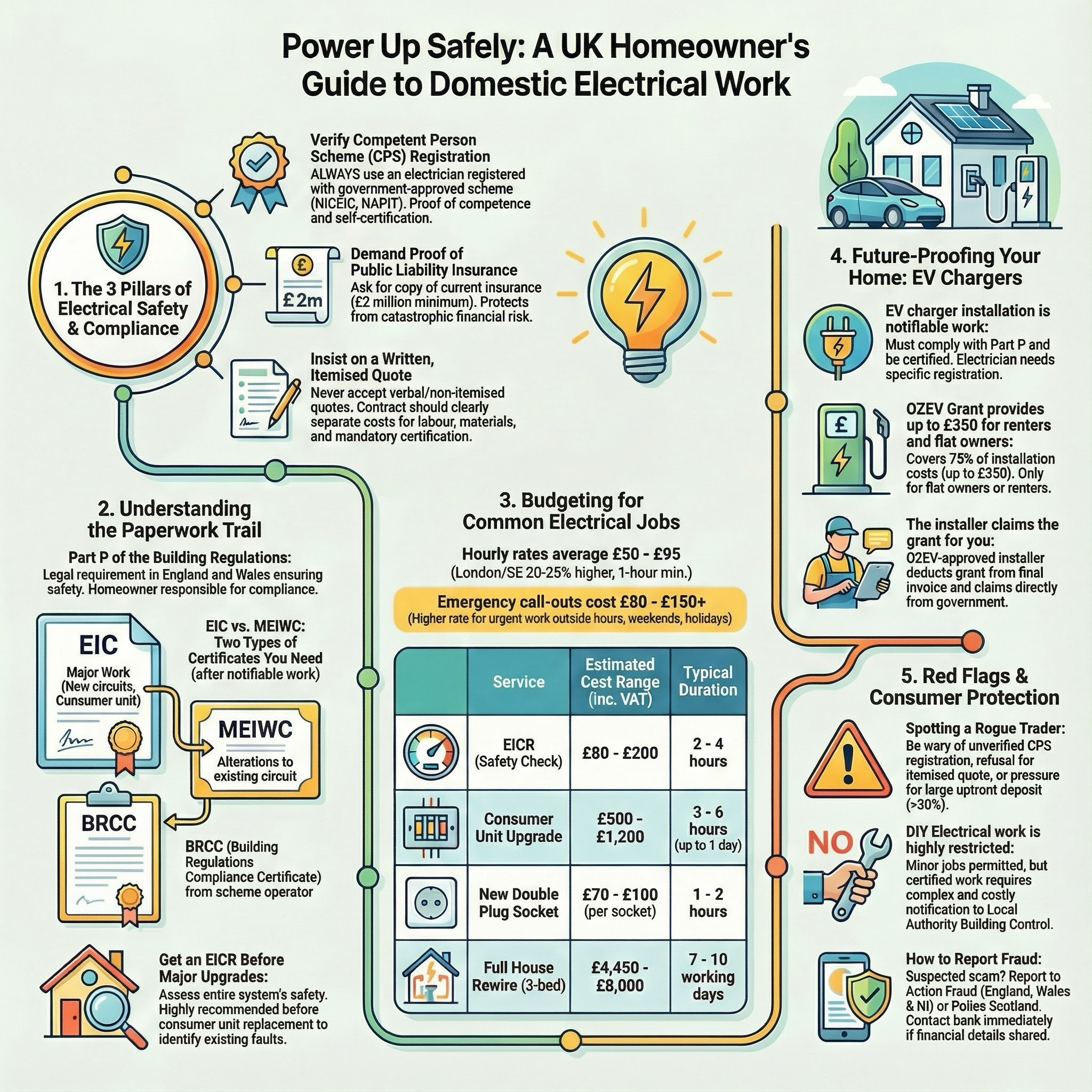
Safety is the primary concern with any electrical work in the home. Faulty installation can lead to overheating, electrical fires, or fatal shocks, which is why UK electrical safety is governed by strict Building Regulations. Hiring a professional ensures your new lighting is compliant with current standards, protecting both your family and your home insurance policy.
The following table outlines realistic 2025/26 prices for ceiling light replacement in the UK. Please note that prices include VAT and reflect standard labour rates, though costs in London and the South East are typically 20% higher.
| Item / Service | Low £ | High £ | Notes |
|---|---|---|---|
| Standard Pendant Swap | £65 | £100 | Simple like-for-like replacement. |
| Chandelier Installation | £130 | £275 | Includes assembly and structural support. |
| Bathroom IP-Rated Light | £90 | £140 | Includes moisture-proof sealing. |
| LED Downlight (per unit) | £45 | £80 | Assumes existing wiring is accessible. |
| Minimum Call-Out Fee | £80 | £130 | Covers travel and the first hour of work. |
| Dimmer Switch Upgrade | £35 | £70 | Required for flicker-free LED dimming. |
Costs are primarily influenced by the height of the ceiling and the weight of the fitting. If your electrician discovers that your lighting circuit lacks an earth wire (common in pre-1966 homes), the price will increase to cover the necessary remedial safety work.
Under Part P of the Building Regulations, replacing a light fitting on an existing circuit is generally "non-notifiable," meaning you can legally do it yourself if you are competent. However, the complexity of UK "loop-in" wiring means that one wrong connection can kill the power to your entire floor or create a serious fire hazard.
You must hire a professional if:
Warning: DIY electrical work that results in a fire can lead to your home insurance provider voiding your policy if the work was not completed by a "competent person."
Yes, if it is a like-for-like swap and you are confident in identifying the wiring. However, if the fitting is metal or the wiring is old, hiring an electrician is safer to ensure proper earthing and testing.
A Class II (double insulated) light does not require an earth wire. These are the only safe option for metal-look fittings in older UK homes that lack an earth connection in the lighting circuit.
This is usually caused by an incompatible dimmer switch. Most traditional dimmers are "leading edge," whereas LEDs typically require "trailing edge" dimmers designed for lower wattages.
A formal Part P notification to the local council isn't required for a simple swap. However, a professional electrician should still provide a Minor Works Certificate to confirm the installation is safe.
No, bathroom lights must have an appropriate IP rating. Most ceiling lights in a bathroom need to be at least IP44 rated to protect against steam and water splashes.
An electrician can install a "timber noggin" between the ceiling joists from the room above. This provides a solid wood base to screw the fitting into, rather than relying on fragile plasterboard.
This guide was written with AI assistance and is intended for general information only. Prices are estimates based on UK averages and may vary by region. Always get at least three quotes and consult a qualified professional before starting any work.
Ask follow-ups in plain English. The AI explains options, sequencing and what to ask the electrician — so you walk in informed.
What Is Emergency Lighting? Emergency lighting is a safety system designed to illuminate escape routes, exits, and high-risk areas when the normal mains power f...
READ GUIDE →GuideA full house rewire or a consumer unit (fuse box) upgrade is one of the most critical safety investments a UK homeowner can make. As our reliance on electrical ...
READ GUIDE →GuideWhile many floor lamps are marketed as simple flat-pack items, high-end designer models, heavy arched lamps, and vintage restorations often require professional...
READ GUIDE →GuideGeneral electrical work encompasses everything from minor repairs and socket additions to installing new circuits for home improvements. For UK homeowners, ensu...
READ GUIDE →GuideElectric boilers are an increasingly popular choice for UK homeowners, particularly in modern flats or properties without a mains gas connection. While they are...
READ GUIDE →GuideReplacing a bathroom light switch is a common home improvement task that balances aesthetics with vital safety requirements. Given the high levels of moisture a...
READ GUIDE →