Instant
01 · Ask
Ask the AI a follow-up
Got more questions about electric meter inspection? Describe the bit you're unsure about — the AI explains options, sequencing and what to ask the electrician.

Faulty meter, suspected high readings or pre-payment swap — diagnosed by an MOCOPA-registered engineer.
You've read the brief on electric meter inspection. Now lean on us to find the right electrician — and stay in control of the job.
Got more questions about electric meter inspection? Describe the bit you're unsure about — the AI explains options, sequencing and what to ask the electrician.
Costs, timelines, pitfalls and the right questions to ask before any electrician starts on electric meter inspection.
Itemised quotes from up to 3 local electricians on electric meter inspection — so you can compare like-for-like, not lump sums.
Ready when you are
Enter your postcode and get free quotes from local pros.
Four moves that separate a smooth job from a nightmare.
Often caused by previous unauthorised work; this can lead to accusations of energy theft by suppliers.
External meter boxes are prone to cracking, allowing rain to enter and corrode live terminals.
Older properties often have 16mm tails that are insufficient for modern 100A supplies, posing a fire risk.
Over time, thermal expansion can loosen terminal screws, leading to "hot spots" and potential fires.
Indicative UK ranges and what affects price.
By job type
Quote spread is typically ± 18% — always get 3 quotes.
Electrician quick-view
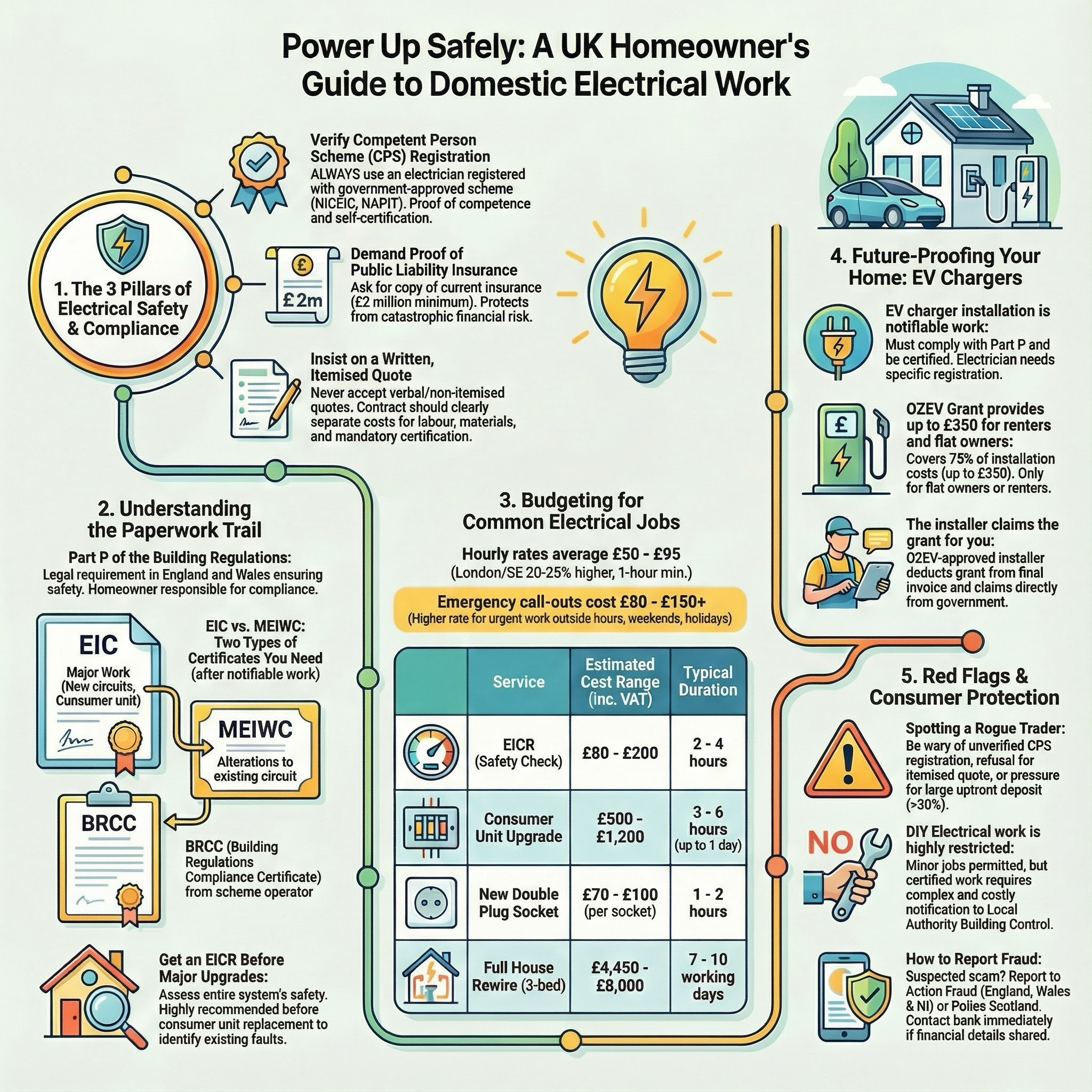
Electrician explained
Homeowners usually request these inspections when buying a new property, noticing signs of wear, or before undertaking major renovation work. A professional assessment identifies potential fire hazards, ensures earthing is up to standard, and confirms that no illegal tampering has occurred, which could lead to significant fines or safety risks.
| Item | Low £ | High £ | Notes |
|---|---|---|---|
| Standard Call-out Fee | £80 | £150 | Includes travel and first 30-60 minutes on site. |
| Hourly Labour Rate | £60 | £110 | Applicable for complex access or remedial work. |
| Minor Materials | £10 | £40 | Replacement labels, clips, or minor cable tidying. |
| Access Equipment | £0 | £150 | Only required for meters at height or in awkward voids. |
| Total Project Cost | £120 | £350 | Typical range for a standard UK domestic property. |
Prices vary based on your location (London and the South East carry a premium) and the ease of access to the meter. If the electrician identifies urgent safety defects, such as exposed live parts, the cost of immediate remedial repairs will be quoted separately.
This is strictly a professional-only task. You should never attempt to inspect or open electric meter housings yourself due to the risk of fatal electric shock from unshielded live components.
Under UK law, any work involving the "service head" or the meter itself is often the remit of the Distribution Network Operator (DNO) or the energy supplier. An electrician can inspect the installation, but breaking a supplier seal is a criminal offence.
Professional electricians are trained to spot subtle signs of "arcing" or thermal damage that an untrained eye would miss. They also ensure all work complies with Part P of the Building Regulations and BS 7671 (The Wiring Regulations).
The energy supplier owns the meter, and the Distribution Network Operator (DNO) owns the service head and the main fuse. You, the homeowner, are responsible for the meter tails (the wires coming out of the meter) and everything from that point into your home.
You should contact your energy supplier immediately. An electrician can confirm if they are missing during an inspection, but only the supplier or DNO is legally allowed to replace them. Missing seals can be flagged as "tampering" if not reported.
No. A private electrician can move your consumer unit, but only the DNO or your energy supplier is authorised to move the actual meter and the incoming service cable.
No. An Electrical Installation Condition Report (EICR) is a full "health check" of your entire home's wiring. A meter inspection is a targeted check specifically focusing on the point of entry and the main intake equipment.
While a very faint hum can be normal for some meters, a loud buzzing or "crackling" sound usually indicates a loose connection or a failing component. This is an urgent safety issue and requires an immediate professional inspection.
Yes, usually. Even if the meter is in an external box, the electrician will need access to your consumer unit (fuse box) inside the house to verify the connections and earthing are consistent throughout the system.
This guide was written with AI assistance and is intended for general information only. Prices are estimates based on UK averages and may vary by region. Always get at least three quotes and consult a qualified professional before starting any work.
Ask follow-ups in plain English. The AI explains options, sequencing and what to ask the electrician — so you walk in informed.
What Is Emergency Lighting? Emergency lighting is a safety system designed to illuminate escape routes, exits, and high-risk areas when the normal mains power f...
READ GUIDE →GuideA full house rewire or a consumer unit (fuse box) upgrade is one of the most critical safety investments a UK homeowner can make. As our reliance on electrical ...
READ GUIDE →GuideWhile many floor lamps are marketed as simple flat-pack items, high-end designer models, heavy arched lamps, and vintage restorations often require professional...
READ GUIDE →GuideGeneral electrical work encompasses everything from minor repairs and socket additions to installing new circuits for home improvements. For UK homeowners, ensu...
READ GUIDE →GuideElectric boilers are an increasingly popular choice for UK homeowners, particularly in modern flats or properties without a mains gas connection. While they are...
READ GUIDE →GuideReplacing a bathroom light switch is a common home improvement task that balances aesthetics with vital safety requirements. Given the high levels of moisture a...
READ GUIDE →