Instant
01 · Ask
Ask the AI a follow-up
Got more questions about electricity restoration? Describe the bit you're unsure about — the AI explains options, sequencing and what to ask the electrician.

Power cut, tripped board or supply fault — fixed safely by a qualified electrician with emergency response.
You've read the brief on electricity restoration. Now lean on us to find the right electrician — and stay in control of the job.
Got more questions about electricity restoration? Describe the bit you're unsure about — the AI explains options, sequencing and what to ask the electrician.
Costs, timelines, pitfalls and the right questions to ask before any electrician starts on electricity restoration.
Itemised quotes from up to 3 local electricians on electricity restoration — so you can compare like-for-like, not lump sums.
Ready when you are
Enter your postcode and get free quotes from local pros.
Four moves that separate a smooth job from a nightmare.
The most frustrating issue where the power cuts out randomly. This is often caused by moisture in outdoor sockets or a fridge compressor failing.
Rats and mice in lofts or under floorboards frequently chew through cable insulation, causing short circuits that are difficult to locate.
Modern homes use more gadgets than older wiring was designed for. Using multiple high-wattage appliances (kettle, toaster, tumble dryer) on one circuit can cause total failure.
Over time, the copper in your consumer unit can expand and contract, loosening the screws. This causes "arcing," which generates heat and eventually melts the plastic components.
Indicative UK ranges and what affects price.
By job type
Quote spread is typically ± 18% — always get 3 quotes.
Electrician quick-view
Electrician explained
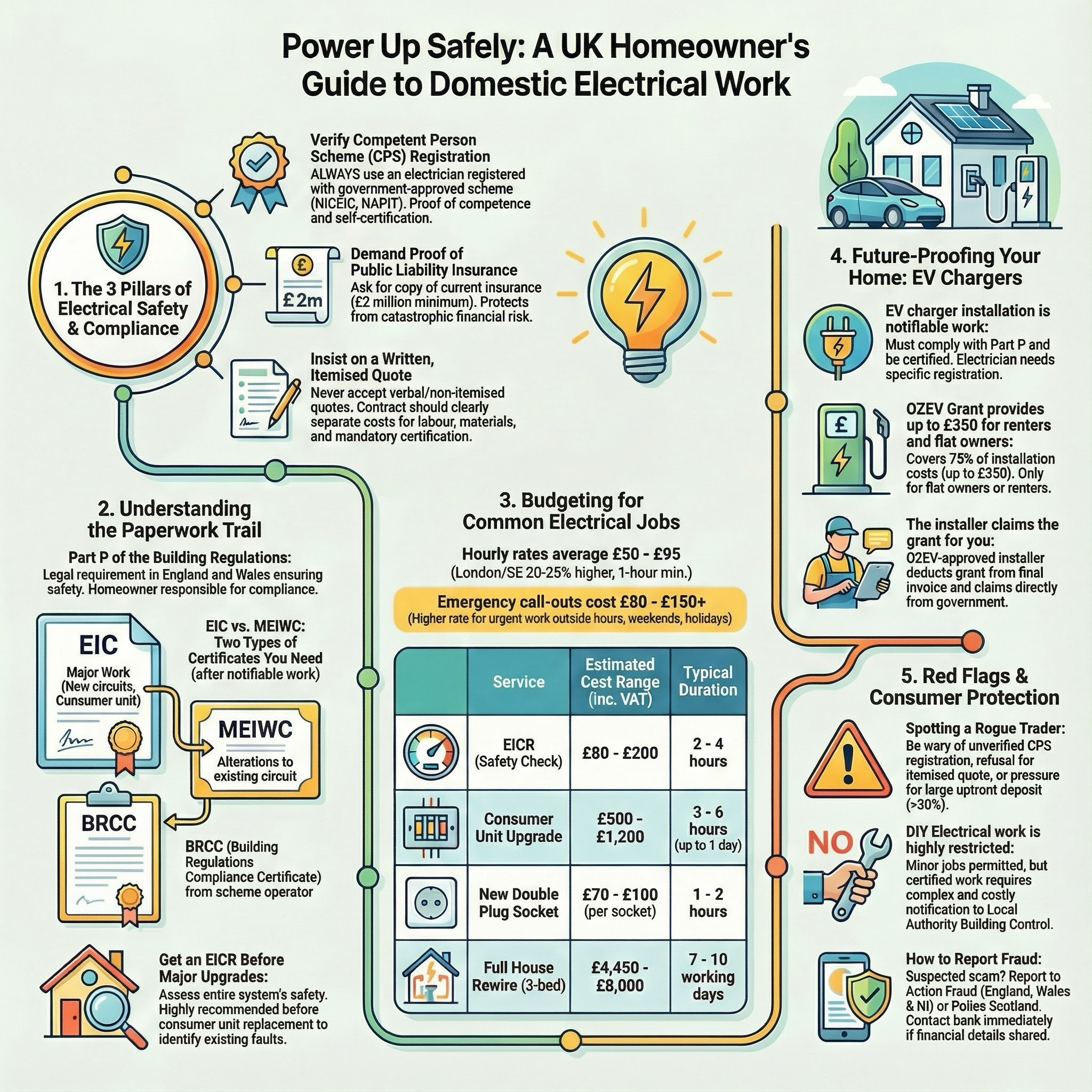
Professional electricity restoration involves far more than just flipping a switch. It requires a systematic approach to identify the root cause, isolate the danger, and ensure the installation meets current UK safety standards before the power is reinstated.
| Item | Low £ | High £ | Notes |
|---|---|---|---|
| Emergency Call-out (First Hour) | £120 | £250 | Includes travel and initial diagnosis; higher in London/SE. |
| Standard Hourly Rate | £65 | £95 | Charged after the first hour for ongoing repairs. |
| Replacement RCD/MCB | £40 | £150 | Cost of part plus labour for installation. |
| Full Consumer Unit Swap | £550 | £1,200 | Required if the old board is damaged beyond repair. |
| Fault Finding (Fixed Fee) | £100 | £300 | Some electricians offer a flat rate for the first 2-3 hours. |
Prices for electricity restoration vary significantly based on the time of day and your location. Emergency "out-of-hours" calls (evenings, weekends, or bank holidays) typically carry a premium, often double the standard daytime rate. All prices above are inclusive of VAT at 20%.
Electricity restoration is not a DIY task. While you can safely check your own fuse box to see if a switch has tripped, any investigation beyond that requires professional equipment and expertise.
Under UK law, specifically Part P of the Building Regulations, most electrical work in "wet" areas (bathrooms) or the installation of new circuits must be carried out by a competent person or notified to Building Control.
Attempting to bypass a tripping breaker or "patch" wiring yourself can lead to electrical fires, fatal shocks, and will likely invalidate your home insurance policy. A professional electrician has the tools to find faults that are invisible to the naked eye.
Questions to ask:
This usually indicates a "hard fault" in the fixed wiring of the house rather than a faulty appliance. It could be moisture in an external junction box, a cable damaged by a DIY project, or a neutral-to-earth fault that requires professional testing equipment to locate.
If your neighbours also have no power or the streetlights are off, call 105 to reach the District Network Operator (DNO). If the neighbours have power but your switches won't stay "up," the fault is inside your home and you need an electrician.
For minor repairs like replacing a single socket or light switch, a certificate isn't always mandatory. However, for any work involving the consumer unit or new circuits, you must receive an Electrical Installation Certificate to prove the work is safe and legal.
Clear the area around your consumer unit and electricity meter. If possible, identify which appliances were running when the power failed, as this helps the electrician narrow down the search area quickly, saving you money on labour.
While basic repairs are possible, many electricians will recommend upgrading to a modern consumer unit with RCD protection. Old "rewirable" fuse boxes do not provide the same level of protection against electric shocks or fires as modern circuit breakers.
This guide was written with AI assistance and is intended for general information only. Prices are estimates based on UK averages and may vary by region. Always get at least three quotes and consult a qualified professional before starting any work.
Ask follow-ups in plain English. The AI explains options, sequencing and what to ask the electrician — so you walk in informed.
What Is Emergency Lighting? Emergency lighting is a safety system designed to illuminate escape routes, exits, and high-risk areas when the normal mains power f...
READ GUIDE →GuideA full house rewire or a consumer unit (fuse box) upgrade is one of the most critical safety investments a UK homeowner can make. As our reliance on electrical ...
READ GUIDE →GuideWhile many floor lamps are marketed as simple flat-pack items, high-end designer models, heavy arched lamps, and vintage restorations often require professional...
READ GUIDE →GuideGeneral electrical work encompasses everything from minor repairs and socket additions to installing new circuits for home improvements. For UK homeowners, ensu...
READ GUIDE →GuideElectric boilers are an increasingly popular choice for UK homeowners, particularly in modern flats or properties without a mains gas connection. While they are...
READ GUIDE →GuideReplacing a bathroom light switch is a common home improvement task that balances aesthetics with vital safety requirements. Given the high levels of moisture a...
READ GUIDE →