Instant
01 · Ask
Ask the AI a follow-up
Got more questions about fuse replacement for hot water supply? Describe the bit you're unsure about — the AI explains options, sequencing and what to ask the electrician.

Hot-water immersion or boiler circuit fuse — checked, swapped and root cause diagnosed.
You've read the brief on fuse replacement for hot water supply. Now lean on us to find the right electrician — and stay in control of the job.
Got more questions about fuse replacement for hot water supply? Describe the bit you're unsure about — the AI explains options, sequencing and what to ask the electrician.
Costs, timelines, pitfalls and the right questions to ask before any electrician starts on fuse replacement for hot water supply.
Itemised quotes from up to 3 local electricians on fuse replacement for hot water supply — so you can compare like-for-like, not lump sums.
Ready when you are
Enter your postcode and get free quotes from local pros.
Four moves that separate a smooth job from a nightmare.
In hard water areas, scale coats the immersion element, causing it to overheat and eventually short-circuit, blowing the fuse.
Over time, the high current causes wires to expand and contract; if they loosen, they create heat which melts the fuse holder.
Using a 3A or 5A fuse instead of the required 13A fuse will cause it to blow immediately when the heater switches on.
Old rubber or early PVC wiring can degrade, leading to "nuisance tripping" or blown fuses.
Indicative UK ranges and what affects price.
By job type
Quote spread is typically ± 18% — always get 3 quotes.
Electrician quick-view
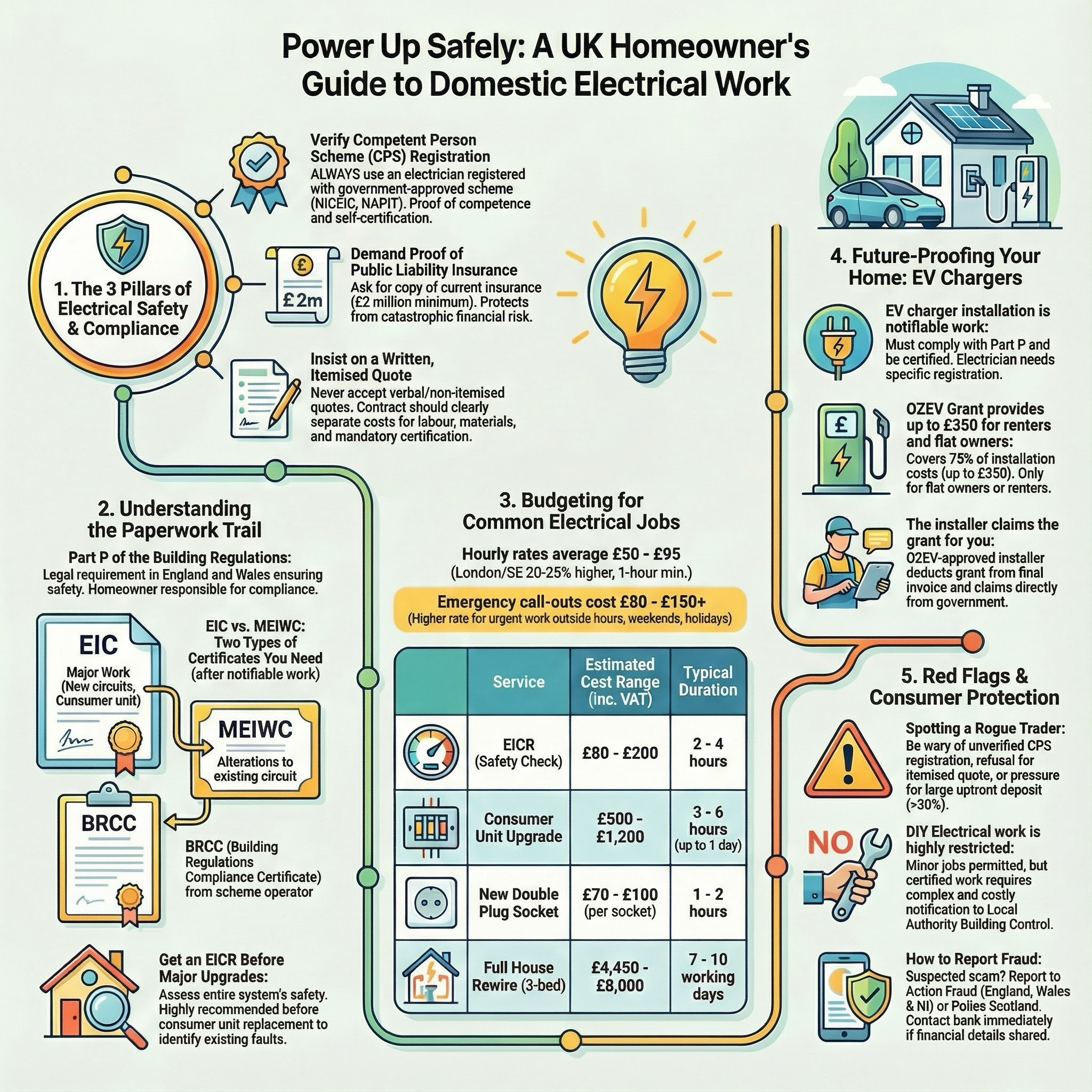
Electrician explained
Ensuring your hot water electrical supply is safe and correctly fused is essential for preventing fire risks and equipment damage. This guide outlines what to expect when hiring an electrician to diagnose and repair your hot water electrical circuit.
Prices for electrical work vary based on your location in the UK, with London and the South East typically seeing rates 20-30% higher than the national average. Most electricians charge a minimum call-out fee which covers the first hour of diagnostic work.
| Item | Low £ | High £ | Notes |
|---|---|---|---|
| Emergency Call-out | £100 | £180 | Includes first hour of labour; higher for out-of-hours. |
| Standard Labour (per hour) | £60 | £95 | Qualified electrician rate for non-emergency work. |
| Fused Spur Unit (Parts) | £15 | £45 | Standard vs. premium/decorative finishes. |
| Immersion Heater Element | £25 | £60 | If the fuse blew because the element failed. |
| Total Project Cost | £140 | £350 | Typical range for diagnosis and minor part replacement. |
The total cost is heavily influenced by whether the problem is limited to the fuse or if the immersion heater element itself has burnt out. If the element requires replacement, you may also need a plumber to drain the tank, which will increase the overall price.
While replacing a fuse in a plug is a common DIY task, the electrical supply for a hot water system is a high-load circuit that requires professional expertise. Under Part P of the Building Regulations, certain electrical works in "special locations" (like bathrooms) must be notified or carried out by a registered competent person.
Warning: Hot water circuits carry high currents. Loose connections or incorrectly rated fuses can lead to overheating, melted plastic, and potential house fires. Always use a qualified electrician for fixed wiring repairs.
Questions to ask:
This is usually due to a failing immersion heater element. As the element ages, the outer casing can split, allowing water to touch the internal filament, causing an instant short circuit. It could also be due to loose, overheating connections within the fused spur switch.
No. You must never use a fuse rated higher than what the circuit and appliance are designed for (usually 13A for immersion heaters). Doing so removes the safety protection and can lead to the cables melting or catching fire.
A fuse is a physical wire that melts to break the circuit, whereas a circuit breaker (MCB) in your consumer unit is a switch that flips off. If your hot water is on a fused spur, the fuse might blow without the main circuit breaker tripping.
If the issue is purely electrical (blown fuses, no power to the switch), call an electrician. If the tank is leaking or the element needs physical replacement, many electricians can do this, but some may prefer you to hire a plumber for the "wet" side of the job.
It may feel slightly warm when the water is heating, but it should never feel hot, smell of burning, or show signs of discolouration. If it does, turn it off at the main consumer unit immediately and call an electrician.
This guide was written with AI assistance and is intended for general information only. Prices are estimates based on UK averages and may vary by region. Always get at least three quotes and consult a qualified professional before starting any work.
Ask follow-ups in plain English. The AI explains options, sequencing and what to ask the electrician — so you walk in informed.
What Is Emergency Lighting? Emergency lighting is a safety system designed to illuminate escape routes, exits, and high-risk areas when the normal mains power f...
READ GUIDE →GuideA full house rewire or a consumer unit (fuse box) upgrade is one of the most critical safety investments a UK homeowner can make. As our reliance on electrical ...
READ GUIDE →GuideWhile many floor lamps are marketed as simple flat-pack items, high-end designer models, heavy arched lamps, and vintage restorations often require professional...
READ GUIDE →GuideGeneral electrical work encompasses everything from minor repairs and socket additions to installing new circuits for home improvements. For UK homeowners, ensu...
READ GUIDE →GuideElectric boilers are an increasingly popular choice for UK homeowners, particularly in modern flats or properties without a mains gas connection. While they are...
READ GUIDE →GuideReplacing a bathroom light switch is a common home improvement task that balances aesthetics with vital safety requirements. Given the high levels of moisture a...
READ GUIDE →