Instant
01 · Ask
Spot the warning signs
Buzzing fuse box, hot sockets, lights flickering when you boil the kettle. Describe it in plain English — the AI tells you if it's a 30-min fix or a rewire.

Garden or shed IP-rated socket — new circuit from consumer unit, RCBO protection, Part P certified.
From a single dodgy socket to a full rewire — read the brief, then let Three local electricians quote.
Buzzing fuse box, hot sockets, lights flickering when you boil the kettle. Describe it in plain English — the AI tells you if it's a 30-min fix or a rewire.
Part P, EIC vs EICR, C1/C2/C3 ratings, when Building Control gets involved. Know the lingo before the quote arrives.
Up to Three local electricians come back with itemised quotes — call-out, materials, labour, certificate fee. No flat-rate guesses.
Ready when you are
Enter your postcode and get free quotes from local pros.
Four moves that separate a smooth job from a nightmare.
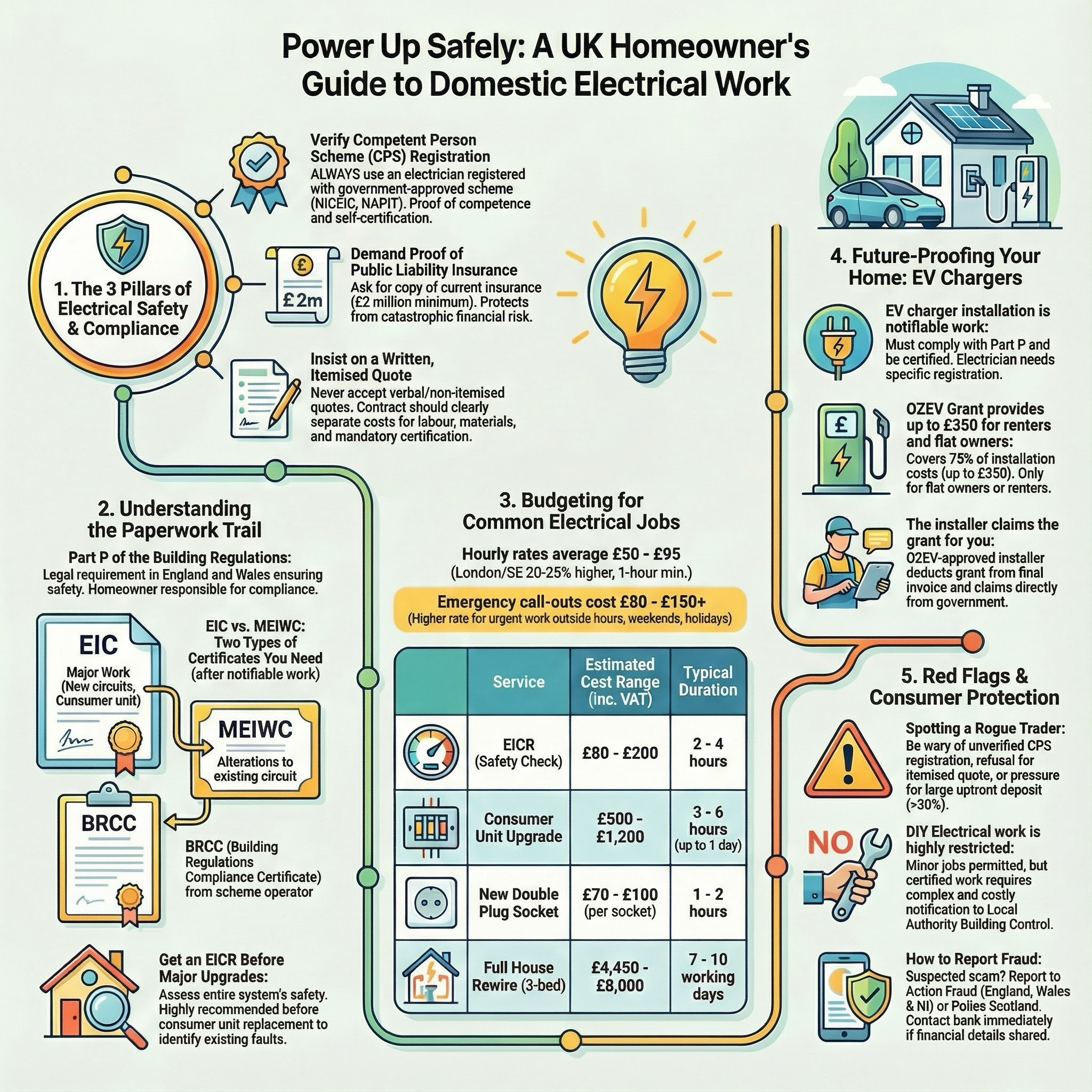
Part P electrical work must be certified by a registered electrician. NICEIC and NAPIT are the two big ones — verify online before they start.
Any new circuit or consumer unit change needs an Electrical Installation Certificate (EIC). Without it, you can't sell the house cleanly.
An Electrical Installation Condition Report on a house you're buying flags hidden rewire jobs. A C1 or C2 finding is a £2k–£8k negotiation lever.
Honest electricians lift a few floorboards before quoting a rewire. Anyone quoting a flat rate over the phone is guessing.
Indicative UK ranges and what affects price.
By job type
Quote spread is typically ± 18% — always get 3 quotes.
Electrician quick-view
Electrician explained
Adding an outdoor socket in a UK home is a notifiable Part P electrical job, typically costing £140–£320 for a single weatherproof socket on the back wall, run from an existing internal circuit. More involved installations (long cable runs, separate consumer unit feed, or multi-socket pillars) range from £300–£700.
Outdoor sockets need to be IP-rated, RCD-protected, and properly certified — Part P notification is essential because outdoor electrical work is in a "special location" under the Wiring Regs.
| Job | Typical price |
|---|---|
| Single IP55 socket on back wall (cable from inside) | £140–£280 |
| Twin IP55 socket | £170–£330 |
| Outdoor socket on detached pillar (in garden) | £250–£500 |
| Dedicated outdoor circuit + consumer unit work | £350–£700 |
| Garden building feed (armoured cable + sub-board) | £500–£1,500 |
| EV charger install (separate spec) | £800–£1,400 |
Outdoor electrical work is in a "special location" under Part P; new circuits must be notified, certificated, and tested by a competent person. Most insurance and conveyancing solicitors will flag uncertified outdoor electrical work on sale. Use a Part P registered electrician.
Single back-wall socket: 2–4 hours. Multi-socket runs or buried garden cabling: half a day to a full day. Includes notification paperwork.
Yes — mandatory under BS 7671. Either via the circuit RCD at the consumer unit, or an inline RCD spur at the socket. Without RCD, the install fails certification.
A separate, dedicated armoured-cable feed from the consumer unit is the right approach — typically 6–10 mm² SWA buried at 450 mm depth, terminating in a small sub-board in the office. Allow £500–£1,500 depending on distance and how many circuits are needed in the building.
Short-term, occasional use — yes, but only with an outdoor-rated extension lead and only when monitored. Permanent extension-lead use through windows is a fire and trip hazard, not weather-protected, and usually breaches insurance.
Properly installed and certified — no, it actually adds value. Uncertified DIY installs are flagged by EICRs and home buyer surveys, and may invalidate parts of your insurance. Always get the Part P certificate.
Want a local pro to handle this? A Part P registered electrician will install, certify, and notify outdoor work properly. Cheap unregistered installs cost more in the long run when the certificate is missing at sale.
This guide was written with AI assistance and is intended for general information only. Prices are estimates based on UK averages and may vary by region. Always get at least three quotes and consult a qualified professional before starting any work.
Ask follow-ups in plain English. The AI explains options, sequencing and what to ask the electrician — so you walk in informed.
What Is Emergency Lighting? Emergency lighting is a safety system designed to illuminate escape routes, exits, and high-risk areas when the normal mains power f...
READ GUIDE →GuideA full house rewire or a consumer unit (fuse box) upgrade is one of the most critical safety investments a UK homeowner can make. As our reliance on electrical ...
READ GUIDE →GuideWhile many floor lamps are marketed as simple flat-pack items, high-end designer models, heavy arched lamps, and vintage restorations often require professional...
READ GUIDE →GuideGeneral electrical work encompasses everything from minor repairs and socket additions to installing new circuits for home improvements. For UK homeowners, ensu...
READ GUIDE →GuideElectric boilers are an increasingly popular choice for UK homeowners, particularly in modern flats or properties without a mains gas connection. While they are...
READ GUIDE →GuideReplacing a bathroom light switch is a common home improvement task that balances aesthetics with vital safety requirements. Given the high levels of moisture a...
READ GUIDE →