Instant
01 · Ask
Ask the AI a follow-up
Got more questions about payment meter installation? Describe the bit you're unsure about — the AI explains options, sequencing and what to ask the electrician.

Prepay meter fit or swap — by a MOCOPA-registered electrician with supplier coordination.
You've read the brief on payment meter installation. Now lean on us to find the right electrician — and stay in control of the job.
Got more questions about payment meter installation? Describe the bit you're unsure about — the AI explains options, sequencing and what to ask the electrician.
Costs, timelines, pitfalls and the right questions to ask before any electrician starts on payment meter installation.
Itemised quotes from up to 3 local electricians on payment meter installation — so you can compare like-for-like, not lump sums.
Ready when you are
Enter your postcode and get free quotes from local pros.
Four moves that separate a smooth job from a nightmare.
Older properties often have 16mm tails, but modern 100A supplies usually require 25mm cables.
Meters hidden behind heavy furniture or built-in cupboards can significantly increase labour time.
Smart payment meters may fail to connect to the network if installed in a basement with poor signal.
If an electrician finds broken seals on the main fuse, they are legally required to report it to the network operator.
Indicative UK ranges and what affects price.
By job type
Quote spread is typically ± 18% — always get 3 quotes.
Electrician quick-view
Electrician explained
While energy suppliers often install their own meters for billing, private electricians are frequently called to install secondary "sub-meters." These allow property owners to monitor and bill electricity usage for specific areas of a building independently from the main supply.
| Item | Low £ | High £ | Notes |
|---|---|---|---|
| Call-out Fee | £80 | £150 | Covers travel and the first hour of labour. |
| Labour (Hourly) | £60 | £100 | Varies by region (London/SE is higher). |
| Private Sub-Meter Unit | £120 | £350 | MID-approved meters for billing purposes. |
| Meter Tails & Materials | £40 | £90 | Cables, seals, and protective trunking. |
| Total Project Cost | £250 | £1,200 | Higher end includes consumer unit upgrades. |
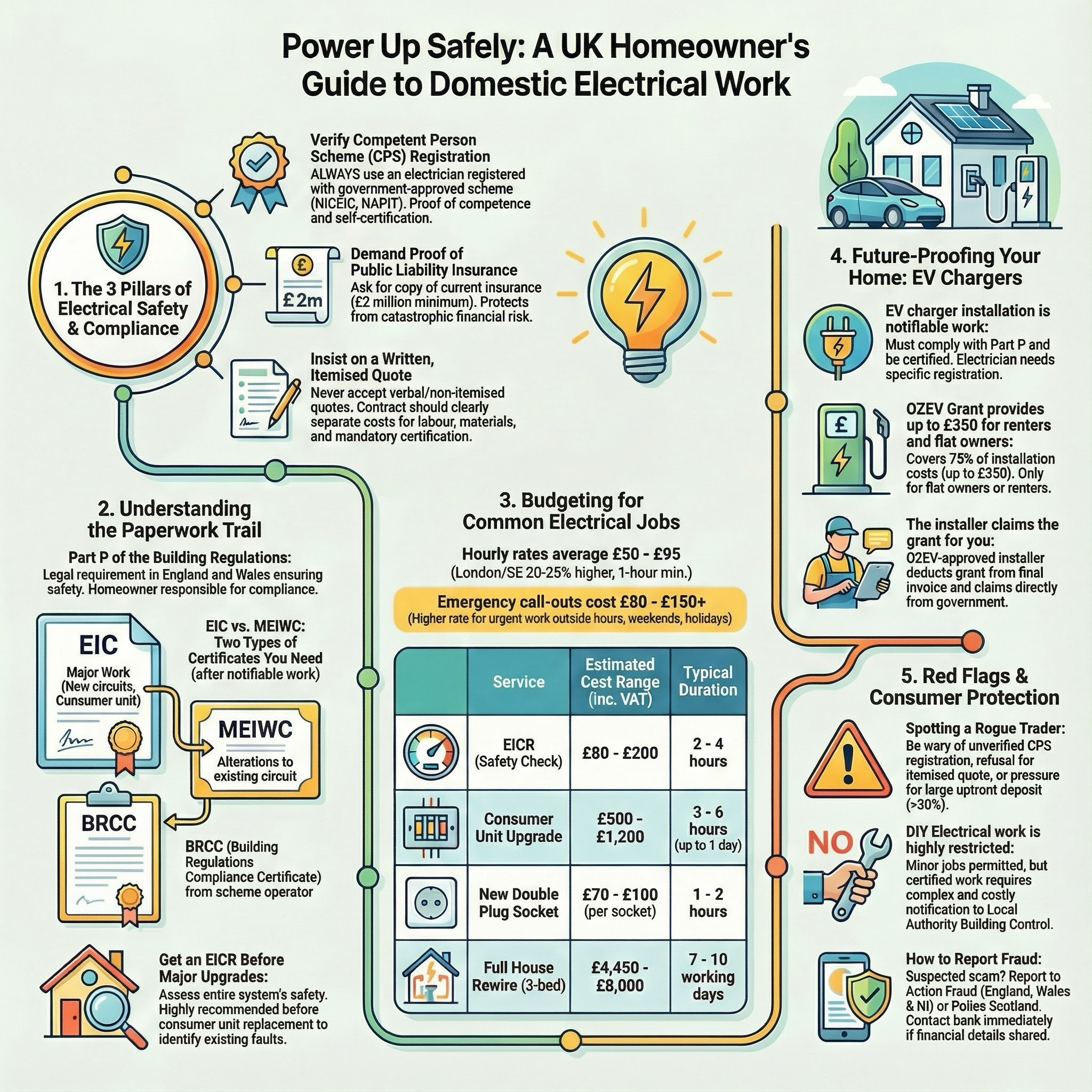
Prices are influenced by the complexity of your existing wiring. If your consumer unit is outdated or the meter tails are too thin for modern standards, these must be replaced to comply with safety regulations.
This is strictly a job for a qualified professional. Working with mains electricity is life-threatening if mishandled, and illegal tampering with a supplier's meter is a criminal offence.
Warning: Any electrical work in "wet zones" (kitchens/bathrooms) or involving a new circuit must comply with Part P of the Building Regulations.
Questions to ask:
You can, but it must be MID-approved if it's for billing tenants. Most electricians prefer to supply the unit themselves to ensure it meets current UK safety standards and comes with a warranty.
Generally, prepayment tariffs are slightly higher than direct debit rates. However, for landlords, they prevent the risk of tenants leaving behind unpaid utility bills.
A supplier meter is owned by companies like British Gas or Octopus; only they or their agents can change it. A sub-meter is a private unit installed after the main meter to track usage in a specific room or annex.
No, you do not need permission to install a private sub-meter as long as it is installed after the primary supplier meter and does not interfere with the main billing equipment.
Yes, the electrician will need to isolate the supply. This usually results in a total power cut lasting between 30 minutes and 2 hours, depending on the complexity of the wiring.
This guide was written with AI assistance and is intended for general information only. Prices are estimates based on UK averages and may vary by region. Always get at least three quotes and consult a qualified professional before starting any work.
Ask follow-ups in plain English. The AI explains options, sequencing and what to ask the electrician — so you walk in informed.
What Is Emergency Lighting? Emergency lighting is a safety system designed to illuminate escape routes, exits, and high-risk areas when the normal mains power f...
READ GUIDE →GuideA full house rewire or a consumer unit (fuse box) upgrade is one of the most critical safety investments a UK homeowner can make. As our reliance on electrical ...
READ GUIDE →GuideWhile many floor lamps are marketed as simple flat-pack items, high-end designer models, heavy arched lamps, and vintage restorations often require professional...
READ GUIDE →GuideGeneral electrical work encompasses everything from minor repairs and socket additions to installing new circuits for home improvements. For UK homeowners, ensu...
READ GUIDE →GuideElectric boilers are an increasingly popular choice for UK homeowners, particularly in modern flats or properties without a mains gas connection. While they are...
READ GUIDE →GuideReplacing a bathroom light switch is a common home improvement task that balances aesthetics with vital safety requirements. Given the high levels of moisture a...
READ GUIDE →