Instant
01 · Ask
Ask the AI a follow-up
Got more questions about plug socket installation? Describe the bit you're unsure about — the AI explains options, sequencing and what to ask the electrician.

Single, double or USB-integrated socket — added or replaced by a Part P electrician.
You've read the brief on plug socket installation. Now lean on us to find the right electrician — and stay in control of the job.
Got more questions about plug socket installation? Describe the bit you're unsure about — the AI explains options, sequencing and what to ask the electrician.
Costs, timelines, pitfalls and the right questions to ask before any electrician starts on plug socket installation.
Itemised quotes from up to 3 local electricians on plug socket installation — so you can compare like-for-like, not lump sums.
Ready when you are
Enter your postcode and get free quotes from local pros.
Four moves that separate a smooth job from a nightmare.
Connecting too many sockets to a single "spur" off the ring main can cause cables to overheat.
Older properties may have inadequate earthing, which must be upgraded before any new sockets can be safely added.
DIYers often hit existing pipes or wires when chasing walls; professionals use scanners to map "safe zones."
If wires aren't screwed tightly into the socket terminals, arcing can occur, leading to charred sockets or fires.
Indicative UK ranges and what affects price.
By job type
Quote spread is typically ± 18% — always get 3 quotes.
Electrician quick-view
Electrician explained
Whether you are installing a dedicated USB charging point in the kitchen or adding multiple outlets for a home cinema, the process involves more than just cutting a hole in the wall. A qualified electrician will ensure the circuit can handle the additional load without tripping or overheating, providing peace of mind and the necessary certification for your home records.
| Item | Low £ | High £ | Notes |
|---|---|---|---|
| Call-out / Minimum Charge | £80 | £150 | Covers the first hour and travel. |
| Labour (Hourly Rate) | £55 | £100 | Higher rates in London and the SE. |
| Standard Double Socket | £15 | £35 | White plastic, including back box and cable. |
| Premium/USB Socket | £30 | £85 | Brushed steel, brass, or USB-C integrated. |
| External Weatherproof Socket | £90 | £180 | Includes drilling through external masonry. |
| Total (Single New Socket) | £160 | £380 | Standard installation on an existing circuit. |
Prices vary based on the distance from the consumer unit and the construction of your walls. Chasing into solid brick takes significantly longer than installing a socket into a timber stud wall, which will be reflected in the labour cost.
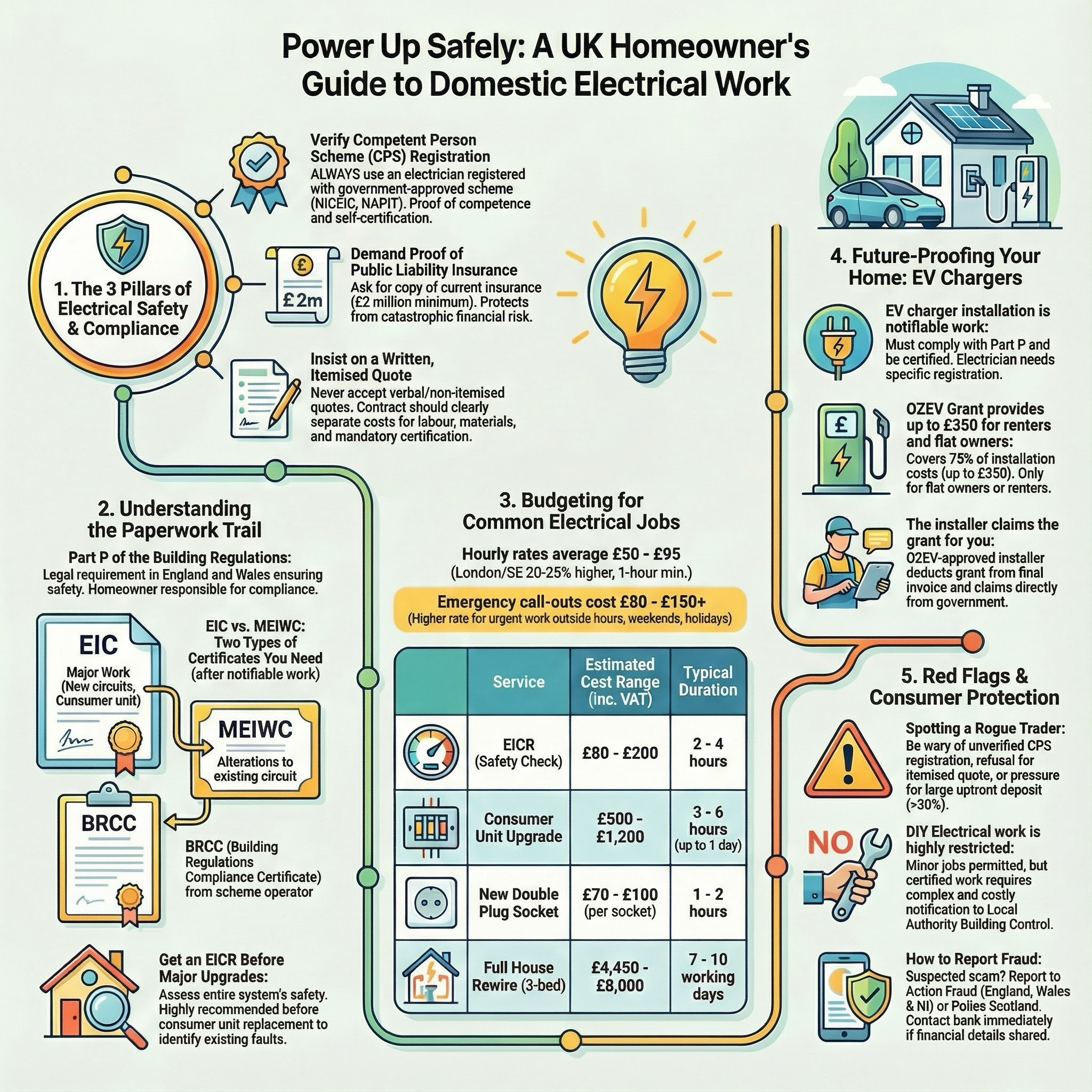
While a competent DIYer can technically replace an existing socket faceplate "like-for-like," installing a new socket is a different matter. Under UK Building Regulations (Part P), any work in "special locations" like bathrooms or the installation of a new circuit is legally notifiable to Local Authority Building Control.
Safety Warning: Faulty electrical work is a leading cause of domestic fires in the UK. Using a professional ensures the work is tested with specialist equipment that a standard DIY multimeter cannot replicate.
Hiring a professional provides you with a Minor Electrical Installation Works Certificate (MEIWC). This document is essential when selling your home to prove that electrical modifications were performed safely and legally.
Technically yes, but some walls are harder than others. Internal stud walls are easiest. Solid brick walls require "chasing," and party walls (shared with neighbours) have regulations regarding how deep you can cut to maintain fire and sound integrity.
Usually, no. However, if your wiring is over 30-40 years old (rubber or lead sheathing), an electrician may find that the circuit is too degraded to safely support modifications. They will perform a quick visual check before starting.
Yes, for convenience. However, be aware that USB technology evolves faster than electrical standards. A socket with USB-A ports might be obsolete in a few years, whereas a standard 3-pin plug is a universal constant.
A spur is an additional socket connected directly to an existing socket on a ring main. UK regulations generally allow only one single or double socket to be "spurred" from one point on the ring to prevent overloading the cable.
If the cable needs to be hidden inside a solid wall, they will have to cut a channel (chase). While most use dust-extraction tools, you will be left with a strip of bare plaster that requires filling and repainting. Always clarify who is responsible for the final finish.
The most common reason is a tripped RCD at the consumer unit. If the electrician has left and it fails, it may be due to a loose wire or a faulty appliance you have plugged into it. Always call the installer back to check their work if it fails within the first 24 hours.
This guide was written with AI assistance and is intended for general information only. Prices are estimates based on UK averages and may vary by region. Always get at least three quotes and consult a qualified professional before starting any work.
Ask follow-ups in plain English. The AI explains options, sequencing and what to ask the electrician — so you walk in informed.
What Is Emergency Lighting? Emergency lighting is a safety system designed to illuminate escape routes, exits, and high-risk areas when the normal mains power f...
READ GUIDE →GuideA full house rewire or a consumer unit (fuse box) upgrade is one of the most critical safety investments a UK homeowner can make. As our reliance on electrical ...
READ GUIDE →GuideWhile many floor lamps are marketed as simple flat-pack items, high-end designer models, heavy arched lamps, and vintage restorations often require professional...
READ GUIDE →GuideGeneral electrical work encompasses everything from minor repairs and socket additions to installing new circuits for home improvements. For UK homeowners, ensu...
READ GUIDE →GuideElectric boilers are an increasingly popular choice for UK homeowners, particularly in modern flats or properties without a mains gas connection. While they are...
READ GUIDE →GuideReplacing a bathroom light switch is a common home improvement task that balances aesthetics with vital safety requirements. Given the high levels of moisture a...
READ GUIDE →