Instant
01 · Ask
Ask the AI a follow-up
Got more questions about aluminium Soffit and Gutter Installation? Describe the bit you're unsure about — the AI explains options, sequencing and what to ask the fascia & soffits.

Premium aluminium soffit and seamless guttering — 25-year warranty, no painting needed.
You've read the brief on aluminium Soffit and Gutter Installation. Now lean on us to find the right fascia & soffits — and stay in control of the job.
Got more questions about aluminium Soffit and Gutter Installation? Describe the bit you're unsure about — the AI explains options, sequencing and what to ask the fascia & soffits.
Costs, timelines, pitfalls and the right questions to ask before any fascia & soffits starts on aluminium Soffit and Gutter Installation.
Itemised quotes from up to 3 local fascia & soffitss on aluminium Soffit and Gutter Installation — so you can compare like-for-like, not lump sums.
Ready when you are
Enter your postcode and get free quotes from local pros.
Four moves that separate a smooth job from a nightmare.
This occurs if aluminium comes into contact with other metals (like copper or steel) without a buffer. Ensure your installer uses stainless steel fixings.
Metal expands and contracts with the UK's seasonal temperature changes; without gaps, the gutters will creak or buckle.
If the gutter is installed too level, water will pool, leading to silt buildup and eventual leaks at the joints.
Aluminium is heavier than uPVC when full of water; brackets must be spaced correctly to prevent sagging.
Indicative UK ranges and what affects price.
By job type
Quote spread is typically ± 18% — always get 3 quotes.
Fascia & Soffits quick-view
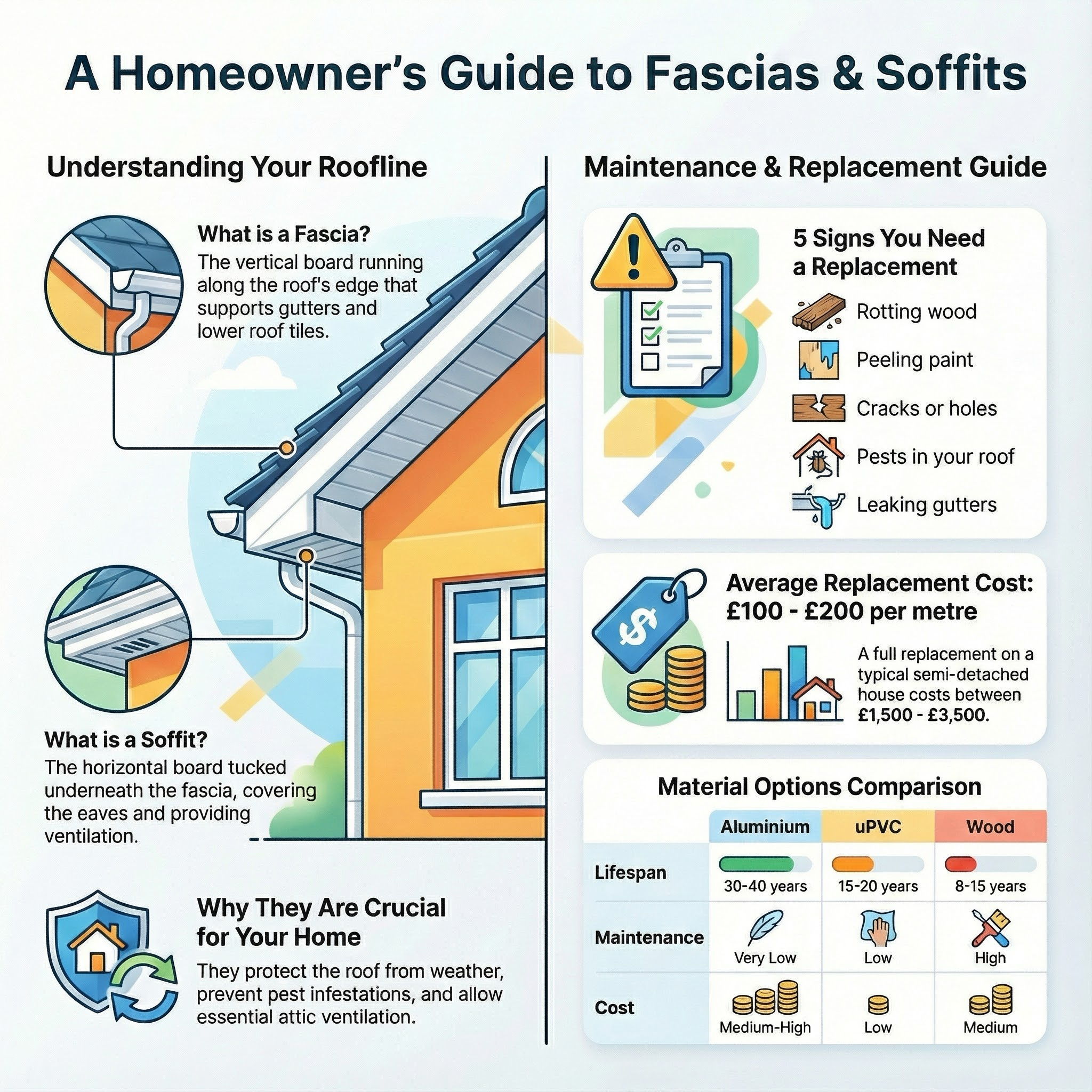
Fascia & Soffits explained
While the initial investment is higher than plastic alternatives, the resistance to warping, fading, and brittleness makes it a cost-effective choice for the long term. This guide covers everything you need to know about the installation process, costs, and regulations in the UK.
Prices for aluminium are significantly higher than uPVC due to material costs and the specialized tools required for installation. The following table provides estimated costs for a standard UK semi-detached or detached home in 2025/26.
| Item | Low £ | High £ | Notes |
|---|---|---|---|
| Aluminium Guttering (per linear metre) | £35 | £65 | Includes brackets and fittings. |
| Aluminium Soffits (per linear metre) | £45 | £80 | Varies by width and ventilation style. |
| Labour (Daily Rate) | £250 | £450 | Usually a team of two installers. |
| Scaffolding / Access | £400 | £1,200 | Depends on height and property size. |
| Average Total Project | £2,500 | £6,000+ | Based on a full 3-bedroom property. |
Several factors will influence your final quote, including the height of your property, the complexity of the roofline (corners and bays), and whether you choose standard sectional guttering or seamless "continuous" aluminium.
Aluminium installation is not recommended for DIYers. Unlike uPVC, which is forgiving and easy to cut, aluminium requires specialized metal-cutting tools and precise expansion gaps to prevent buckling.
Working at height is the leading cause of serious injury in the UK construction industry; hiring a professional with the correct access equipment is essential for safety.
Professional installers ensure the "fall" of the guttering is millimetre-perfect. Incorrect installation can lead to standing water, which causes premature corrosion of the fittings or dampness in your rafters.
Not all roofline installers are experienced with metal. Look for a specialist "Rainwater Goods" installer or a dedicated aluminium contractor.
A high-quality aluminium system can last between 30 and 50 years. The factory-applied powder coating is designed to resist UV fading and salt-air corrosion, making it far more durable than timber or plastic.
No, they are typically quieter than uPVC. Because the metal is more rigid and often thicker, it doesn't vibrate as much. Additionally, the thermal expansion is less noisy than the "clicking" sounds often heard with plastic gutters.
While they come pre-finished in a wide range of RAL colours, they can be repainted. However, it requires specific metal primers and paints. Most homeowners choose a colour they intend to keep for the life of the product.
Seamless (continuous) guttering is generally superior because it is rolled on-site to the exact length of your house, eliminating joints where leaks usually occur. It is, however, more expensive than sectional aluminium.
Yes, aluminium is one of the most sustainable building materials. It is infinitely recyclable, and a large percentage of new aluminium gutters are made from recycled content, unlike many uPVC products.
This guide was written with AI assistance and is intended for general information only. Prices are estimates based on UK averages and may vary by region. Always get at least three quotes and consult a qualified professional before starting any work.
Ask follow-ups in plain English. The AI explains options, sequencing and what to ask the fascia & soffits — so you walk in informed.
Finlock gutters were a popular architectural choice for UK homes built between the 1950s and 1970s. These heavy, precast concrete blocks were designed to serve ...
READ GUIDE →GuideMaintaining the exterior woodwork of your UK home is about more than just kerb appeal. In our damp climate, timber fascias, soffits, and windowsills act as the ...
READ GUIDE →GuideSoffits are the horizontal boards tucked under your roof’s eaves, bridging the gap between the siding and the roofline. While often overlooked, they are critica...
READ GUIDE →GuideFascia boards are the unsung heroes of your home’s exterior, acting as the primary barrier between the British weather and your roof’s timber structure. These b...
READ GUIDE →GuideGuttering is your home's first line of defence against the British weather. While often overlooked, a functioning gutter system is essential for directing rainw...
READ GUIDE →GuideYour guttering system is the first line of defence against the British weather. In the UK, failing gutters can quickly lead to saturated masonry, internal damp,...
READ GUIDE →