Instant
01 · Ask
Ask the AI a follow-up
Got more questions about fascia and Guttering Repair? Describe the bit you're unsure about — the AI explains options, sequencing and what to ask the fascia & soffits.

Hanging gutters, rotten fascia or leaking joints — fixed without replacing the whole run.
You've read the brief on fascia and Guttering Repair. Now lean on us to find the right fascia & soffits — and stay in control of the job.
Got more questions about fascia and Guttering Repair? Describe the bit you're unsure about — the AI explains options, sequencing and what to ask the fascia & soffits.
Costs, timelines, pitfalls and the right questions to ask before any fascia & soffits starts on fascia and Guttering Repair.
Itemised quotes from up to 3 local fascia & soffitss on fascia and Guttering Repair — so you can compare like-for-like, not lump sums.
Ready when you are
Enter your postcode and get free quotes from local pros.
Four moves that separate a smooth job from a nightmare.
Usually caused by broken brackets or heavy snow/debris weight. If not fixed, water will pool and cause the gutter to fail.
Often hidden behind uPVC "capping" boards. If the wood underneath is rotten, the nails will eventually pull out, causing the whole system to collapse.
The rubber seals in gutter unions perish over time due to UV exposure. These should be replaced rather than just "patched" with silicone.
If gutters aren't angled correctly towards the downpipe, water will sit stagnant, attracting mosquitoes and causing rust in metal systems.
Indicative UK ranges and what affects price.
By job type
Quote spread is typically ± 18% — always get 3 quotes.
Fascia & Soffits quick-view
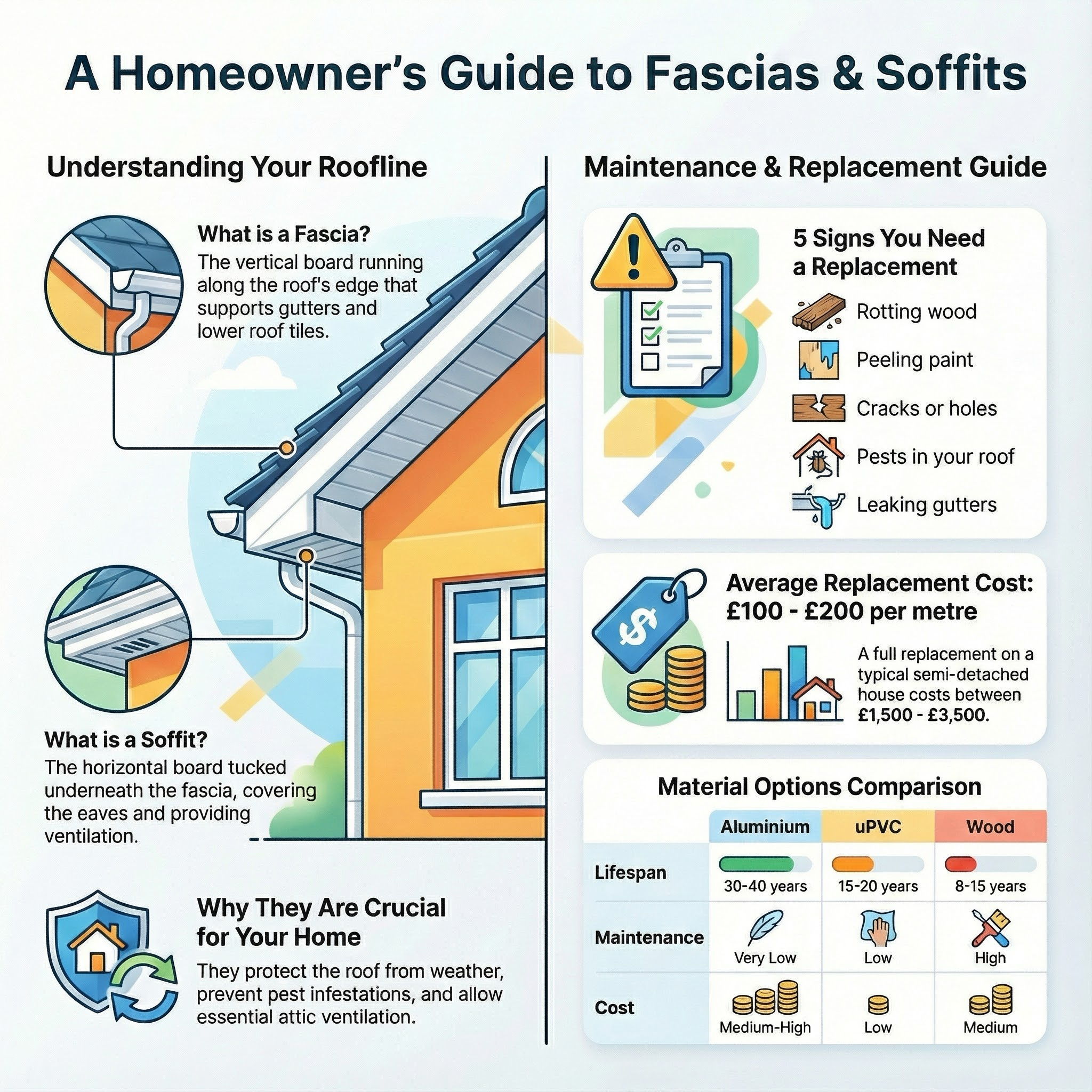
Fascia & Soffits explained
Neglecting a small leak or a rotting fascia board can lead to significant structural damp and expensive interior repairs. This guide covers everything you need to know about maintaining and repairing your roofline to keep your UK home watertight and secure.
Prices for roofline repairs vary based on the material (uPVC is the standard, while cast iron or aluminium costs significantly more) and the ease of access to your roof. All prices below include VAT and reflect 2025/26 UK averages.
| Item | Low £ | High £ | Notes |
|---|---|---|---|
| Gutter Cleaning & Minor Leak Repair | £150 | £300 | Includes debris removal and joint sealing. |
| Replacement Guttering (per metre) | £35 | £65 | Price for standard uPVC installed. |
| Fascia/Soffit Repair (per metre) | £50 | £90 | Small timber or uPVC patch repairs. |
| Downpipe Replacement | £80 | £160 | Standard 2-storey height. |
| Scaffolding Hire (if required) | £400 | £900 | Necessary for difficult access or high-rise. |
The main cost drivers are access and materials. If a tradesperson can work safely from a ladder or a mobile tower, costs remain low; however, if your home is over three storeys or has a conservatory blocking access, scaffolding will be required.
While clearing a ground-floor gutter is a manageable DIY task, most roofline repairs require working at height, which carries significant risk. Professional installers have the correct ladders, safety harnesses, and "outriggers" to work safely without damaging your tiles.
Expert Tip: If you have an older property (pre-2000), your soffit boards may contain asbestos. Never drill or sand these yourself; always hire a professional to test and handle them safely.
Questions to ask:
uPVC is the most popular choice in the UK because it is virtually maintenance-free and does not rot. Timber offers a traditional look for period properties but requires painting every 3–5 years to prevent decay.
Capping involves fitting a thin uPVC board over existing timber fascias. While cheaper, it is only recommended if the underlying wood is in perfect condition. If the wood is damp, capping will accelerate rot by trapping moisture.
Most UK homes should have their gutters cleared once a year, ideally in late autumn after the leaves have fallen. If your house is near large trees, you may need to do this twice a year.
This usually means your "felt lap" (the edge of the roofing felt) has perished. Water runs off the tiles, misses the gutter, and rots the fascia. A tradesperson can install "eaves felt protectors" to bridge this gap.
Yes. Cast iron is significantly heavier and more difficult to work with than uPVC. It requires specialist sealants and heavy-duty fixings to ensure it stays securely attached to the building.
This guide was written with AI assistance and is intended for general information only. Prices are estimates based on UK averages and may vary by region. Always get at least three quotes and consult a qualified professional before starting any work.
Ask follow-ups in plain English. The AI explains options, sequencing and what to ask the fascia & soffits — so you walk in informed.
Finlock gutters were a popular architectural choice for UK homes built between the 1950s and 1970s. These heavy, precast concrete blocks were designed to serve ...
READ GUIDE →GuideMaintaining the exterior woodwork of your UK home is about more than just kerb appeal. In our damp climate, timber fascias, soffits, and windowsills act as the ...
READ GUIDE →GuideSoffits are the horizontal boards tucked under your roof’s eaves, bridging the gap between the siding and the roofline. While often overlooked, they are critica...
READ GUIDE →GuideFascia boards are the unsung heroes of your home’s exterior, acting as the primary barrier between the British weather and your roof’s timber structure. These b...
READ GUIDE →GuideGuttering is your home's first line of defence against the British weather. While often overlooked, a functioning gutter system is essential for directing rainw...
READ GUIDE →GuideYour guttering system is the first line of defence against the British weather. In the UK, failing gutters can quickly lead to saturated masonry, internal damp,...
READ GUIDE →