Instant
01 · Ask
Ask the AI a follow-up
Got more questions about fascia, Soffit, and Gutter Repairs? Describe the bit you're unsure about — the AI explains options, sequencing and what to ask the fascia & soffits.

Three-in-one roofline repair — sagging, rot or storm damage fixed in one scaffold visit.
You've read the brief on fascia, Soffit, and Gutter Repairs. Now lean on us to find the right fascia & soffits — and stay in control of the job.
Got more questions about fascia, Soffit, and Gutter Repairs? Describe the bit you're unsure about — the AI explains options, sequencing and what to ask the fascia & soffits.
Costs, timelines, pitfalls and the right questions to ask before any fascia & soffits starts on fascia, Soffit, and Gutter Repairs.
Itemised quotes from up to 3 local fascia & soffitss on fascia, Soffit, and Gutter Repairs — so you can compare like-for-like, not lump sums.
Ready when you are
Enter your postcode and get free quotes from local pros.
Four moves that separate a smooth job from a nightmare.
When the gutter tilts away from the downpipe, causing water to pool and overflow, often due to sagging brackets.
Covering old wooden fascias with uPVC without removing the rot first, leading to structural failure of the rafter feet.
Perished rubber gaskets in uPVC gutters are the most common cause of "waterfall" leaks during heavy rain.
Often caused by a build-up of moss from the roof, which can cause the entire gutter system to pull away from the wall under the weight.
Indicative UK ranges and what affects price.
By job type
Quote spread is typically ± 18% — always get 3 quotes.
Fascia & Soffits quick-view
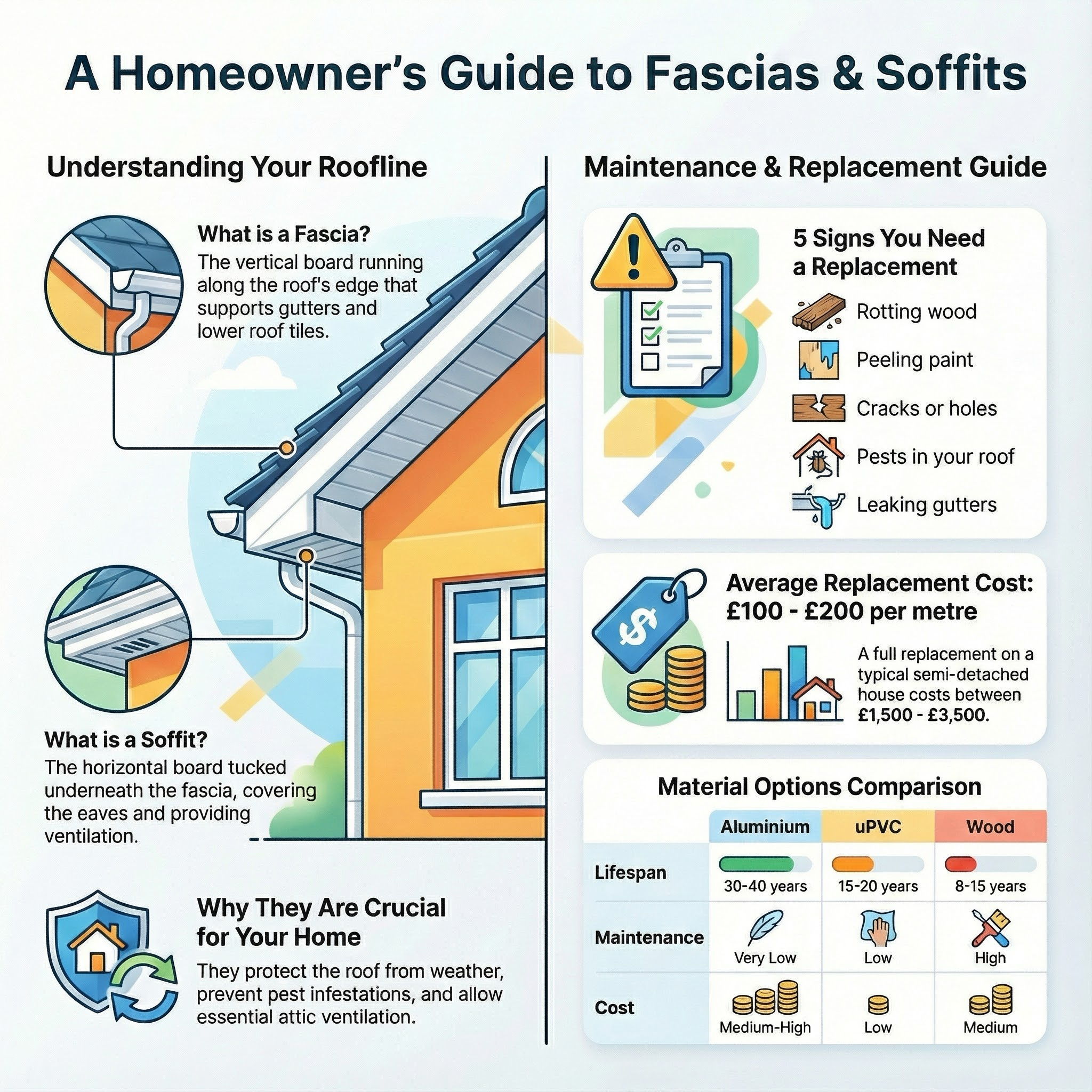
Fascia & Soffits explained
Neglecting a leaking gutter or a soft spot in your fascia can lead to expensive structural damp and timber decay. Timely repairs are a cost-effective way to preserve your property’s value and ensure your loft stays dry and well-ventilated.
Prices for roofline repairs vary depending on the height of your property and the materials used. Timber is often more expensive to repair and maintain than modern uPVC.
| Item | Low £ | High £ | Notes |
|---|---|---|---|
| Gutter Leak Repair (per joint) | £80 | £150 | Includes clearing and new seals. |
| Fascia/Soffit Patch Repair | £150 | £350 | Small section replacement (uPVC). |
| Gutter Realignment | £100 | £200 | Adjusting brackets for better flow. |
| Full Gutter Replacement (per m) | £35 | £60 | Supply and fit of standard uPVC. |
| Scaffolding Hire (if required) | £450 | £900 | Necessary for difficult access or 3+ storeys. |
Factors affecting the price include the ease of access, the presence of asbestos in older soffits, and whether you choose premium materials like cast iron or seamless aluminium.
While clearing a ground-floor gutter is a manageable DIY task, repairs at height are inherently dangerous. Professional tradespeople use specialized access equipment and can spot "hidden" rot that an untrained eye might miss.
Warning: Never lean a ladder directly against uPVC guttering, as it can crack the plastic or cause the ladder to slip.
If your home is more than two storeys high, or if you suspect your soffits contain asbestos (common in pre-1990s builds), you must hire a professional to ensure safety and legal compliance.
Look for flaking paint, soft or "spongy" wood, or visible gaps between the roof tiles and the board. If you see birds or squirrels entering your loft, it’s a sign the fascia or soffit has a hole.
Yes, provided the existing guttering is still in good condition and the profile (shape) is still manufactured. However, older "half-round" or "square" profiles can vary slightly by brand, making a perfect match difficult.
This is usually due to a perished rubber seal in a joint or a "union." Over time, the expansion and contraction of the plastic wear these seals down. They are easily replaced by a professional.
For most standard two-storey homes, a specialist ladder system (like a 'ladder stay') is sufficient. For three storeys, conservatories that block ladder access, or commercial buildings, scaffolding is usually a legal safety requirement.
uPVC is the standard choice in the UK because it is virtually maintenance-free and won't rot. Timber is preferred for period properties or listed buildings to maintain the aesthetic, but it requires repainting every 3–5 years.
This guide was written with AI assistance and is intended for general information only. Prices are estimates based on UK averages and may vary by region. Always get at least three quotes and consult a qualified professional before starting any work.
Ask follow-ups in plain English. The AI explains options, sequencing and what to ask the fascia & soffits — so you walk in informed.
Finlock gutters were a popular architectural choice for UK homes built between the 1950s and 1970s. These heavy, precast concrete blocks were designed to serve ...
READ GUIDE →GuideMaintaining the exterior woodwork of your UK home is about more than just kerb appeal. In our damp climate, timber fascias, soffits, and windowsills act as the ...
READ GUIDE →GuideSoffits are the horizontal boards tucked under your roof’s eaves, bridging the gap between the siding and the roofline. While often overlooked, they are critica...
READ GUIDE →GuideFascia boards are the unsung heroes of your home’s exterior, acting as the primary barrier between the British weather and your roof’s timber structure. These b...
READ GUIDE →GuideGuttering is your home's first line of defence against the British weather. While often overlooked, a functioning gutter system is essential for directing rainw...
READ GUIDE →GuideYour guttering system is the first line of defence against the British weather. In the UK, failing gutters can quickly lead to saturated masonry, internal damp,...
READ GUIDE →