Instant
01 · Ask
Ask the AI a follow-up
Got more questions about gutter inspection and repair? Describe the bit you're unsure about — the AI explains options, sequencing and what to ask the fascia & soffits.

Inspection plus immediate repairs — joints, brackets, splits or hangers sorted in one visit.
You've read the brief on gutter inspection and repair. Now lean on us to find the right fascia & soffits — and stay in control of the job.
Got more questions about gutter inspection and repair? Describe the bit you're unsure about — the AI explains options, sequencing and what to ask the fascia & soffits.
Costs, timelines, pitfalls and the right questions to ask before any fascia & soffits starts on gutter inspection and repair.
Itemised quotes from up to 3 local fascia & soffitss on gutter inspection and repair — so you can compare like-for-like, not lump sums.
Ready when you are
Enter your postcode and get free quotes from local pros.
Four moves that separate a smooth job from a nightmare.
If the gutter is too flat, water sits in the trough, leading to heavy moss growth and eventual sagging under the weight.
Often caused by the expansion and contraction of uPVC in the sun, which wears out the rubber gaskets over 10-15 years.
High winds or heavy snow can pull brackets away from the fascia board, especially if the wood behind is rotting.
Often hidden from view, a blockage at the "swan neck" (the bend at the top) will cause the entire system to overflow during heavy rain.
Indicative UK ranges and what affects price.
By job type
Quote spread is typically ± 18% — always get 3 quotes.
Fascia & Soffits quick-view
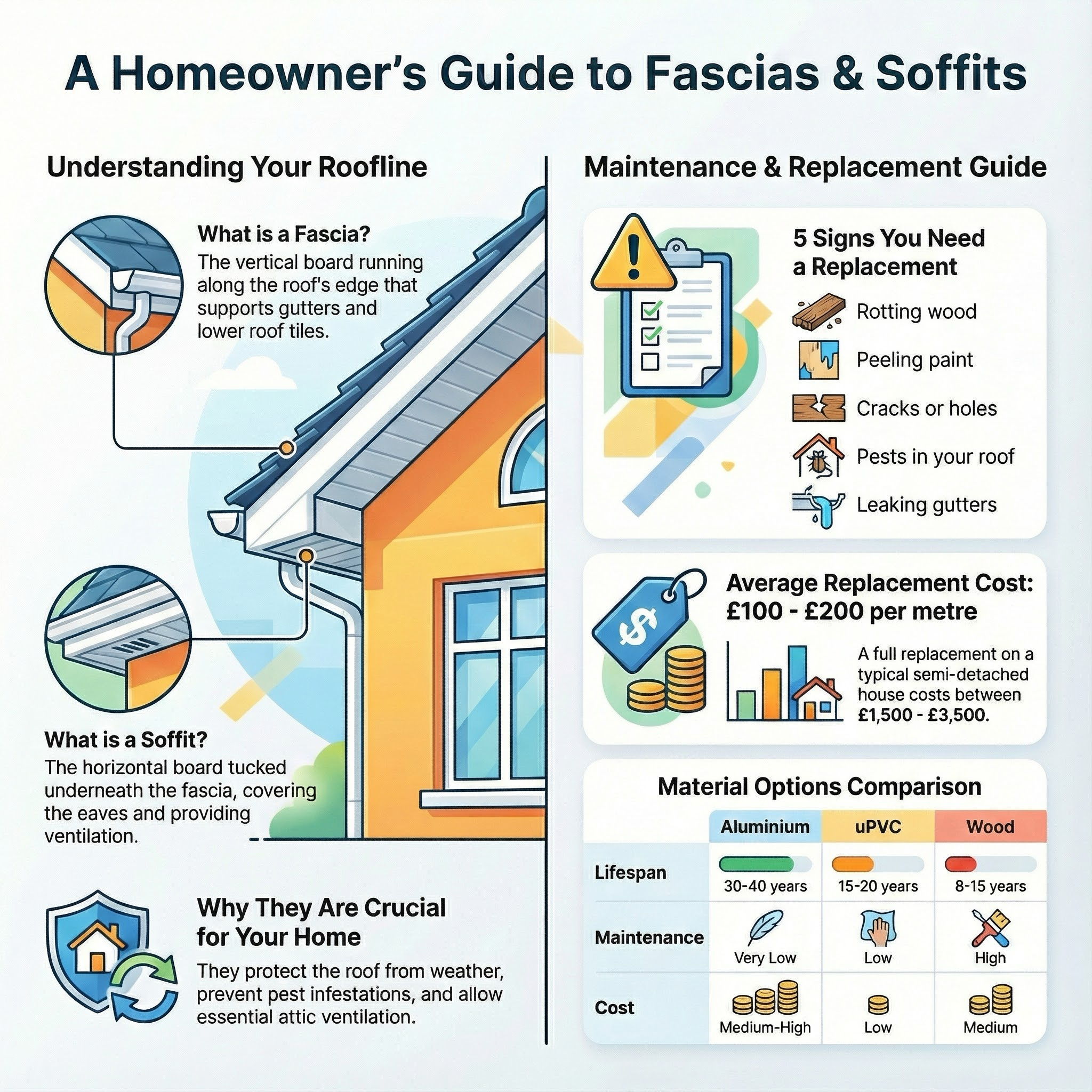
Fascia & Soffits explained
In the UK, our heavy rainfall and seasonal debris mean that gutter systems are under constant pressure. Regular inspections and timely repairs are not just about aesthetics; they are essential maintenance tasks that can save you thousands of pounds in long-term property repairs.
| Item | Low £ | High £ | Notes |
|---|---|---|---|
| Gutter Inspection & Minor Clearing | £80 | £150 | Based on a standard 3-bed semi-detached house. |
| Minor Repair (Seal/Bracket) | £50 | £120 | Usually charged on top of a call-out fee. |
| Replacement Guttering (per metre) | £35 | £60 | Includes labour and uPVC materials. |
| Downpipe Replacement (per length) | £40 | £90 | Depends on height and material (uPVC vs Cast Iron). |
| Scaffolding / Access Tower | £450 | £900 | Required for high-reach or difficult-to-access roofs. |
| Waste Disposal Fee | £20 | £60 | Removal of old plastic or metal sections. |
Prices vary significantly based on your location in the UK and the height of your property. While uPVC is the most affordable material, repairing cast iron or aluminium guttering will attract higher labour and material costs due to the weight and specialist fixings required.
While clearing low-level gutters is a common DIY task, repairs often require working at height, which carries significant safety risks. Professional tradespeople have the correct ladders, harnesses, and "stand-off" brackets to work safely without damaging your roof tiles or the gutters themselves.
If your property is more than two storeys high or has a fragile roof (such as asbestos or old slate), always hire a professional with the correct access equipment.
Furthermore, professionals can accurately "sight" the gutter to ensure the correct fall. A DIYer might install a perfectly level gutter, but without a slight slope toward the downpipe, water will pool and eventually cause the system to sag and fail.
Guttering work generally falls under Building Regulations Part H (Drainage and Waste Disposal). While you don't usually need formal approval for simple repairs, the regulations dictate that:
In the UK, it is best practice to have your gutters inspected and cleared at least once a year, ideally in late autumn after the leaves have fallen. If your home is surrounded by overhanging trees, you may need a second check in the spring.
Most standard home insurance policies do not cover gutter repairs or clearing, as these are considered "wear and tear" or general maintenance. However, if a storm causes a branch to fall and rip your gutters down, you may be able to claim for the accidental damage.
This is usually caused by the "felt lap" (the edge of the roofing felt) perishing or being tucked too far back. Rainwater runs under the tiles and behind the gutter rather than into it. A tradesperson can install "eaves protectors" or "drip trays" to fix this.
Yes, but it requires stronger brackets and a fascia board in excellent condition. Seamless aluminium or cast iron gutters are popular for heritage properties but are significantly heavier and more expensive than uPVC.
Look for green algae or damp patches on your external walls, "tiger stripes" (dark streaks) on the outside of the gutter, or water splashing over the sides during a downpour. Sagging sections are also a clear indicator that the brackets are failing.
Leaf guards can be very effective if you have nearby deciduous trees. However, they aren't maintenance-free; small debris and pine needles can still get through, and the guards themselves will eventually need cleaning to prevent moss build-up on top of them.
This guide was written with AI assistance and is intended for general information only. Prices are estimates based on UK averages and may vary by region. Always get at least three quotes and consult a qualified professional before starting any work.
Ask follow-ups in plain English. The AI explains options, sequencing and what to ask the fascia & soffits — so you walk in informed.
Finlock gutters were a popular architectural choice for UK homes built between the 1950s and 1970s. These heavy, precast concrete blocks were designed to serve ...
READ GUIDE →GuideMaintaining the exterior woodwork of your UK home is about more than just kerb appeal. In our damp climate, timber fascias, soffits, and windowsills act as the ...
READ GUIDE →GuideSoffits are the horizontal boards tucked under your roof’s eaves, bridging the gap between the siding and the roofline. While often overlooked, they are critica...
READ GUIDE →GuideFascia boards are the unsung heroes of your home’s exterior, acting as the primary barrier between the British weather and your roof’s timber structure. These b...
READ GUIDE →GuideGuttering is your home's first line of defence against the British weather. While often overlooked, a functioning gutter system is essential for directing rainw...
READ GUIDE →GuideYour guttering system is the first line of defence against the British weather. In the UK, failing gutters can quickly lead to saturated masonry, internal damp,...
READ GUIDE →