Instant
01 · Ask
Ask the AI a follow-up
Got more questions about armchair reupholstery? Describe the bit you're unsure about — the AI explains options, sequencing and what to ask the furniture repair.

Strip back, re-spring, re-pad and recover in your fabric — restored to better-than-new.
You've read the brief on armchair reupholstery. Now lean on us to find the right furniture repair — and stay in control of the job.
Got more questions about armchair reupholstery? Describe the bit you're unsure about — the AI explains options, sequencing and what to ask the furniture repair.
Costs, timelines, pitfalls and the right questions to ask before any furniture repair starts on armchair reupholstery.
Itemised quotes from up to 3 local furniture repairs on armchair reupholstery — so you can compare like-for-like, not lump sums.
Ready when you are
Enter your postcode and get free quotes from local pros.
Four moves that separate a smooth job from a nightmare.
Once the old fabric is removed, you may find cracked wood or woodworm that wasn't visible during the initial quote.
Inexperienced upholsterers may fail to align patterns or grains correctly, making the chair look "crooked."
Using low-density foam might look good initially but will lose its shape and support within 12 months.
If the fabric is not stretched correctly, it will develop ripples and premature wear points.
Indicative UK ranges and what affects price.
By job type
Quote spread is typically ± 18% — always get 3 quotes.
Furniture Repair quick-view
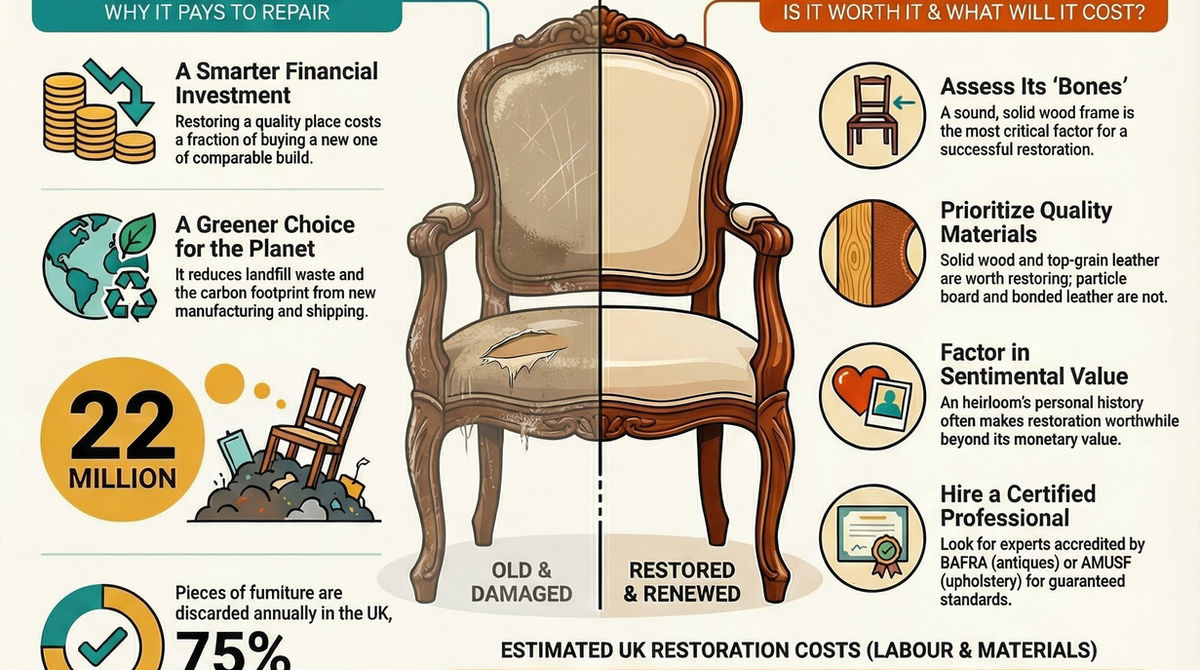
Whether it is a mid-century classic, a Victorian heirloom, or a comfortable wingback that has lost its bounce, professional reupholstery restores both comfort and aesthetic appeal. This process allows you to customise your interior decor while keeping quality craftsmanship out of the landfill.
The cost of reupholstering an armchair varies significantly based on the chair's size, the complexity of the design, and the price per metre of your chosen fabric.
| Item | Low £ | High £ | Notes |
|---|---|---|---|
| Labour (Full Reupholster) | £350 | £750 | Depends on style (e.g., Wingback vs. Club chair). |
| Fabric (per metre) | £25 | £150 | Average armchair requires 5–7 metres. |
| Sundries (Foam/Webbing) | £60 | £180 | Includes fire-retardant foam and new springs. |
| Frame Repairs | £40 | £120 | Fixing wobbles or replacing broken rails. |
| Collection & Delivery | £40 | £100 | Often based on distance from the workshop. |
| Total Project Cost | £550 | £1,300+ | Inc. VAT and mid-range fabric. |
Labour rates are higher for intricate work like deep-buttoning (Chesterfield style) or working with difficult materials like velvet and genuine leather. Always clarify if the quote includes the "sundries" (internal materials) or just the labour.
While a simple seat pad can be a DIY project, a full armchair reupholstery requires specialised tools such as pneumatic staple guns, webbing stretchers, and industrial sewing machines. Professionals possess the "tensioning" skills required to ensure fabric doesn't sag or pucker over time.
Crucially, professional upholsterers ensure all materials used comply with strict UK Fire Safety Regulations, which is vital for your home insurance and personal safety.
Reupholstering a high-quality chair is often similar in price to buying a mid-range new one. However, the result is usually superior in quality to modern mass-produced items and is tailored exactly to your style.
A standard armchair typically requires between 5 and 7 metres of fabric. If your fabric has a large pattern repeat, you may need an extra 1–2 metres to ensure the patterns align perfectly across the cushions and back.
Most upholsterers allow "COM" (Customer’s Own Material), but they may charge a small handling fee. You must ensure the fabric is suitable for upholstery and meets UK fire regulations.
Recovering simply places new fabric over the old. Reupholstering involves stripping the chair to the frame, replacing worn internals, and building the comfort back up from scratch.
Yes, but it requires a full strip-back. Leather and fabric behave differently, so the internal padding may need adjusting to ensure the fabric sits correctly without slipping.
This guide was written with AI assistance and is intended for general information only. Prices are estimates based on UK averages and may vary by region. Always get at least three quotes and consult a qualified professional before starting any work.
Ask follow-ups in plain English. The AI explains options, sequencing and what to ask the furniture repair — so you walk in informed.
Restoring a cherished piece of furniture is often more cost-effective and sustainable than buying new. Whether it is a family heirloom or a high-quality find th...
READ GUIDE →GuideTable revarnishing is one of the most effective ways to breathe new life into tired furniture. Whether it is a cherished family heirloom, a sturdy oak dining ta...
READ GUIDE →GuideA high-quality sofa is often a significant investment, making professional repair a far more sustainable and cost-effective choice than replacement. Whether it ...
READ GUIDE →GuideA coffee table is often the focal point of a British living room, but years of tea spills, hot mugs, and general wear can leave it looking tired. Restoring a hi...
READ GUIDE →GuideMoth damage can be a distressing discovery for UK homeowners, often affecting expensive wool carpets, heirloom upholstery, or high-end cashmere garments. While ...
READ GUIDE →GuideA broken or wobbly sofa leg can make your living room feel neglected and, worse, risks damaging your flooring or causing the frame to collapse. In most cases, a...
READ GUIDE →